Content

Showing posts with label Quality. Show all posts

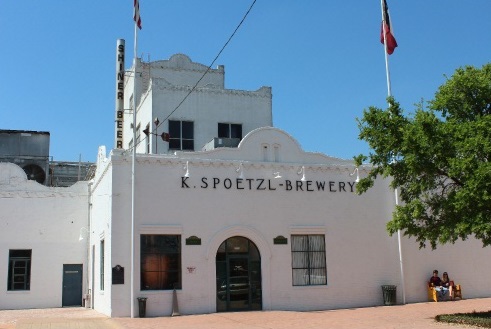
CONSISTENT QUALITY: SPOETZL BREWERY - SHINER, TEXAS

January 16, 2018 0 comments
Spoetzl is Texas' oldest independent brewery.
Living here in Ohio, it should be no surprise that I am partial to many of our great Midwestern brewers, like Great Lakes, Hoppin’ Frog, Thirsty Dog, Platform, Bell’s, Short’s and Rhinegeist. They all make great beers—even though it is inevitable that there will always be hits-and-misses from time to time. Nobody’s perfect.

That said, one American brewer I would like to celebrate for their high level of consistency and quality is the Spoetzl Brewery of Shiner, Texas. The oldest independent brewery in Texas, they are widely distributed, and generally easy to find in major markets throughout Ohio.

Originally named "The Shiner Brewing Association," (SBA) The Spoetzl Brewery was founded in 1909 by German and Czech immigrants who had settled around the central Texas town of Shiner. Unable to find the type or quality of beer they had enjoyed in their home countries, they began to brew their own. They remain one of the oldest independent breweries in the U.S

Shiner Brewing Association - 1909
Personally, I have sampled a wide range of their beers, though strangely enough, their standard Shiner Premium lager, I regularly enjoy their Bock beer, Bohemian Black Lager, Cream Ale, Oktoberfest and Holiday Cheer—the last two being seasonals. Their Strawberry Blonde is excellent as well, and their 2015 Birthday Beer, a chocolate stout, was one of my all-time favorites. Sadly, the birthday beers change every year, and I’ve not had it since.

The German and Czech heritage must run strong throughout Spoetzl’s brewing tradition and methods, because what I enjoy most about their beers are that they are always true to style—Bocks, Oktoberfests and Cream Ales always taste the way you expect them to…no extra hops, wrong hops, or other strange flavors distracting from a job well done. So many American craft brewers fall to the temptation to try to “improve” on classic styles, or somehow “reinterpret” them--and the result is usually a big fail.

The other thing I would commend them for is the ability to just “get it right” when it comes to taste and balance. It would be easy to get into trouble with more creative recipes like Shiner Prickly Pear, Ruby Redbird, or their Holiday Cheer, but the brewery always manages to get consistently great results, using just the right amount of ingredients that complement the underlying beer without overwhelming it. That’s not easy—evidence that their brew masters have a well-tuned palate. Maybe a little common sense, too.

Read more »

ANOTHER FALL SEASON OF BREWING BECKONS

August 10, 2016 0 comments
I generally brew my beer in the Fall; something about the season always feels right, and the thought of entering the Holiday Season with some special beers on hand makes a lot of sense to me. Fall being harvest time also seems appropriate, especially when considering complimentary flavors that might be added. Note—that does not include pumpkin.
My brew tools are pretty rudimentary and common to most home brewers:  a 6-gallon clear fermenter, brew pots, plastic pails for bottling and secondary fermentation, large bottles, small bottles, an ancient capper—you name it. All this and a handful of books on brewing plus a great local supply shop, The Grape & Granary, provide me with just about everything I need.

Once in a while, however, I come across something new that piques my interest, and so it was with the BrewDemon 2.5-gallon Conical Fermenter. Till now, I’ve always brewed in 5-gallon batches, but I was attracted to the idea of brewing smaller batches, which would allow for a little more frequent experimentation with recipes and new styles. I ordered mine from Amazon with some birthday gift money as well as some spare airlocks and a BrewDemon kit to make one 2.5-gallon batch of Brown Ale, which remains my go-to drink of choice.

For whatever reason, I’ve preferred the beers I’ve made with extract over the last batch I made from a kit that included dry malts and steeped grains. The latter, while good, had more of the roasted malt taste that I associate with American Brown Ales, rather than the sweet, caramel-malt “fruitiness” that typifies good English Brown Ales. My goal with the first batch here is to try and replicate my past efforts, which normally result in a fresh, rich and sessionable Brown Ale, similar to Newcastle, but better. Currently, I’m considering what modest additions I might add to this kit to ensure just a little more body and taste.

I’ll let you know how this works out. I’m also looking at what comes next—I am thinking about some type of rich Harvest Ale, a Holiday Porter, and at least one or two other styles that I can store long term. Over the last winter, I completed building a wine/beer storage cellar under the basement stairs, and it’s been waiting for some occupants. Time to get to work!
Read more »

JUST SAY NO TO HOP MADNESS

May 20, 2016 0 comments
I’ve been grousing about the infestation of IPAs into American Beer Culture for some time now, as well as the fact that so many US craft brewers seem to have no clue in how to use them correctly. This attitude was strengthened even more after a recent trip to Germany, Switzerland, Alsace and Austria—where I was actually able to enjoy a number of different beers. While they varied quite a bit in their color, taste and strength, they all seemed to have one thing in common—they were largely formulated with varying combinations of beer’s four main ingredients: Water, Malt, Hops and Yeast.

I’ve often been of a mind that most US craft brewers should first dedicate themselves to learning how to make a solid, well-balanced beer with just these four ingredients before jumping into trendy stuff like pumpkin ales, sours, hop-bombs, chocolate or peanut-butter ales, or any other exotic style. There are a very few US craft brewers who can successfully pull this wizardry off (my local brewery, Hoppin’ Frog, comes to mind) but the truth is, this “everything and the kitchen sink” approach can offer plenty of style and little substance. It also offers some brewers with limited skill a convenient place to hide—behind a truckload of ingredients that can camouflage an otherwise less-than-stellar brew.

After being reminded of what simple, fresh and delicious beer tastes like, it’s easy to get tired of so-called “experts” telling me that I just don’t “get” the appeal of hops, or have “too weak a palate” to appreciate all these bold, bitter hop flavors. What a load of bullshit.

“You need to train your palate to appreciate these bitter hop flavors.” More bullshit. I suppose I could slip a dab of poop into my ham sandwich every once in a while and build up a tolerance. What does that prove other than I have developed a taste for shit?

First of all, I’ve been drinking beer long before some of these morons were even born; and most of it was good beer, not just the swill that the macro-brewers have been foisting upon us for the last 65 years. It’s true that for much of that period, imports were the best and most popular route to quality beer, at least until the late 1970’s and early 80’s. At that time, microbreweries were just beginning to appear and some of the larger brewers responded to the rise of imports by rolling out premium lines and bringing back some old brew house recipes that offered more flavor. And back then, most imports were really imported—not brewed in the US under contract. I believe I developed a fairly sophisticated palate over 40+ years of beer drinking, and while my taste buds and sniffer might not be as good as they used to be, I’d like to think I know what beer is supposed to taste like.

And I’ll be damned if you try to convince me that it’s supposed to taste like turpentine. Or Pine Sol.

Unfortunately, we have a whole generation of beer drinkers who have been marketing-brainwashed into thinking that this is exactly how good beer is supposed to taste; utterly convinced that these “bold” flavors have been missing from beer for generations. Of course the convincing has been done by some craft brewers who have built a reputation on hop-bombing the Western Hemisphere, and US hop-growers who only want to expand the market for their goods.

Now the usual response to my view is always – “Well, if you don’t like it, just don’t drink it.” And that sounds reasonable, until you realize that the tidal wave of IPAs has pushed a vast number of great alternatives off the store shelves. It’s getting harder to obtain beers I actually like. The local super-grocers offer dozens and dozens of IPAs in their cooler, both in 6-packs and in single bottle (“build your own 6-pack”) selections. But where before I could choose from among 10 or 15 English ales, or 18 different German beers, or a few dozen other imports, or some reliable, high-quality domestic beers, now I can only find a handful (cold) and maybe a few more (warm) on the store shelf.

Yes, there are a number of US Craft Beer offerings that are not IPAs, it is true; but the simple fact is—I don’t trust a lot of these brews to deliver on their promises. Many are not “true to style”. Many are still over-hopped, as brewers end up massaging their entire brewery lineup to cater to the “hop-forward” tastes of today. I’d be happy to give some a test shot, but I’m not going to buy a $12 6-pack to experiment—or give away later.

Other bozos will try and make some technical argument that bitterness is not always associated with hops. They add fragrance and aroma, too. Yes, I know that. And I will respond by simply stating that, while yes—a beer with extra hops does not always have a bitter taste, the other side of the coin is simply this: almost every beer that tastes too bitter is the result of being over-hopped.

Or the result of using the wrong hops. I really do think a lot of craft brewers are using hop varieties for taste that should only be used for aroma. For example, let me be clear in stating that while Pine-like flavors may lend a nice aroma, they have absolutely no place in beer taste.

Have you ever had smoked meat or fish? Have you ever wondered why expert barbeque masters only use hard woods like oak, hickory, mesquite or cherry on their fires? Did you notice that they never use pine wood? The reason is simple: pine leaves a sharp, resinous and wholly unpleasant taste in the mouth that ruins food. No grillmaster with a brain uses it. Why would you want to put that taste in your mouth via beer?

Again, we see generations of simple knowledge and proven experience go by the wayside, as idiots try to convince us that this is actually a good taste for beer to have. I’ll be honest and also admit that I have found few American hop varieties that I appreciate as much as traditional, noble hop European varieties. I’m sure there are some good ones, but it’s hard to judge when they are being used by the boxcar load.

Do I sound grouchy? Good. Then you’re catching on.

Just as lame arguments break on the rocks of four decades of beer drinking experience, the same can be said for trendy brewing approaches that go against the grain of several hundred years of beer brewing tradition. Just how bitter can a beer be, anyway—before it becomes palate-tiring, overwhelming and undrinkable?

Ever had a real, traditional English IPA? Bass dropped the “India” from its “Pale Ale” some years ago, but the taste hasn’t changed all that much over the years; this style was never intended to be as bitter as the stuff that has been pushed on us today in the US. Ever had an English “bitter”? Try a Fullers ESB. The bitterness is subtle; it embellishes the taste and balances the malt. It doesn’t overwhelm it. Same with a genuine Pilsner, which has slightly more bitterness than a typical Lager.

Hey, if you wanna drink this bitter swill—go ahead. Pay $12 a 6-pack or $8 a pint and support the Hipster Brewmaster & Organic Hop-Grower’s Retirement Fund. Of course IPAs are selling so well, but what do you expect when (aside from Macro-Brew) that’s mostly what you find on today's store shelf? It’s a self-fulfilling cycle—and a cycle that’s making it harder to obtain truly good, honest beers that have been enjoyed for decades.

For the craft brewers who are focusing on innovative, well-balanced stouts, tasty porters and drinkable ales that people can actually enjoy, my hat is off to you. Continue to innovate, and please resist the urge to obscure the tastes you’ve worked hard to develop by wrapping them in an overly-bitter hop shroud. Hopefully this hop madness will wear off, the pendulum will swing in the other direction and more brewers will come to their senses—not to mention beer drinkers who haven’t had enough experience to know any better.

Read more »

A BEAUTIFUL BEER WEEKEND IN MICHIGAN: PART ONE

July 13, 2015 0 comments
THE VIEW FROM THE DOCKSIDE - TORCH LAKE
Okay, you probably don’t expect a guy from Ohio to be raving about anything from “that state up north” – but I had one of my best weekends ever up in Michigan, enjoying some incredible views, gawking at awesome high-performance powerboats, and sampling some of the great beers that state has to offer.

As a brief note of explanation, I have vacationed in this area since about 1962, when my father started bringing the family up to stay on the chain-of-lakes just north of Traverse City, with beautiful Torch Lake being the most notable. Over the years, we’ve visited spots up-and down the coast, including Charlevoix, Petoskey and on up to Mackinac.

I think the last time we were in Bellaire, it was a Sunday morning; we were on our way back home and I believe Short’s Brewing Company was not open at the time. So I was determined to get there on this trip.

Our destination was Boyne City; for the third time, the wife and I decided to check out Boyne Thunder, which is a fund-raising Poker Run for high-performance offshore powerboats. There were over 100 boats registered this year, and not only can you check them out on the docks, there’s also a big street party on Friday night, right on the shores of Lake Charlevoix—featuring both hot boats and hot rods.

Before that, however, our first stop was at one of our old haunts, the Alden Bar & Grille, just steps from Torch Lake. The place was recently remodeled, and I have to say—while it is larger and brighter, it lost some of its “up north” character when they replaced the original knotty-pine wall paneling with new stuff. I’m sure it will look just fine in about 30-50 years, but for now, it just seems too “new.” Still, that didn’t stop us from enjoying a couple cold ones; I went for a traditional Bell’s Two-Hearted Ale (what else would you drink in Hemingway Country?) and having done that, we headed north along the east coast of Torch Lake to Clam River.

THE DOCKSIDE - FROM ACROSS CLAM RIVER CHANNEL
Clam River, where Clam Lake flows into Torch Lake, is home to The Dockside, one of the most popular spots on the chain-of-lakes. It’s right on Torch, so you have spectacular views and lots of action, as boats go back-and-forth down the channel. The place was crowded as you might expect, but the service was prompt and friendly—and my smoked chicken quesadilla was perfect. I washed that down with a delicious Short’s Bellaire Brown, not something I normally drink on a hot day when I’m sitting in the sun, but it’s smooth and light enough to go down easy and quench any thirst.

We spent about an hour or so enjoying the lake, then headed off to Bellaire to check out Short’s Brewery in person. Just as expected, the place was packed on the middle of a Friday afternoon, and I went with a flight of five beers, including Paper Thin Walls (which my wife really liked) Locals, Magician, Village Reserve and a Badankadank. All of them were great, and I grabbed a six pack of Locals and Bellaire Brown to take home with me.

SHORT'S BREWING COMPANY - BELLAIRE MI
The Brewery and restaurant are really first class, it’s easy to see why this place is a top regional tourist attraction. From the physical facilities to the beer packaging, it’s clear that there’s a solid, consistent line of philosophy and creativity running across the whole operation. Their success is a real tribute to the commitment and care that everyone demonstrates from top to bottom.
That’s all for Part One of our Michigan Beer Journey. Part 2 to follow.
Read more »

FALL & WINTER: THE BEERS ARE LOVELY, DARK AND DEEP...

November 12, 2014 0 comments
I feel I'd be pretty confident in saying that my seasonal beer drinking habits are probably in line with most serious beer drinkers. After a summer-full of lighter pilsners, lemon-and lime infused beers, wheat bears and other hot-weather styles, the shorter days and falling leaves lead me to darker, heavier, more full-flavored beers and ales.

Not having to worry about sitting for hours in the hot sun, brown ales, smokey porters and rich stouts get added to the shopping list--along with pumpkin ales, spicy holiday brews and even some hoppier ales, depending on the activity and the menu choices. This is also the time of year I make more trips to the grocery myself, where I can usually put together a "build your own" 6-pack of individual beers I'd like to try (keeps me from making $10 "mistakes") and also grab an occasional 22oz bottle of something special.

Most fall and winter weeknights, I'll enjoy a bottle or two while reading or watching TV; often checking the Twitter stream and surfing for beer-related news and commentary. I generally don't do in-depth beer reviews (there are enough of these already) but I will usually tweet a brief comment on what I'm tasting, some initial impressions and also--whether I might drink it again. 

So far, I've come across few beers I would describe as "bad." If I express any negative comments about a beer, it would be more likely that it's not particularly true to stye, or that I don't find it quite as "remarkable" as some other people do. In other cases, I mind not find  a beer's taste so pleasing, but I am also willing to chalk that up to personal preference--especially where high IBUs are concerned.

Weekends are a little different. I'm a big NFL and NCAA football fan, so that naturally pairs with beer-drinking. If I'm at the neighborhood sports bar--to which I can thankfully walk--I might settle in with a Yuengling (buck a bottle on Thursdays) and if I am home, a sessionable brown ale or dark lager. Regardless of how good the game might be, I wouldn't try to pound a lot of heavy, high ABV craft beers, and I don't think you would, either.

It's early in this "dark season." My favorite so far has clearly been Samuel Smith's Organic Chocolate Stout, which was incredibly rich and dessert-like. In fact, I know I will be serving a small glass of this this along with dessert at some holiday dinner party. I found Breckenridge Brewery's Vanilla Porter to be quite good as well; very smooth and subtle.

I have just started checking out Christmas ales as they are now coming out. Locally, Akron's own Thirsty Dog puts out an excellent 12 Dogs of Christmas Ale, though I found Great Lakes Brewing Company's Christmas Ale to be just slightly smoother in terms of the spice combination. What that really boils down to is that I might drink two of one and three of the other at Christmas dinner.

Happily, Hoppin' Frog Brewery is about a mile from my house, and it wouldn't be winter without a few of their Imperial Stouts, Porters and Scotch Ales. They've always been major belly-warmers; the perfect thing for a cold winter night in front of the fireplace, nodding off during an episode of Brew Dogs.

Though I am not a particular fan of most IPAs, I am intrigued by some of the darker, so-called "black" IPA's I've seen, and am determined to give them a try some time soon. In fact, if you have any good suggestions, let me know.

This time of year, the beers are lovely, dark and deep.  But there are so damn many to drink. 
Let's get to work.
Read more »

GETTING PAST THE POLITICS OF PILSNER

November 1, 2014 0 comments
I came across a ridiculous rant the other day on Deadspin, where Will Gordon (does he pronounce that "Gor-DON" - like in the Sprint commercials?) rails against Stella Artois being a disgrace to Belgian beer. Apparently he was disappointed in getting an older sample, which may have been a little skunky. It happens, although getting a truly bad bottle is a little less common than it was in the past.

I've had a decent Stella or two over the years - mostly on tap - and anyone who knows beer clearly knows that Belgium produces a wonderful array of beers that are far superior, by anyone's standard. Of course, that's pretty much the case in any country, including the USA; there are plenty of smaller breweries delivering a better product than the larger, more popular brands. So much for stating the obvious.

What I really found irritating in the article is that he seems to be basing his opinion primarily on the simple fact that since the brand is owned by a large beer holding company like InBev, it must be horrible. Most of the post is spent trashing big beer in general - about three paragraphs. Eventually, he gets around to actually, "reviewing" the beer, which he usefully describes as "skunked and awful."   Nuff said; I'm all for tight editing.

He ends the article with this out-of-breath zinger:

Belgium's continued production of Stella Artois is an affront to human decency. All the waffles and Westvleteren in the world can not make up for this crime against beer.

Well, then...
"A crime against beer?"  Really? All in all, Godon's take is really sophomoric, and typical of so many rants I hear from hipsters about how terrible any product must be if it's from a "large" brewery. Or more accurately, ANY brewery - small or large - that happens to be owned by a big, international holding company.

This seems to be the prevailing attitude: Is your brewery producing beer by the same methods it was before you were purchased by that big international conglomerate? Doesn't matter - the minute you signed on the dotted line, your beer became swill. At the very least, it's not "worthy" of our consumption, and the hard-working people who have been making your beer are traitors to the craft beer movement.

Now, I am sure there are examples where the perceived quality, or the formulation, may have been compromised for "the product formerly known as craft." It can happen. One supportive commenter on the article I am mentioning pointed out that Red Hook is now a shadow of its former self since being taken over by Craft Brew Alliance. I have to wonder if that's view is based on his "beer politics" or a blind tasting.

It's similar to a guy I know who, upon occasion,  used to drive over to PA to bring back a couple cases of Yuengling, because "it's really good beer" and you couldn't get it in Ohio at the time. Today, success allows those folks to also claim the title of "largest American-owned brewery" in addition to being the oldest.  The result? Yuengling's popularity has now earned the disdain of some craft beer sophisticates. That seems a little unfair.

Before I go any further, let's get this straight: I support and love Craft Beer. The movement here in the US and in other countries is providing beer lovers with access to an incredible array of great beers and ales, better overall beer knowledge and lots of good jobs. I've been drinking beer for forty years, and I remember when -- if you wanted something better than a Bud, your only other choices were a Molson, a Heineken, a Bass Pale Ale, or a St. Pauli Girl.

Hell yes, things are way better now.

We're getting more variety, improved quality, new flavors and more freshness. The interest in beer, the non-stop calendar of beer-related events, the increased appreciation of beer as a food product, and even the realization of beer as a cultural phenomenon makes this an exciting time.

But let's not get lost in the reality of what's in the glass. I'm not buying into this need to automatically "rip" some beer because it's not made by a handful of bearded guys in an old warehouse, or cooked up in a farmhouse and sold in 22oz. bottles. Even the so-called "craft wannabees" are way better than the swill we had available 35 years ago.

In the end, the question for me is not so much - "is it really a craft beer?" - as is it is" "Is it really a good beer?"  One seems to be a question of production method, philosophy and marketing. The latter is a simple result, and not exclusively dependent on the former.

I don't drink beer as a political statement. I drink it because I enjoy it, and it [usually] tastes good. Just because a beer brand may be owned by a big company, doesn't automatically disqualify it from my appreciation. For the same reason - any so-called "Craft Beer" doesn't get a free pass just because it was produced in a small quantity, by seemingly dedicated beer-lovers. They can make nasty beer, too - and I've had a few.

Having made beer myself, I can appreciate the time and effort that goes into it, and the skill required to brew up a drinkable product - several dozen or several thousand barrels at a time. It's all I can do to knock out five tasty gallons.

Producing a great beer can be a serious matter. But it is beer, after all. No need to take it's enjoyment quite so seriously.


Read more »

FAIR WARNING....PLEASE

September 14, 2014 0 comments
I would never say hops are a bad thing. They're an essential part of beer--and well used, are critical to imparting great aroma and flavor to our beers and ales.

But the current tendency in American Craft Brewing seems to be adding hops to the point where they often dominate the taste profile...and where their over-use almost becomes an end in itself. As a result we are left with double and triple-IPAs, "Hoppinators," "Hoppus Maximus," "Hop Killers," etc. etc.

While some of these beers are fine for sampling, their bitterness and "hit you on the head with a hammer" qualities make them impractical for any type of session drinking, and I've found many to be almost undrinkable. (I've had some beers that were loaded with so much Simcoe that I thought someone had poured a cap full of PineSol into my beer.) At best, I find myself saying - "Well, that's good, but I couldn't drink more than one."

For those who like these kinds of beers, fine. But my worry is that this hop craze is having a detrimental effect on Craft Beer overall--to the point where the high-hop focus is insinuating itself into beer styles that are not traditionally hoppy. Even experienced craft brewers seem to be falling into this trap. I've always loved GLBC beers, but over the years, I find their offerings all morphing into a very similar hop taste profile. Over the past year, I've had an Oktoberfest and a Pilsner from them that were far too hoppy for the claimed style--and many other quality craft brewers seem to be heading in the same direction.

It's easy to think that the hop-craze we've seen here in the US might have filtered into our general approach to brewing. A lot of Americans under 35 have become accustomed to highly-hopped beers...perhaps to the point where brewers feel a certain amount of bitterness is required if the beer is going to "taste right" to those folks. If so, that would be a shame--since those of us that don't need a ton of hops in our beer to know we are drinking a good one will be forced to suffer.

Of course, I'm not the first to complain, and I won't be the last. It may get worse before it gets better. I've heard about an upcoming hop shortage (we can only hope) - but then I am also reading so many articles about how many people are growing hops in the US now (and why not, you can grow them in your backyard) that it seems inevitable that more and more are going to end up dumped into our beer by the bushel-full. Why? Just because we have them.

I'm beginning to think US brewers should do us a favor and label some of these beers "American Oktoberfest,"  "American Helles," etc. -- so we get fair warning that we shouldn't expect these beers to adhere to the traditional beer styles at all; that they have been "hop-boosted" to please what they have come to believe is the common American preference.

That way, they would not disappoint experienced beer drinkers who are expecting something more refined, subtle and well...traditional.


Read more »

THERE'S FRESH. AND THEN THERE'S REALLY FRESH.

August 15, 2014 0 comments
I've sampled a lot of beers this summer, but one that really stood out is the Indigo Imp Blonde Bombshell that I picked up at the high-end market in town. It was smooth, very rich and clearly had the nose of a bottle-conditioned beer. But what struck me the most was the bright, yeasty- flavor that brought back some great memories.

Over 25 years ago, my wife and and I couldn't really afford much of a honeymoon, so we spent a weekend in Frankenmuth, Michigan - a great little town (cough-tourist trap) that offers some great places to visit and some great food.

At the time, they had a Carling Black Label brewery in town, we went on a tour and the fresh Black Label in the hospitality room was actually pretty good. Also in town was the little Frankenmuth Brewery, which offered two kinds of beer--regular pale lager and a dark beer.

I purchased a six-pack of the lager and took it back to Ohio with us. It was good, but what I remember most was the incredible, fresh, yeasty flavor--with which I was not familiar at all, and not found in any other beer I'd had at the time (this was 1983, after all). At the time, I later discovered that the strange, fruity taste I was experiencing was due to the still-active yeasts in the brew; I wasn't sure it was something I preferred, but it was a memorable taste, nonetheless.

That original Frankenmuth brewery is no more - it's been replaced by a new version, with much more sophisticated and higher-quality beers. But the yeasty brightness of this Indigo Imp bombshell brought it readily to mind. I still have my wax-sealed "imp" bottle in the fridge - I have a feeling  it will possibly improve with a month or more of aging - if I can resist drinking it a little longer.


Read more »

REMEMBERING YOUR WORST AND BEST BEERS EVER

October 12, 2012 0 comments

            When you’re writing about beer, you feel it’s only fair to let people know a little bit about your background and tastes, so they can put your commentary into a context that makes sense. With that in mind, I thought I might share some thoughts about the worst and the best beers I have enjoyed up to this point—which includes about forty years of beer drinking.

            It’s important to keep in mind two things here. One, it’s quite possible that I have yet to come across the absolute “worst” or “best” beer, since we never can really know what the future holds. Two, when categorizing these beers (especially when you’re talking best beer) other factors come into play, like the impact of the moment, the color of one’s memory, and the context of drinking. Think of it this way: that ice cold Coors Banquet beer you had when after you just finished mowing the lawn in 100+ degree, record-breaking heat 15 years ago might be remembered quite fondly. Likewise, the first really good beer you had of a certain type might be remembered as the best, even though you may have had better examples since then.

THE WORST

            This one’s easy. I was working at an ad agency near Cleveland, and a new Indian restaurant was just opening up in the ground floor space in our building. To help introduce themselves and build word-of-mouth business, the new proprietors invited most of the other tenants in our office tower downstairs one late afternoon for a buffet, where we were encouraged to sample a variety of their dishes. The food, as we all had hoped, was really excellent, and after sitting at a table for a few minutes, one of our hosts graciously came out to offer us something to drink.

“Well, a beer would be nice,” I replied. “If you happen to have any.”

            My host's eyes lit up. “Oh yes, of course,” he said. “I have just the thing; I can bring you some beer from India!”

            He returned a moment later, cracking open a tall, 16oz. brown bottle with an ornate gold label and majestically pouring into a tall pilsner glass. I looked at the label, which said World Famous Bombay Beer. I thanked him as he stepped away to help another table.

            Now, before I disparage any hard-working brewer on the subcontinent, please understand that I seriously doubt this beer is a relation to any currently-available beer of this name—blonde or otherwise. This was, after all, over 15 years ago.

            As I raised the glass to my lips and took some long gulps (the food was a little spicy, after all) the girls who worked in the media department observed my reaction carefully, since they were thirsty too, and were wondering if they should follow my lead. As I swallowed, I could see the looks on their faces, no doubt mirroring the confusion, bewilderment and revulsion on my own.
           
            “What…thefuckisthisshit???” The words were hard to pronounce, since my mouth was probably contorted into the shape of a dog’s anus. Which was kinda what this beer tasted like.
           
            “What is it?” asked the girls. “Whatsa matter? Isn’t it any good?”

            I set the pilsner glass down in front of me, took a long look at it, and then inspected the bottle label again, just to make sure it did, in fact, say “beer.” Crazy as it seems, I actually found myself tasting it again, as if to confirm my disbelief.
           
            “This,” I announced slowly, “is-absolutely-the-worst-tasting-beer-I-have-ever-had-in-my life.”
           
            “That bad, huh?” someone asked.

            “Yes,” I confirmed. “You know the Ganges River, where all those people go to bathe before they go into the Hindu temple? I think they stand downstream and collect the water for this beer there.”

            In fact, after some consideration, I surmised that it wasn’t that they collected water from the Ganges to make the beer, but that the dirty water itself was actually in my bottle. It didn’t even tasted like beer—truly an indescribable mouthful of—something. Worst part was, it was a 16oz. bottle to boot. I left the other 14oz. on someone else's table.

THE BEST BEER I EVER HAD

            If you recall what I said at the top of this article about remembering your best beer, then it certainly applies to this example. By the early 1980’s I had enjoyed plenty of decent beers and some very good imports, though there was not a lot available at the time. But after Merchant DuVin started importing more obscure, high-quality beers from overseas, better stuff could be obtained. Trying to save money for our first home, I found a second job working the drive-thru section at the best beer shop in town, called The Outpost.

            I can still remember coming home one night after work with a few bottles of Samuel Smith’s Pale Ale, from the Old Tadcaster Brewery. This was back when it was still in a clear bottle, and I can recall pouring this lovely brown ale into a small juice glass, gazing in wonder at it’s beautiful creamy head and savoring the rich, fruity esters that tickled my nose. The taste? It was absolutely delicious…like drinking a bite of grandma’s apple pie, but not as sweet, of course.

            What a revelation that was. Who knew that beer could be that good—or that a single bottle of “the good stuff” could give so much more satisfaction than any 12-pack of ordinary American pilsner could ever muster? Like most people who have tasted today's well-made craft beers and suddenly had their eyes opened, that first Samuel Smith’s was my own real eye-opener.

            Since then, I’m sure I’ve had beers that were probably every bit as good, maybe even better. But certainly, none have been more memorable…and that is what makes it the best for me.

            If you have a memory of your worst or best beers, feel free to share them in the comments; I’d like to hear about them.
Read more »

AMERICA GOING FOR QUALITY OVER QUANTITY

September 27, 2012 0 comments

With the recent release of a beer study by market research firm Technomic, it appears that Americans are slowly turning away from lowest-common-denominator beers to embrace higher-quality (and more expensive) craft beers. As a result, the overall quantity of beer sold in the country is slightly down, while there have been higher sales number for imported beers and American-made craft beers. As most anyone familiar with today’s beer scene would tell you, it reflects what we are seeing in bars, grocery stores and refrigerators across the US.

Yes, the Beer Giants still dominate advertising and sponsorships, and they may always have a death grip on the general public’s brand awareness. But craft beer in America is here to stay—even if people do worry about their being too many new breweries—and the lineup available even at the average grocery store is an inspiration to most any beer lover. At my own local grocer, the selection is probably 4 times as large as it was 10 years ago, and they are even selling draft beer in growlers now (though sadly—not at my neighborhood branch).

I must admit I was also happy to see Yuengling on that top sales list (#16 – over 10 million cases sold, just a fraction of Bud Light’s 269+ million) since I think it’s a very good product and now is happily available in Ohio. Many local bars have in on draught now, and since it has been introduced in our area, has become a common replacement for basic lagers like Bud, Miller and Coors. Why? Well, it tastes better—though still relatively familiar—and is also offered at an accessible price point for the average customer. Even Yuengling’s Light product is touted by one of my local barkeeps as being more flavorful than a standard Bud (this is indeed true) and once they have sampled either Pennsylvanian lager, it may be only a hop-skip-and-a-jump before they’ll check out a Yuengling Black & Tan.

I do believe that older, “traditional” beer drinkers can be educated. A thoughtful combination of the right product and the right price makes entry into the craft beer world easier for those who don’t want to immediately plunk down several dollars for an exotic tri-hopped IPA or seasonal spiced pumpkin ale. Yuengling has expanded its distribution in the right places and at the right time, and is seeing major growth as a result. A-B may try to get in on this taste shift with their “Project Twelve” craft-beer scheme…but my take is that a lot of beer drinkers will see it more as a temporary marketing gimmick than a genuine change in philosophy. Regardless of how these new “test’ beers taste, what happens afterwards? Do you think you’re going to be able to buy that bottle of amber named after a ZIP code next year?
Read more »

I’M OLD. I NEED SESSION BEERS.

September 21, 2012 0 comments

There seems to be an ongoing discussion—well, controversy for some—about whether there will ever be an increased demand for session beers in the U.S., what exactly constitutes a session beer, and what is the point of the whole matter anyway.

Part of the discussion seems to revolve around the simple issue of drinkability, since it has become apparent to most responsible craft beer drinkers that it might not always be a good idea to sit around all night imbibing high-powered hop bombs. Another part might be a reactionary response to a contemporary craft beer culture which insists on throwing everything including the kitchen sink into the brew kettle. That approach may, in the best cases, provide something worthy of note, and in the worst…well, we’ve all tasted that at one time or another.
  
I’ve said it before, these exotic recipes can definitely provide some level of individuality to a brew, but they can also serve to cover up a lot of mistakes. Don’t get me wrong; I was never a fan of Bauhaus architecture, either (Less is More) but I figure there was a good reason the Germans came up with the Purity Law. So, while the current crop of heavy, high-hopped, high ABV brews continues to hold sway, I can’t believe that over time, the pendulum will swing just slightly toward beers that maintain quality and flavor while allowing increased enjoyment in quantity.

Of course, any movement won’t be led by younger folks in their 20’s and 30’s. They’ll drink whatever they want anyway—because they can. But I’ve been enjoying beer for some 40 years now; good beer for about 35 years, and while I enjoy tasting today’s “big” beers, I just can’t slam them one after another without settling down on the end of the couch and nodding off. In other words, I’m like a lot of baby-boomers who made their way through the decades-long Rise of Craft Beer; there’s a time and a place for everything, and for me, now seems to be the time to find some good, reliable session beers.

The last beer I made was a simple brown English ale, about 4 or 4.5% ABV. I bottled most of it, but some of it went into 2-liter plastic bottles, and I found I could easily polish one of those off in an evening while listening to a baseball game on the radio. Easy to drink, enough flavor to keep me interested—it still remains my basic “go-to” beer style.  

Nowadays, if I’m in a bar and there’s nothing extraordinary available on tap, I will generally get a Newcastle Brown or lately, a Yuengling Lager—which is reliably good, reasonably priced, and clearly superior to the mass-market swill that a lot of people tolerate. Indeed, the general pattern for me now might be to try out a “big” beer first and then switch to something lower-octane (but still tasty) as the night moves on.  After all, I’m not concerned with trying to impress anyone—so if you scoff at my choices, drop dead.

Even when friends come over to visit, very rich, high-gravity/ABV beers may often be served after a meal, in a sampler-sized glass—almost like a dessert. This provides an easy, restful opportunity to focus on the product in question and discuss its merits.  If those friends want more, they can certainly have it; but eventually most will find their way back to something tasty, moderate, affordable and reliable—and that, perhaps, is the simplest definition of a session beer.
Read more »

UH…IT DIDN’T START OUT SKUNKY

September 18, 2012 0 comments

With all the beer-rating apps available for smart phones, there’s never any shortage of viewpoints when it comes to the quality of one brand of beer or another. Of course, there have been websites and blogs with taste-tests and ratings for years, too (something I have chosen—for now—not to bore you with) resulting in the fact that there are plenty of opinions out there, should you ever need one to help shape your beer-drinking decisions.

Me? Usually it’s whether I think the label is attractive or not. Or the tap-handle, if we’re talking draught beer.

But I digress. What does tend to irk me is how many “raters” or commenters will take what we know to be a perfectly good beer and whine about how it smelled skunky—as if that quality was brewed into the beer at the outset.

The recent example I came across was a rating on Pintly for Stella Artois, which I have enjoyed for many years, and still do upon occasion. I’ve been lucky enough never to have had a bad one (most were on draught) or an old one in the bottle. And that is the key.


Having sold beer, I know the importance of regular stock turnover and rotation. And everyone should know the effect that things like light and age have on beer. So if the “rater” a) didn’t notice that the bottle may have been dusty, or - b) wasn’t fully confident of the beer’s freshness, they may have wanted to delay final judgment until a proper sample could be obtained.

It’s not uncommon to come across a beer with a strange, unpleasant or slightly-off taste / smell, even when fresh. But generally-speaking, skunkiness should be a red flag that says “dammit – this beer is past its prime, or hasn’t been stored properly.”  That’s probably not the brewery’s fault, though it’s true some styles and some bottles (green) are more susceptible to this odiferous condition. For more on this, check out a nice article here.

You would hope that an educated beer drinker would realize that it was more likely that the particular “sample” was skunky, rather than the “beer” being skunky—and perhaps not representative of the product as originally produced. To some, that’s a fine line, but bad things can happen to beer after it leaves the brewery and before it gets to your mouth.

Which, in the end, is a pretty good endorsement for the idea of enjoying your local craft beer, anyway. It should always be fresh. Right?


Note: I did come across a story headlined "Skunky Beer Recalled by Stella Artois" in 2010 - but that problem was not skunkiness at all (innaccurate headline) but a "sour" taste due to a production problem...and none of that beer reached US shores, anyway.
Read more »

ShareThis Stuff

Bookmark and Share

Translate This Site

Latest from Twitter

Topics

Beer Culture (22) Beer Inc. (11) Beer Ratings (7) Books (4) Breweries (14) Commentary (33) Craft Beer (31) Education (11) Equipment (1) Events (2) Germany (3) History (10) Homebrewing (6) Imports (4) Local (14) Marketing (6) News (13) Places (10) Pubs (2) Quality (12) Reviews (11) Sarcasm (3) Seasonal (9) Session Beers (6) Travel (7) UK (6)

Search This Blog

Powered by Blogger.

CRAFT BEER NEWS

HOMEBREWER'S ASSOCIATION NEWS

BREWER'S ASSOCIATION NEWS

DAILY NEWS

UK BREWING NEWS

Other Sites of Interest