Content

Showing posts with label Commentary. Show all posts

THE ECONOMIC IMPACT OF THE CRAFT BEER REVOLUTION

January 26, 2018 0 comments


Having lived through America’s Craft Beer Revolution—and being a beer drinker before it even began—I can appreciate a thoughtful and objective look back on its impact and significance. That’s exactly what this article, which appeared in both The Atlantic and Citylab, provides. Derek Thompson does a nice job in briefly describing the beer landscape that used to exist in America and how crafty beer appeared at just the right moment to take advantage of changing tastes at first, and then economic circumstances later.

While a lot of beer drinkers and beer writers focus on cultural issues, style developments and personalities, Thompson does a nice job describing the Craft Beer Revolution’s economic impact, and how the expansion of local breweries and jobs has come during a period of industrial and retail consolidation. It seems like an anomaly, but fits in perfectly during an era when the Great Recession sparked innovation, forced many people to become new entrepreneurs and boosted interest in local production.

Changing tastes play their role too—and the article explains how the traditional three-tier system shaped the brewing industry for so many decades. All in all, it’s a solid read and a concise, accurate place to start if you want to get a helpful grip on U.S. beer history.

Read more »

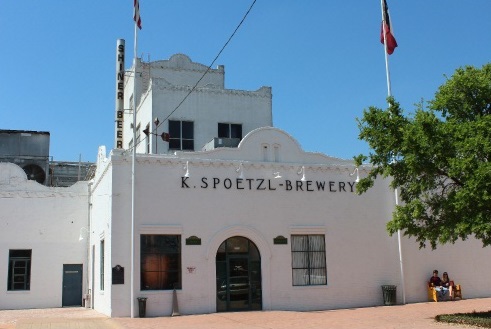
CONSISTENT QUALITY: SPOETZL BREWERY - SHINER, TEXAS

January 16, 2018 0 comments
Spoetzl is Texas' oldest independent brewery.
Living here in Ohio, it should be no surprise that I am partial to many of our great Midwestern brewers, like Great Lakes, Hoppin’ Frog, Thirsty Dog, Platform, Bell’s, Short’s and Rhinegeist. They all make great beers—even though it is inevitable that there will always be hits-and-misses from time to time. Nobody’s perfect.

That said, one American brewer I would like to celebrate for their high level of consistency and quality is the Spoetzl Brewery of Shiner, Texas. The oldest independent brewery in Texas, they are widely distributed, and generally easy to find in major markets throughout Ohio.

Originally named "The Shiner Brewing Association," (SBA) The Spoetzl Brewery was founded in 1909 by German and Czech immigrants who had settled around the central Texas town of Shiner. Unable to find the type or quality of beer they had enjoyed in their home countries, they began to brew their own. They remain one of the oldest independent breweries in the U.S

Shiner Brewing Association - 1909
Personally, I have sampled a wide range of their beers, though strangely enough, their standard Shiner Premium lager, I regularly enjoy their Bock beer, Bohemian Black Lager, Cream Ale, Oktoberfest and Holiday Cheer—the last two being seasonals. Their Strawberry Blonde is excellent as well, and their 2015 Birthday Beer, a chocolate stout, was one of my all-time favorites. Sadly, the birthday beers change every year, and I’ve not had it since.

The German and Czech heritage must run strong throughout Spoetzl’s brewing tradition and methods, because what I enjoy most about their beers are that they are always true to style—Bocks, Oktoberfests and Cream Ales always taste the way you expect them to…no extra hops, wrong hops, or other strange flavors distracting from a job well done. So many American craft brewers fall to the temptation to try to “improve” on classic styles, or somehow “reinterpret” them--and the result is usually a big fail.

The other thing I would commend them for is the ability to just “get it right” when it comes to taste and balance. It would be easy to get into trouble with more creative recipes like Shiner Prickly Pear, Ruby Redbird, or their Holiday Cheer, but the brewery always manages to get consistently great results, using just the right amount of ingredients that complement the underlying beer without overwhelming it. That’s not easy—evidence that their brew masters have a well-tuned palate. Maybe a little common sense, too.

Read more »

TRUTH IN BEER: TWO MONKS BREWING

July 17, 2017 0 comments
In a world where over-the-top, hop-heavy beers are nothing out of the ordinary, it’s truly refreshing (forgive the pun) to come across a brewer who is adamant about staying true to style when it comes to traditional beers. Such is the case with Two Monks Brewing. I’ve had a growler-full of their German dunkel and was thoroughly satisfied—it was smooth, flavorful and malty—just what I was expecting.

On my first visit, the two owners were still prepping the tap room and getting their occupancy permits; tables, chairs and other equipment were stacked against the walls as they provided a growler-filling service to customers who stopped in.

On my most recent visit, they were fully open and ready to go, and there was a nice crowd checking out the beers on a Saturday afternoon. The wife and I stopped to get our Summit BrewPath passports stamped, so we sat down and looked at the beer list, which is not long, but features a nice assortment of styles—you should be able to find something you like here.

My wife, who generally prefers lighter fare, went with the Czech Pilsner, which she thoroughly enjoyed. I selected a pint of the E.S.B. and was totally won over—an excellent English bitter that was correctly hopped, full of flavor and extremely drinkable. On my next visit, it will definitely be my “go-to” beer.

Overall, Two Monks is a nice, comfortable spot to enjoy well-made beer; being just a stone's throw from Hoppin' Frog and the Brick Oven Brewpub, it's part of a nice East-Side Brewery Triangle that you must check out. I would only encourage the one owner to engage the customers a little more; when I asked him about their brewing system and complimented him on their beer, he seemed a little disinterested, and generally unenthusiastic about holding a conversation. Maybe he was just tired, but I've yet to meet a brewer who didn't enjoy talking about beer and bragging up his brews to anyone who will listen!

As an acknowledged “traditionalist” when it comes to beer, I can still appreciate some creativity and experimentation when those efforts are clearly identified as such. What does irritate me is when craft brewers offer a traditional beer style and then muck it up, either through inexperience, ignorance or a desire to make it “fit” today’s hop-heavy flavor profiles. Thus, we get an Austrian Pils that should be labelled an “American Pils”…or a German Oktoberfest that should be labelled “American Octoberfest.” That would constitute “fair warning”.

A perfect example is a recent 6-pack of Lager Heads Brewing Oktoberfest I bought. While they may have used German hops (this is what it claims on the label) they used too much of them to make it taste like a true German Oktoberfest; in fact, if I poured it in a glass and served it to most of my friends, they probably would guess it was an IPA. This is precisely why I am wary of buying a lot of “traditional-style” American craft beers—a lot of them have a problem with “truth in labelling”—though it’s due to bad brewing choices and lack of knowledge, not dishonesty.

Thankfully, it’s nice to know that places like Two Monks can still get it right. Hats (or hoods) off to them!


Read more »

A SUMMER OF BEER – PART 3: BEERS OF BOYNE CITY

July 16, 2017 0 comments
The docks and dining deck at The Landing at Ironton. Great beer & Food.
After a night in beautiful Bellaire, I packed up my gear and headed to Boyne City, Michigan—to claim a camping spot about four miles west of town, right on the shores of Lake Charlevoix. Boyne City is at the east end, and Charlevoix is at the western end of this big lake, near where it empties into Lake Michigan. Both towns are wonderful and great places for boating.

A lot has changed since my last time in Boyne City; two new, large tap rooms have opened and a small brewery has also made the town it’s home.  That the population of the town is only about 4,000 people should tell you something about its popularity as a summer vacation destination, and maybe how much the folks up here like their beer! It was safe to say that my visit occurred on the busiest weekend of the year, and every one of these beer destinations was packed.


Another great campsite - outside my tent door on Lake Charlevoix.
Sadly, I was not able to try the offerings at Stiggs Brewing Company, located just a block off the main street; though they have an outdoor serving area and a decent-sized dining/tap room (they were packed) I couldn’t even find a seat at the bar. I was assured by a friend I saw later that their beer was quite good, but that second-hand endorsement is all I can offer. They are located in a great-looking old Victorian-era building, with an attractive bar to match; I guess I’ll have to try again another time.

I did manage a couple of stops at the excellent 7 Monks Taproom. It’s a big place, with a nice contemporary décor, a very long bar and an awesome outdoor patio with a view of the lake. Being a big fan of Founder’s Rubaeus, I jumped at the “nitro” version they offered, which was smooth and creamy enough to be a dessert. I followed that with a very small salad and to accompany that, a pint of a classic Weihenstephaner lager.

The only problem was it wasn’t a lager, it was a Weihenstephaner weiss beer, which was evident from both its taste and its color. I brought this to the attention of the server, who immediately checked with her colleagues to investigate. Turns out the brand has very similar-looking kegs for the lager and Weiss - and it was just simple a mix up. Not hard to imagine with all those beers to keep track of. The staff corrected this right away and quickly brought me a golden lager. I found the fact that they did not even charge me for it (due to the minor inconvenience, I suppose) extremely hospitable and generous.

The boats - why I came here in the first place.
Later that evening, I decided to have dinner at the Boyne City Tap Room, which is operated by the same folks who operate the Bridge Street Tap Room in Charlevoix, as well as Lake Charlevoix Brewing Co. The beer selection is vast, and clearly described on a large electronic board that stretches above the bar. It makes for a nice display. I can barely recall what beer I ordered, I believe it was a Griffin Claw El Rojo Red Ale—this is probably because I was distracted by the prospect of having a delicious perch dinner. I love perch. By the way, the beer was good, too.

Service at both these places was extremely friendly, helpful and eager to please, but that’s what you expect up here. It was the same experience the night before, when I passed through Ironton, a small village about halfway between Boyne City and Charlevoix. There’s a three-dollar ferry there that provides a short cut across the lake’s lower arm (saves about 20 miles) – but the real attraction is The Landing, a great place to eat with an excellent beer selection of its own. I tried a Landings Lager—a nice, clean lager made with some wheat, brewed especially for the restaurant by Short’s in Bellaire. Crisp and clean, with a light body, I found that a couple of those, along with my perch sandwich, made for another perfect night. What a BeerCation.
Read more »

A SUMMER OF BEER – PART 2: MICHIGAN BEER BONANZA

0 comments
My campsite in Bellaire, Michigan. Looking out of my tent door.
Every couple of years or so I try to get up to NW Michigan to see some of my favorite vacations spots; being kind of a last-minute exercise this year, and that no reasonable accommodations were available, I was forced to go camping. This also meant that I would be traveling alone, since my wife does not camp out in tents. This also gave me an opportunity to volunteer at the Boyne Thunder Poker Run, a great performance boating event that raises thousands of dollars for a camp that serves children with cancer.

My first destination was once again Bellaire Michigan, home of well-known Short’s Brewing. Since my last visit, some of their excellent beers have become available in Akron, so I didn’t feel the need to stock up on the return trip. That said, they had an excellent range on tap—I got a sampler which included a Kolsch 45, Power of Love, Totally Noche, and a Bellaire Brown. All were great; the Totally Noche, which I might suggest is like a dark Dos Equis or a Modello Negro—was very good. The Power of Love was a fruit beer that was very rich and tasty…nice for dessert, at the end of a meal. I settled in after this with a pint of the Noche, and ordered The Old Man Thunder beef shoulder sandwich, which was awesome.

On a Friday night in July, every seat in all three
indoor rooms and the patio were filled.
What is so interesting about this place—aside from its location in a vacation wonderland and the great beer they serve—is that they just keep growing. The original taproom has expanded to encompass the buildings on either side, and now also includes a comfortable covered patio that overlooks Bridge St. out front.

Short's has also have opened a production facility in Elk Rapids (on Lake Michigan, closer to Traverse City) and are expected to brew 55,000 barrels of beer this year. As a result, rumors seem to fly every year that they are about to sell out to a mega-brewer (this year, it was supposed to be Heineken) but it’s just not true. Whoever said that quality is what speaks the loudest has it right.
Read more »

A SUMMER OF BEER – PART 1: GRAPEFRUIT GLORY

July 14, 2017 0 comments
One of the first pleasures of the season, I am happy to relate, was the release of Hoppin’ Frog Brewery’s Grapefruit Turbo Shandy, which is the first product of theirs to be available in a 12 oz. can. As I have previously noted, I am a big fan of the regular (lemon) Turbo Shandy, and would drink it by the bucketload if I could afford it. I first tried the grapefruit version on the first day of its release, and although I have always preferred lemon, I must admit it was very delicious. Being highly familiar with grapefruit radlers—like those offered by the Austrian brewery, Stiegl—I found Fred Karm’s product superior in most every way.

Having been to the Stiegl brewery in Salzburg a year ago, I was happy to relate my judgement to Fred Karm, Hoppin’ Frog’s owner – who explained to me that it was one of the beers after which he had patterned his grapefruit masterpiece. We agreed that the primary reason for the superiority of his product is that it has a lot more “product” in it to begin with; as a result it has a significantly higher ABV than the Stiegl radler, which is only 2.5% compared to Hoppin’ Frog’s 7.0%.

The key to both Fred’s Shandies is the fact that he starts with a great ale—something that you’d be happy to drink “as-is”—and then adds a very rich, all-natural tasting fruit flavor. As Men’s Journal said in a review of America’s best Shandy & Radler beers – “Ohio's Hoppin' Frog makes no beer in half measures…”  Amen to that.

I took a 4-pack of the Graprefruit Turbo Shandy with me on a recent trip to Michigan and the folks I shared them with agreed that it was one of the “best summertime beers” ever. If you can get your hands on some – try it out.


Read more »

THE BEER IN ENGLAND IS NOT SERVED WARM

May 21, 2017 0 comments

In fact, most of the beer—or lager—as they would call it, is served perfectly cold. In this case, however, we’re talking about ale. And while English ale is not served warm, it would better be described as cool.

Of course, none of this came as a surprise to me during our recent trip to London. True English ales, hand-pumped out of a cask, are at their best when they are just slightly cool, so that more of their flavor has a chance to show through. This is especially true of the low-alcohol (around 4% abv) session ales, which are very light indeed. Served ice cold, they would clearly suffer as a result, and no doubt display all the character of a Coors Light.

Another note is that these ales, when pulled from a cask, are not nearly as carbonated as you might expect, especially if you enjoy English ales out of a bottle here at home. While not completely flat, the character is more like a bottle of beer you attempted to re-cap and put back in the fridge to drink the next day; there’s something there, but not like when you first opened it.


I will get into a little more detail in some follow-up posts regarding some specific ales and experiences—the pubs were mostly all delightful and the ales very good. We had a wonderful visit to the Windsor & Eaton Brewery after a visit to the castle and the staff were so entertaining and gracious as we sampled a variety of their tasty offerings. We did a lot of walking, which left me quite thirsty—as a result, when we reached a pub for a break, I often had a cold lager to start and followed up with ales afterwards.

As I expected, the long reach of American Craft Beer is making itself known in the UK; besides the ubiquitous BrewDog offerings, a few of the newer craft brewers were beginning to fall under the spell of “more hops, please” – and are also using some US variety hops. I can only hope this phenomenon is held in check, as I’d hate to muddy the traditional character of true English ales as a result of this bitter trend.

All in all, however - a great trip and a memorable experience.
Read more »

BEER NOTES FOR LATE SUMMER / EARLY FALL

September 21, 2016 0 comments
Summer or Fall, any time is a great time for beer.
It's been a little while since I posted so I thought I’d share some thoughts about a few of the brews I’ve enjoyed recently…

Hoppin’ Frog | Can Fred Karm even make a bad beer? I don’t think so. My only issue with Fred’s treats is that I just can’t drink a lot of them; the rich flavors are so intense, the alcohol is up there, and the cost—well, let’s just say they are not cheap—but they are worth the price. During the summer I often enjoy lighter stuff like his Turbo Shandy, and his light/dark berry brews. My wife, who is a habitual Miller Lite drinker, has definitely taken a shine to Outta Kilter and Karminator. I guess it’s never too late to change your beer habits. On our most recent visit, I tried one of his concoctions with Peanut Butter, Chocolate/Coffee and it was truly a new experience. Perfectly balanced, the PB came through clearly but did not overwhelm the overall taste profile. I look forward to trying it again. I also had a pint of the Oktoberfest, which was just being rolled out on the Saturday afternoon we visited. It was very solid, with a distinct character; at first I thought the hop bitterness was slightly higher than the style demanded, but after a few more sips I came around to the notion that it was pretty spot on.

I cornered Fred across the room where he was spinning some records and asked him for some suggestions for something I could store in our basement. I built a wine/beer storage cellar under the stairway—most of it is against the solid concrete outer wall, and the temperature stays fairly cool and steady throughout the season. We settled on a BORIS the Crusher Oatmeal Stout and a Silk Porter as a good place to start; Fred said they should do well for at least 9 months, maybe more. I doubt if they will make it past the holidays.

Sweetwater Hop Hash | I keep trying to give IPAs a fair shake, but I keep coming back to the realization that this is not the way beers were intended to taste. My best friend has this stuff from time-to-time; I thought their standard IPA wasn’t bad (the bitterness was light, and dissipated quickly off the tip of the tongue) and I do like their Blue, but the Hop Hash just solidified my overall preference not to drink beers with “hop” in the name. If you like this stuff, it’s not bad.

Gervasi Vinyards Farmhouse Ale | This popular winery is a great place to visit, but go for the wine, not the beer. I tried the Farmhouse Ale (bottled) but it turned out to be a pretty standard, hoppy IPA with no unique or notable characteristics. I was expecting something more interesting, and maybe a little “rougher around the edges” taste-wise. The ale is contract brewed for Gervasi by Thirsty Dog in Akron, who generally makes excellent beers. This one, maybe not so much. I switched to Peroni for my second beer.

Short’s Soft Parade | This is a high gravity brew that’s loaded with four different kinds of berries. While it does exhibit definite fruitiness, the malt also manages to balance out the tartness and makes for a very smooth sipper with just enough of a note of alcohol to remind you that it’s 9% ABV. That’s not a lot, but it means you can’t knock back two or three of these like you could a more typical “berry beer.” A substantial and memorable ale, I was glad to find that this top Michigan brewer was now available in Northeast Ohio. It’s brewed in Bellaire, just a little north of Traverse City—if you ever have a chance, be sure to visit. You may never come back.

Stiegl Lager | I had enjoyed this beer before going to Germany last May, but when we took a day trip to Salzburg, Austria, the Stiegl Brewery immediately made it on the “must see” list, and we enjoyed both their brewing museum tour and a fine dinner in their central courtyard/bier garten, which was crowded and fun. We sampled several of their beers, all of which were excellent, but I keep coming back to their standard lager, which has become one of my go-to German styles. I also enjoyed a 6-pack of their Grapefruit Radler this summer, which is great for sitting in the hot sun by the pool. Or in the pool.
Read more »

JUST SAY NO TO HOP MADNESS

May 20, 2016 0 comments
I’ve been grousing about the infestation of IPAs into American Beer Culture for some time now, as well as the fact that so many US craft brewers seem to have no clue in how to use them correctly. This attitude was strengthened even more after a recent trip to Germany, Switzerland, Alsace and Austria—where I was actually able to enjoy a number of different beers. While they varied quite a bit in their color, taste and strength, they all seemed to have one thing in common—they were largely formulated with varying combinations of beer’s four main ingredients: Water, Malt, Hops and Yeast.

I’ve often been of a mind that most US craft brewers should first dedicate themselves to learning how to make a solid, well-balanced beer with just these four ingredients before jumping into trendy stuff like pumpkin ales, sours, hop-bombs, chocolate or peanut-butter ales, or any other exotic style. There are a very few US craft brewers who can successfully pull this wizardry off (my local brewery, Hoppin’ Frog, comes to mind) but the truth is, this “everything and the kitchen sink” approach can offer plenty of style and little substance. It also offers some brewers with limited skill a convenient place to hide—behind a truckload of ingredients that can camouflage an otherwise less-than-stellar brew.

After being reminded of what simple, fresh and delicious beer tastes like, it’s easy to get tired of so-called “experts” telling me that I just don’t “get” the appeal of hops, or have “too weak a palate” to appreciate all these bold, bitter hop flavors. What a load of bullshit.

“You need to train your palate to appreciate these bitter hop flavors.” More bullshit. I suppose I could slip a dab of poop into my ham sandwich every once in a while and build up a tolerance. What does that prove other than I have developed a taste for shit?

First of all, I’ve been drinking beer long before some of these morons were even born; and most of it was good beer, not just the swill that the macro-brewers have been foisting upon us for the last 65 years. It’s true that for much of that period, imports were the best and most popular route to quality beer, at least until the late 1970’s and early 80’s. At that time, microbreweries were just beginning to appear and some of the larger brewers responded to the rise of imports by rolling out premium lines and bringing back some old brew house recipes that offered more flavor. And back then, most imports were really imported—not brewed in the US under contract. I believe I developed a fairly sophisticated palate over 40+ years of beer drinking, and while my taste buds and sniffer might not be as good as they used to be, I’d like to think I know what beer is supposed to taste like.

And I’ll be damned if you try to convince me that it’s supposed to taste like turpentine. Or Pine Sol.

Unfortunately, we have a whole generation of beer drinkers who have been marketing-brainwashed into thinking that this is exactly how good beer is supposed to taste; utterly convinced that these “bold” flavors have been missing from beer for generations. Of course the convincing has been done by some craft brewers who have built a reputation on hop-bombing the Western Hemisphere, and US hop-growers who only want to expand the market for their goods.

Now the usual response to my view is always – “Well, if you don’t like it, just don’t drink it.” And that sounds reasonable, until you realize that the tidal wave of IPAs has pushed a vast number of great alternatives off the store shelves. It’s getting harder to obtain beers I actually like. The local super-grocers offer dozens and dozens of IPAs in their cooler, both in 6-packs and in single bottle (“build your own 6-pack”) selections. But where before I could choose from among 10 or 15 English ales, or 18 different German beers, or a few dozen other imports, or some reliable, high-quality domestic beers, now I can only find a handful (cold) and maybe a few more (warm) on the store shelf.

Yes, there are a number of US Craft Beer offerings that are not IPAs, it is true; but the simple fact is—I don’t trust a lot of these brews to deliver on their promises. Many are not “true to style”. Many are still over-hopped, as brewers end up massaging their entire brewery lineup to cater to the “hop-forward” tastes of today. I’d be happy to give some a test shot, but I’m not going to buy a $12 6-pack to experiment—or give away later.

Other bozos will try and make some technical argument that bitterness is not always associated with hops. They add fragrance and aroma, too. Yes, I know that. And I will respond by simply stating that, while yes—a beer with extra hops does not always have a bitter taste, the other side of the coin is simply this: almost every beer that tastes too bitter is the result of being over-hopped.

Or the result of using the wrong hops. I really do think a lot of craft brewers are using hop varieties for taste that should only be used for aroma. For example, let me be clear in stating that while Pine-like flavors may lend a nice aroma, they have absolutely no place in beer taste.

Have you ever had smoked meat or fish? Have you ever wondered why expert barbeque masters only use hard woods like oak, hickory, mesquite or cherry on their fires? Did you notice that they never use pine wood? The reason is simple: pine leaves a sharp, resinous and wholly unpleasant taste in the mouth that ruins food. No grillmaster with a brain uses it. Why would you want to put that taste in your mouth via beer?

Again, we see generations of simple knowledge and proven experience go by the wayside, as idiots try to convince us that this is actually a good taste for beer to have. I’ll be honest and also admit that I have found few American hop varieties that I appreciate as much as traditional, noble hop European varieties. I’m sure there are some good ones, but it’s hard to judge when they are being used by the boxcar load.

Do I sound grouchy? Good. Then you’re catching on.

Just as lame arguments break on the rocks of four decades of beer drinking experience, the same can be said for trendy brewing approaches that go against the grain of several hundred years of beer brewing tradition. Just how bitter can a beer be, anyway—before it becomes palate-tiring, overwhelming and undrinkable?

Ever had a real, traditional English IPA? Bass dropped the “India” from its “Pale Ale” some years ago, but the taste hasn’t changed all that much over the years; this style was never intended to be as bitter as the stuff that has been pushed on us today in the US. Ever had an English “bitter”? Try a Fullers ESB. The bitterness is subtle; it embellishes the taste and balances the malt. It doesn’t overwhelm it. Same with a genuine Pilsner, which has slightly more bitterness than a typical Lager.

Hey, if you wanna drink this bitter swill—go ahead. Pay $12 a 6-pack or $8 a pint and support the Hipster Brewmaster & Organic Hop-Grower’s Retirement Fund. Of course IPAs are selling so well, but what do you expect when (aside from Macro-Brew) that’s mostly what you find on today's store shelf? It’s a self-fulfilling cycle—and a cycle that’s making it harder to obtain truly good, honest beers that have been enjoyed for decades.

For the craft brewers who are focusing on innovative, well-balanced stouts, tasty porters and drinkable ales that people can actually enjoy, my hat is off to you. Continue to innovate, and please resist the urge to obscure the tastes you’ve worked hard to develop by wrapping them in an overly-bitter hop shroud. Hopefully this hop madness will wear off, the pendulum will swing in the other direction and more brewers will come to their senses—not to mention beer drinkers who haven’t had enough experience to know any better.

Read more »

BUDWEISER BASHES CRAFT BEER: BECAUSE IT CAN

July 20, 2015 0 comments
Once the brewing giant AB InBev started throwing shade on the craft beer movement, the craft beer world was understandably up in arms over the insult. In response, those who make and enjoy craft beers continue to hammer the brewing behemoth—most notably for the company’s clear hypocrisy: making fun of craft beer and its adherents while heavily investing in small, independent craft breweries and trying to position some of those products as “craft.”

The fact is, I’ve often made fun of Budweiser myself. Even though it was one of the first beers I ever consumed, there is no sense of nostalgia associated with it—in fact, my memories are usually associated with post-party headaches (I used to blame the beechwood aging).

What has been a little surprising is the fact that after taking its initial shots, AB InBev has doubled down on its “let’s-chide-craft-beer-lovers” strategy, with new ads that celebrate Bud’s macro heritage.

With macro-brew sales slipping, this might seem like a pointless effort. But in reality, I don’t see what choice the mega-brewers have. As Chris Morris noted in a recent Fortune post, Bud is really preaching to the choir now—reinforcing the behaviors of long-time Bud drinkers who are slow to try anything new, and who generally see beer as a high-volume commodity, not something to be sipped and savored.

This might not increase sales, but it may help slow the erosion of its market.

After all, not everyone is an experienced or educated beer drinker. Some people simply like to drink LOTS of beer, and they cannot or will not pay craft beer prices. While there are lots of fine craft beer bars here in Akron, for example—I would also tell you that for every one of those, there are 8-10 other bars that slam out innumerable bottles of Bud and Miller Lite and Coors Light each and every night.

Sure, their customers may have briefly switched to Yuengling after it first became available in Ohio, but now the novelty has worn off and they are back to their old standby.

For these consumers (and boy, do they consume) it has always been about quantity over quality. To make the appeal clearer, you could plan out your weekly bar stops here in town and probably enjoy your “Dollar Domestics” night somewhere—at least five nights a week. That’s five or six 12 oz. bottles of beer for the price of a pint of something much better. That is, if you care about better.

The Bud ads are the equivalent of saying “Yeah—who’s the smart guy now? Six beers for the price of One? And ours will wash down that burger just as good.”

Most of us know the truth about quality. But this is the line of thinking that AB InBev is taking in speaking to its target audience. This is the same audience that ran the Sam Adams Rebel IPA off the tap at one of my local bars, after no one bought it and the barmaid characterized it as “undrinkable.” I know there was nothing wrong with it per se, only that it was a bitter, highly hopped IPA that was totally foreign to the palates of the “regular beer drinkers” who frequent that bar—and was quickly rejected.

It’s the same mind-set that takes umbrage at anyone trying to tell them what they are “supposed-to” like:
“Dammit, my dad drank Bud, and it was good enough for him. I’ve enjoyed it for years, and dammit, I’ll be dammed if any liberal, smart-alecky, thinks-he’s-better-than-me SOB is gonna tell me what I should drink or like. Same damn people that wanna take away my guns, tell me I gotta like gay people, or tell me where or when I can have a smoke. Hell with them. Give me another Bud.”

...then he goes out to his pickup with the Rebel Flag mudflaps and cranks up some Bro Country CD.

Okay – this characterization may be a little unfair. A similar attitude could be found with the college kid that never grew up; raised on dorm fridges filled with Bud, or PBR, or Busch—it may be all he ever feels the need to drink. The college degree did not include the finer points of beer brewing or consumption.

This is precisely why it may take years or decades before Big Beer cedes a really substantial portion of the market to craft beer. It took Prohibition, decades of TV advertising, force-of-habit, more advertising, and macro-beer economics to get to where we are today. The attitudes of most macro-beer consumers may never change, and AB InBev’s ad strategy seems to be designed to ensure that any change, if it does come, will come at the slowest rate possible.
Read more »

WHY AKRON NEEDS A BREWERY DISTRICT

June 28, 2015 0 comments
Not everyone knows it, but Akron is home to several high-quality breweries, with national and regional reputations; one (Thirsty Dog) has already indicated that they need further room to grow. Separately, none of these operations are huge. They all include production facilities and Tasting Rooms, where customers gather to sample their products and enjoy food and entertainment. Currently, most of them are spread out all around the city.

Every time I drive past the old Goodyear World Headquarters and factory, which is being redeveloped as the landmark East End project, I can't help but thing what a natural location this would be for a Brewery District. Gathered together, these breweries could create a strong destination attraction—a Brewery District—that would enhance the marketability and appeal of the East End location, allowing these brewers to use their “strength of numbers” to pull visitors from many areas.

A while back, I spoke to Fred Karm, owner of nationally-recognized Hoppin’ Frog Brewery, and his initial response was that he might be interested in such a concept, and could see some advantages. Of course, it would have to make economic sense, and some incentives might be needed to make it happen, but he seemed to find the idea appealing.

I have also spoken  to our current Mayor, and while he thinks it's a solid idea, the city has limited resources to get behind such a plan right now; what's more, we'll have a new Mayor come next January, and it's hard to get anything going during an Election Year. Nevertheless, it's an idea worth pursuing and one that I feel the developer, Stuart Lichter's Industrial Realty Group, should take a hard look at.

POINTS TO CONSIDER:

1) There are TONS of space available at East End for brewing operations and tasting rooms; tens of thousands of square feet. Plenty of parking, easy highway access (for out-of-town visitors). It’s a natural fit for these old buildings. Simply put, this location is high-visibility, and far superior to any place these breweries are currently located (outskirts of town, old, run-down neighborhood, etc.)

2) Existing and future Commercial/Office/Hotel development here – provides an additional customer base for these operations. (Goodyear-Hotel-major hospital-are already nearby)

3) Easily accessible from The University of Akron, too—by bus or bike. Some cities who have similar districts even establish a “brewery shuttle” – low/no cost trolley service to district from popular destinations.

4) A successful brewery district would also be an advantage for attracting out-of-region craft breweries to locate to Akron. The city could get in the game with other regional brewers who may want to expand their operations into the Midwest.

5) A district here offers a nice geographic balance to a popular area like Highland Square. While that area is certainly a natural for craft-beer loving Hipsters, there’s really no room for new breweries there. East End is about the same distance from Downtown, easily accessible by public transportation, and long term, provides an additional working/living option for that demographic.

Over the coming weeks and months, I'll be talking to more people about this--it seems like too good an idea to pass up.
Read more »

AND NOW FOR SOMETHING COMPLETELY DIFFERENT...

June 11, 2015 0 comments
It’s no secret that in the summertime, my preferences generally turn to lighter beers, shandies, and the like. Like a lot of people, the combination of increased thirst and hot weather make me less apt to turn to heavier dark ales, stouts and porters—or beers with higher alcohol content.

If I’m in the pool or at the Tiki Bar, I’ll probably go with a Corona, a Radler, or a simple Lager-and-Lemonade. Occasionally, a berry beer of some type (always liked Abita’s Purple Haze) may suffice – and I was intrigued with a recent trial of Shiner’s Prickly Pear.

Since our backyard pool area has a pretty solid Tiki vibe going on, I couldn’t resist the opportunity to sample Rivertown’s Hala Kahiki* Pineapple Beer. It’s actually one of the few craft beers that I’ve purchased in a can, aside from a six pack of Cellar Rats/Hopview Bernie Beer I enjoyed last Fall. The Hala Kahiki can looked fun, and I like pineapple…so it seemed like something worth a try.

And try it we did. What Hala Kahiki offers is a very, very light ale, with a sweet, fruity taste that goes down very easy. It is indeed very refreshing, and you could probably enjoy a lot of it on a hot summer’s day. That said, I would make two important observations: 1) it is a very light tasting ale – (read “light-beer” light) with no hop bitterness. That’s’ okay by me, but without the fruitiness, the ale would have little character on its own. 2) The pineapple flavor is there, but it is also very light. That may be a good thing, but it struck me that if I was blind testing this stuff and was asked exactly what fruit I was tasting, I might not be so sure.

In truth, the Kahiki’s flavor pales beside something like Hoppin’ Frog’s Turbo Shandy—which is a rich, golden ale with a clean, natural lemon flavor component. But then, the Turbo Shandy is at least 7 bucks for a 22oz bottle; you’d want to drink a lot of it, but you probably couldn’t afford it.

To sum it up, Rivertown’s Hala Kahiki is probably a good choice for any hot summer day. I would buy more of it (in fact, I just did today before I penned this post) since it’s easy to drink and offers a fun alternative to the typical summer shandy. Definitely worth sampling.


*According to the marketing blurb on the can, the name "Hala Kahiki"(hahlah-kah-hee-kee), originates from the Hawaiian words for pineapple.
Read more »

GOOFY GUINNESS: JUST STICK TO IRISH STYLES

June 3, 2015 0 comments
There are a lot of attempts by big foreign conglomerates to infiltrate the American Craft Beer Market. Some, like the recently reviewed Newcastle-Caledonian Pale Ales, result in a good product that offers something worthwhile; a solid British Pale Ale, brewed with English Hops – make sense, right?

Then, we have Guinness’ effort to approach this market: Let’s try to make an American Style lager that’s made with American Hops. This is the reasoning behind Guinness Blonde American Lager.

First of all, I would remind you that I’m not a fan of some high-alpha American hop varieties, or resinous, “Piney” hops like Simcoe. In many cases, it’s not even so much about the hops, but the fact that many brewers are not subtle in their use, tending to “load up” for “big” flavor and bitterness.

That said, we have a wealth of great American Craft Breweries who are working their tails off to bring us an incomparable range of unique ‘American Lagers.”  Does America really need Guinness to show us how to do this? My guess would be no.

My suggestion to Guinness would be to simply stick to what you do best. Great stout…Irish Ales…you get the picture. Harp’s a fine product—just try to convince people to buy it more often and you’ll be fine.
Read more »

WHY CAN'T MORE AMERICAN PALE ALES TASTE THIS GOOD??

May 22, 2015 0 comments
While most of my beer-buying is done at the local supermarket (our locals have a fairly excellent selection) I came across Newcastle's new variety pack at a nearby BP station, where the proprietor goes out of his way to offer a modest selection of craft and import beers:

"Just let me know what you like, I'll try and get it for you, boss."

The “Best of Britain” Variety 12-Pack contains equal amounts of three ales, including two definitive new styles from the brand--Newcastle British Pale Ale and Newcastle British Session IPA--along with Newcastle Brown Ale, which has always been one of my “predictable, go-to beers.”  The three distinctly Newcastle offerings are intended to “showcase the quality and depth of the Newcastle-Caledonian partnership and capitalize on the growing demand for variety among consumers.”

So much for marketing strategy. My main concern would be how the two new offerings would taste, and I wasn’t disappointed.

It’s probably important to preface this review with the fact that I am NOT a big IPA drinker; in fact, I almost never buy American IPA’s because (for the most part) I find them over-hopped and overly bitter for my palate. I’m also not a big fan of some varieties of American hops, which seem to get shoveled into those IPA’s relentlessly. I know a generation of young drinkers have been told that these IPA’s are delicious. Good for them. Open a Bottle and Carry On.

Back to the Newcastle Variety Pack.  The newcomers include a Newcastle British Pale Ale (5.8% ABV, 39 IBUs) and a Newcastle British Session IPA (5.1% ABV, 45 IBUs).

I tried the Session IPA first—realizing that even at just 5.1% ABV, it’s not technically a Session Ale at all (needs to be 4% or under. If you doubt me, ask @D_I_N_G on Twitter). It had a lovely copper hue, manageable bitterness, and an aromatic nose; a nice balance overall--and as I was outside opening the pool on the first weekend in May--notably refreshing.

The British Pale Ale was actually a little better. A little more of the same, with a rich gold color, a little more body and a citrusy-finish that I found particularly appealing. The higher alcohol level was not really that apparent, but what was apparent to me was that I could drink quite a bit of either one of these ales.

I was happy to have come across them, but was also wondering how long these Caledonian offerings would be available. I was also wondering to myself “why can’t more American pale ales taste this good?”

I’m sure there are some that do. If you’ve tried either of these Newcastle-Caledonian offerings and want to suggest a similar offering from one of our American craft breweries, please send me an email or a tweet with your suggestions.
Read more »

FALL & WINTER: THE BEERS ARE LOVELY, DARK AND DEEP...

November 12, 2014 0 comments
I feel I'd be pretty confident in saying that my seasonal beer drinking habits are probably in line with most serious beer drinkers. After a summer-full of lighter pilsners, lemon-and lime infused beers, wheat bears and other hot-weather styles, the shorter days and falling leaves lead me to darker, heavier, more full-flavored beers and ales.

Not having to worry about sitting for hours in the hot sun, brown ales, smokey porters and rich stouts get added to the shopping list--along with pumpkin ales, spicy holiday brews and even some hoppier ales, depending on the activity and the menu choices. This is also the time of year I make more trips to the grocery myself, where I can usually put together a "build your own" 6-pack of individual beers I'd like to try (keeps me from making $10 "mistakes") and also grab an occasional 22oz bottle of something special.

Most fall and winter weeknights, I'll enjoy a bottle or two while reading or watching TV; often checking the Twitter stream and surfing for beer-related news and commentary. I generally don't do in-depth beer reviews (there are enough of these already) but I will usually tweet a brief comment on what I'm tasting, some initial impressions and also--whether I might drink it again. 

So far, I've come across few beers I would describe as "bad." If I express any negative comments about a beer, it would be more likely that it's not particularly true to stye, or that I don't find it quite as "remarkable" as some other people do. In other cases, I mind not find  a beer's taste so pleasing, but I am also willing to chalk that up to personal preference--especially where high IBUs are concerned.

Weekends are a little different. I'm a big NFL and NCAA football fan, so that naturally pairs with beer-drinking. If I'm at the neighborhood sports bar--to which I can thankfully walk--I might settle in with a Yuengling (buck a bottle on Thursdays) and if I am home, a sessionable brown ale or dark lager. Regardless of how good the game might be, I wouldn't try to pound a lot of heavy, high ABV craft beers, and I don't think you would, either.

It's early in this "dark season." My favorite so far has clearly been Samuel Smith's Organic Chocolate Stout, which was incredibly rich and dessert-like. In fact, I know I will be serving a small glass of this this along with dessert at some holiday dinner party. I found Breckenridge Brewery's Vanilla Porter to be quite good as well; very smooth and subtle.

I have just started checking out Christmas ales as they are now coming out. Locally, Akron's own Thirsty Dog puts out an excellent 12 Dogs of Christmas Ale, though I found Great Lakes Brewing Company's Christmas Ale to be just slightly smoother in terms of the spice combination. What that really boils down to is that I might drink two of one and three of the other at Christmas dinner.

Happily, Hoppin' Frog Brewery is about a mile from my house, and it wouldn't be winter without a few of their Imperial Stouts, Porters and Scotch Ales. They've always been major belly-warmers; the perfect thing for a cold winter night in front of the fireplace, nodding off during an episode of Brew Dogs.

Though I am not a particular fan of most IPAs, I am intrigued by some of the darker, so-called "black" IPA's I've seen, and am determined to give them a try some time soon. In fact, if you have any good suggestions, let me know.

This time of year, the beers are lovely, dark and deep.  But there are so damn many to drink. 
Let's get to work.
Read more »

GETTING PAST THE POLITICS OF PILSNER

November 1, 2014 0 comments
I came across a ridiculous rant the other day on Deadspin, where Will Gordon (does he pronounce that "Gor-DON" - like in the Sprint commercials?) rails against Stella Artois being a disgrace to Belgian beer. Apparently he was disappointed in getting an older sample, which may have been a little skunky. It happens, although getting a truly bad bottle is a little less common than it was in the past.

I've had a decent Stella or two over the years - mostly on tap - and anyone who knows beer clearly knows that Belgium produces a wonderful array of beers that are far superior, by anyone's standard. Of course, that's pretty much the case in any country, including the USA; there are plenty of smaller breweries delivering a better product than the larger, more popular brands. So much for stating the obvious.

What I really found irritating in the article is that he seems to be basing his opinion primarily on the simple fact that since the brand is owned by a large beer holding company like InBev, it must be horrible. Most of the post is spent trashing big beer in general - about three paragraphs. Eventually, he gets around to actually, "reviewing" the beer, which he usefully describes as "skunked and awful."   Nuff said; I'm all for tight editing.

He ends the article with this out-of-breath zinger:

Belgium's continued production of Stella Artois is an affront to human decency. All the waffles and Westvleteren in the world can not make up for this crime against beer.

Well, then...
"A crime against beer?"  Really? All in all, Godon's take is really sophomoric, and typical of so many rants I hear from hipsters about how terrible any product must be if it's from a "large" brewery. Or more accurately, ANY brewery - small or large - that happens to be owned by a big, international holding company.

This seems to be the prevailing attitude: Is your brewery producing beer by the same methods it was before you were purchased by that big international conglomerate? Doesn't matter - the minute you signed on the dotted line, your beer became swill. At the very least, it's not "worthy" of our consumption, and the hard-working people who have been making your beer are traitors to the craft beer movement.

Now, I am sure there are examples where the perceived quality, or the formulation, may have been compromised for "the product formerly known as craft." It can happen. One supportive commenter on the article I am mentioning pointed out that Red Hook is now a shadow of its former self since being taken over by Craft Brew Alliance. I have to wonder if that's view is based on his "beer politics" or a blind tasting.

It's similar to a guy I know who, upon occasion,  used to drive over to PA to bring back a couple cases of Yuengling, because "it's really good beer" and you couldn't get it in Ohio at the time. Today, success allows those folks to also claim the title of "largest American-owned brewery" in addition to being the oldest.  The result? Yuengling's popularity has now earned the disdain of some craft beer sophisticates. That seems a little unfair.

Before I go any further, let's get this straight: I support and love Craft Beer. The movement here in the US and in other countries is providing beer lovers with access to an incredible array of great beers and ales, better overall beer knowledge and lots of good jobs. I've been drinking beer for forty years, and I remember when -- if you wanted something better than a Bud, your only other choices were a Molson, a Heineken, a Bass Pale Ale, or a St. Pauli Girl.

Hell yes, things are way better now.

We're getting more variety, improved quality, new flavors and more freshness. The interest in beer, the non-stop calendar of beer-related events, the increased appreciation of beer as a food product, and even the realization of beer as a cultural phenomenon makes this an exciting time.

But let's not get lost in the reality of what's in the glass. I'm not buying into this need to automatically "rip" some beer because it's not made by a handful of bearded guys in an old warehouse, or cooked up in a farmhouse and sold in 22oz. bottles. Even the so-called "craft wannabees" are way better than the swill we had available 35 years ago.

In the end, the question for me is not so much - "is it really a craft beer?" - as is it is" "Is it really a good beer?"  One seems to be a question of production method, philosophy and marketing. The latter is a simple result, and not exclusively dependent on the former.

I don't drink beer as a political statement. I drink it because I enjoy it, and it [usually] tastes good. Just because a beer brand may be owned by a big company, doesn't automatically disqualify it from my appreciation. For the same reason - any so-called "Craft Beer" doesn't get a free pass just because it was produced in a small quantity, by seemingly dedicated beer-lovers. They can make nasty beer, too - and I've had a few.

Having made beer myself, I can appreciate the time and effort that goes into it, and the skill required to brew up a drinkable product - several dozen or several thousand barrels at a time. It's all I can do to knock out five tasty gallons.

Producing a great beer can be a serious matter. But it is beer, after all. No need to take it's enjoyment quite so seriously.


Read more »

WALKING WITH THE DINOSAURS

September 15, 2014 0 comments
Seems almost every-other tweet I see over the past day or so has to do with Heineken's rejection of an SABMiller takover bid. Now, beer industry watchers everywhere are breathlessly predicting a new round of mergers between the world's mega-brewers.

For most craft beer drinkers, the issue is moot. They don't drink that stuff anyway. Most watch with a degree of satisfaction as the market share of the large industrial brewers continues to slip while the number of microbrewers and craft breweries continue to expand almost daily. It's like watching the slow end of the Age of Dinosaurs--remembering, of course, that it took a long, long time for them to finally become extinct.

Some observers are already predicting a possible purchase of SABMiller by Anheuser-Busch InBev, which--for nostalgia's sake alone--would be slightly disappointing. For someone older like me, it's just hard to accept that the Gog and Magog of the brewing universe would ever be joined together. The huge international brewing conglomerates have long been blamed for everything that was wrong in the beer world. But they were not always so huge.

I can remember when brands like Budweiser, Miller, Coors, Strohs, Pabst, Schlitz, Carling, Hamms and others were all separate entities. Yes, they all brewed a similar product, which was generally undistinguished in overall character--but an experienced palate could still tell the difference between them.

When there wasn't a huge variety of beer available, the concept of a "Champagne of Bottled Beers" seemed to have some merit. I may not have been clear about the advantages of being "fire-brewed"...but a cold bottle of Stroh's was not such a bad thing--especially if it belonged to your dad, and you thought he might not miss one if you snuck it out of the fridge. One of the most enjoyable beers I can remember was a fresh, tasty Black Label I had at the Frankenmuth Carling Brewery tasting room back in 1983.

That brewery is no longer there. It's gone, now. Just like a lot of other things.

But that's not a lament. In may ways, things are better for American beer drinkers now than they've ever been--at least in my lifetime.

I still drink a lot of "major" imports along with my craft beers, and I really don't care who owns them, since they generally taste just as good as they did 30 years ago. I do refuse to drink almost any domestic light beer, with the exception of Bud Light Lime, which is a mainstay in my pool on a hot summer afternoon, along with Corona and Modelo. I don't automatically "write off" any product that comes from a large brewery, just because it comes from a large brewery. I drink for satisfaction, not to make a political statement.

I sit here now writing this and watching Monday Night Football with a Miller Fortune next to me. It's not a superb beer, but it's decent, not over-hopped, and reasonably priced. I'll save my better craft beers and local offerings for the weekend, and time with friends.

As for the dinosaurs, well--I guess it takes one to know one.


Read more »

FAIR WARNING....PLEASE

September 14, 2014 0 comments
I would never say hops are a bad thing. They're an essential part of beer--and well used, are critical to imparting great aroma and flavor to our beers and ales.

But the current tendency in American Craft Brewing seems to be adding hops to the point where they often dominate the taste profile...and where their over-use almost becomes an end in itself. As a result we are left with double and triple-IPAs, "Hoppinators," "Hoppus Maximus," "Hop Killers," etc. etc.

While some of these beers are fine for sampling, their bitterness and "hit you on the head with a hammer" qualities make them impractical for any type of session drinking, and I've found many to be almost undrinkable. (I've had some beers that were loaded with so much Simcoe that I thought someone had poured a cap full of PineSol into my beer.) At best, I find myself saying - "Well, that's good, but I couldn't drink more than one."

For those who like these kinds of beers, fine. But my worry is that this hop craze is having a detrimental effect on Craft Beer overall--to the point where the high-hop focus is insinuating itself into beer styles that are not traditionally hoppy. Even experienced craft brewers seem to be falling into this trap. I've always loved GLBC beers, but over the years, I find their offerings all morphing into a very similar hop taste profile. Over the past year, I've had an Oktoberfest and a Pilsner from them that were far too hoppy for the claimed style--and many other quality craft brewers seem to be heading in the same direction.

It's easy to think that the hop-craze we've seen here in the US might have filtered into our general approach to brewing. A lot of Americans under 35 have become accustomed to highly-hopped beers...perhaps to the point where brewers feel a certain amount of bitterness is required if the beer is going to "taste right" to those folks. If so, that would be a shame--since those of us that don't need a ton of hops in our beer to know we are drinking a good one will be forced to suffer.

Of course, I'm not the first to complain, and I won't be the last. It may get worse before it gets better. I've heard about an upcoming hop shortage (we can only hope) - but then I am also reading so many articles about how many people are growing hops in the US now (and why not, you can grow them in your backyard) that it seems inevitable that more and more are going to end up dumped into our beer by the bushel-full. Why? Just because we have them.

I'm beginning to think US brewers should do us a favor and label some of these beers "American Oktoberfest,"  "American Helles," etc. -- so we get fair warning that we shouldn't expect these beers to adhere to the traditional beer styles at all; that they have been "hop-boosted" to please what they have come to believe is the common American preference.

That way, they would not disappoint experienced beer drinkers who are expecting something more refined, subtle and well...traditional.


Read more »

THERE'S FRESH. AND THEN THERE'S REALLY FRESH.

August 15, 2014 0 comments
I've sampled a lot of beers this summer, but one that really stood out is the Indigo Imp Blonde Bombshell that I picked up at the high-end market in town. It was smooth, very rich and clearly had the nose of a bottle-conditioned beer. But what struck me the most was the bright, yeasty- flavor that brought back some great memories.

Over 25 years ago, my wife and and I couldn't really afford much of a honeymoon, so we spent a weekend in Frankenmuth, Michigan - a great little town (cough-tourist trap) that offers some great places to visit and some great food.

At the time, they had a Carling Black Label brewery in town, we went on a tour and the fresh Black Label in the hospitality room was actually pretty good. Also in town was the little Frankenmuth Brewery, which offered two kinds of beer--regular pale lager and a dark beer.

I purchased a six-pack of the lager and took it back to Ohio with us. It was good, but what I remember most was the incredible, fresh, yeasty flavor--with which I was not familiar at all, and not found in any other beer I'd had at the time (this was 1983, after all). At the time, I later discovered that the strange, fruity taste I was experiencing was due to the still-active yeasts in the brew; I wasn't sure it was something I preferred, but it was a memorable taste, nonetheless.

That original Frankenmuth brewery is no more - it's been replaced by a new version, with much more sophisticated and higher-quality beers. But the yeasty brightness of this Indigo Imp bombshell brought it readily to mind. I still have my wax-sealed "imp" bottle in the fridge - I have a feeling  it will possibly improve with a month or more of aging - if I can resist drinking it a little longer.


Read more »

SUMMER BEER ROUNDUP

0 comments
Every summer,  my normal beer-drinking habits morph into something slightly more plebian - I generally gravitate towards lighter beers and ales, usually mixed with lemonade during hot afternoons lounging around the pool. That preference is supported by long experience; for some reason, Mexican-style beers like Corona, Modelo and even bottles of  Land Shark can be enjoyed in quantity on the hottest of days without giving me a headache.

So it should be no surprise that Shandies of various types are regularly sampled, along with some other lighter types that I wanted to try. Here's a brief look at some of what I've enjoyed this summer...

Sam Adams Porch Rocker
Wasn't expecting a lot, but I actually enjoyed this--and have purchased it on more than one occasion. Nice, solid brew with a light, lemon twang that was reasonably natural-tasting. Refreshing and dependable.

Leinenkugel Summer Shandy
I used to really like this brand. But that was before they began selling it at a premium price. Their original red ale was solid, but this shandy was a big disappointment. Forgettable beer with a very artificial lemon taste - more akin to a lemon cough drop than real fruit.

Hopping Frog Turbo Shandy
Easily the best beer I had all summer.  Delicious ale, rich - but not too hoppy, with a rich, sweet, lemon zest that called upon me to drink more and more. Unfortunately, at about $7 for a 22oz bottle, that is unlikely. But this stuff is delicious - and that's not just hometown bias.

Great Lakes Brewing- The Wright Pils
This was a real letdown. I generally love GL beers, but I've found that more of their beers are starting to have the same "hop profile" - making it harder to discern what style of beer I am drinking. Pilsners should be light, golden, clean and drinkable -- but this was way too hoppy [and bitter] to fit the style. It was the same situation with the GL Oktoberfest I tried last fall...way over-hopped for the beer style.

Seems their brewmaster has fallen into the American craft-beer trap of throwing too much hop into the brew kettle. My feeling is that if you can't stay true to the real "style" of the beer--that's fine--but then you should just call it something else.

Stiegl Radler
No, I did not try the grapefruit radler that seems to be the hot thing now. The local ultra-high end market in town had a couple cases of the stuff in the beer aisle, but I prefer the original lemon, which really does have more of the "lemon soda pop" mouth feel than more typical shandies, and is absolutely delicious. I usually take a few bottles of this to my friend's annual summer-ending luau and it's always a big hit. Awesome stuff.


Read more »

ShareThis Stuff

Bookmark and Share

Translate This Site

Latest from Twitter

Topics

Beer Culture (22) Beer Inc. (11) Beer Ratings (7) Books (4) Breweries (14) Commentary (33) Craft Beer (31) Education (11) Equipment (1) Events (2) Germany (3) History (10) Homebrewing (6) Imports (4) Local (14) Marketing (6) News (13) Places (10) Pubs (2) Quality (12) Reviews (11) Sarcasm (3) Seasonal (9) Session Beers (6) Travel (7) UK (6)

Search This Blog

Powered by Blogger.

CRAFT BEER NEWS

HOMEBREWER'S ASSOCIATION NEWS

BREWER'S ASSOCIATION NEWS

DAILY NEWS

UK BREWING NEWS

Other Sites of Interest