Content

Showing posts with label History. Show all posts

IBN HISTORY OF BREWING SERIES REVEALS SECRETS OF THE MASH TUN

February 1, 2018 0 comments

It's only been a few weeks since we released our first title of 2018, Danish Beer and Continental Beer Gardens. Now IBN has followed up with another pocket classic, Secrets of the Mash Tun: or The Real Causes of Failure in Producing Good Ale or Beer.  First published in 1847, this guide was written for small brewers and home brewers during a period when science was becoming more appreciated for its contributions to the brewer's art. This is not a reproduction, but an all-new edition, freshly re-designed and typeset, including Publisher's comments and a helpful record-keeping section at the back for home brewers.

With simple explanations, useful advice and a common-sense approach, it offers today's small-scale brewers a handy manual of practice and a fascinating insight into our beer-brewing past. It's just the kind of handy reference you would like to add to your homebrewing bookshelf, or sit back and enjoy with a cold ale, next to a mid-winter fire.

Available via Amazon: HERE
Via Amazon UK: HERE
Read more »

THE ECONOMIC IMPACT OF THE CRAFT BEER REVOLUTION

January 26, 2018 0 comments


Having lived through America’s Craft Beer Revolution—and being a beer drinker before it even began—I can appreciate a thoughtful and objective look back on its impact and significance. That’s exactly what this article, which appeared in both The Atlantic and Citylab, provides. Derek Thompson does a nice job in briefly describing the beer landscape that used to exist in America and how crafty beer appeared at just the right moment to take advantage of changing tastes at first, and then economic circumstances later.

While a lot of beer drinkers and beer writers focus on cultural issues, style developments and personalities, Thompson does a nice job describing the Craft Beer Revolution’s economic impact, and how the expansion of local breweries and jobs has come during a period of industrial and retail consolidation. It seems like an anomaly, but fits in perfectly during an era when the Great Recession sparked innovation, forced many people to become new entrepreneurs and boosted interest in local production.

Changing tastes play their role too—and the article explains how the traditional three-tier system shaped the brewing industry for so many decades. All in all, it’s a solid read and a concise, accurate place to start if you want to get a helpful grip on U.S. beer history.

Read more »

NEW ADDITION TO IBN HISTORY OF BREWING BOOK SERIES

January 20, 2018 0 comments


We’ve just added a new title to the IBN History of Brewing Series—Danish Beer and Continental Beer Gardens, is an all-new, expanded edition of a classic early-20th century book by Dr. Max Henius. Originally developed as an extended lecture for American brewers, this new edition highlights many of the “best practices” used by Danish brewers and surveys continental attitudes regarding beer drinking culture. It includes a new introduction, an all-new interior layout and additional matter at the back of the book, including subject updates and additional information that adds further context. Presented in a slightly larger format (7” x 10”) than our first two titles due to the many illustrations, most of which were photo-edited to maximize their reprint quality.

“As usual, we refuse to just scan-and-copy an old book and charge an exorbitant price for a reprint,” explained M.A. Schweitzer, who edited this edition. “We essentially created an all-new book, improving the images, adding extra material and providing some relevant context for modern readers.”

Available on Amazon
List Price: $8.59
7" x 10" (17.78 x 25.4 cm)
58 pages
ISBN-13: 978-1983657023
ISBN-10: 1983657026
Read more »

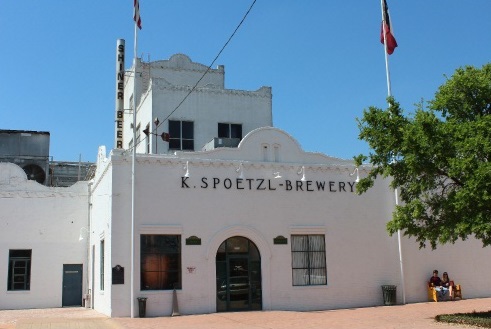
CONSISTENT QUALITY: SPOETZL BREWERY - SHINER, TEXAS

January 16, 2018 0 comments
Spoetzl is Texas' oldest independent brewery.
Living here in Ohio, it should be no surprise that I am partial to many of our great Midwestern brewers, like Great Lakes, Hoppin’ Frog, Thirsty Dog, Platform, Bell’s, Short’s and Rhinegeist. They all make great beers—even though it is inevitable that there will always be hits-and-misses from time to time. Nobody’s perfect.

That said, one American brewer I would like to celebrate for their high level of consistency and quality is the Spoetzl Brewery of Shiner, Texas. The oldest independent brewery in Texas, they are widely distributed, and generally easy to find in major markets throughout Ohio.

Originally named "The Shiner Brewing Association," (SBA) The Spoetzl Brewery was founded in 1909 by German and Czech immigrants who had settled around the central Texas town of Shiner. Unable to find the type or quality of beer they had enjoyed in their home countries, they began to brew their own. They remain one of the oldest independent breweries in the U.S

Shiner Brewing Association - 1909
Personally, I have sampled a wide range of their beers, though strangely enough, their standard Shiner Premium lager, I regularly enjoy their Bock beer, Bohemian Black Lager, Cream Ale, Oktoberfest and Holiday Cheer—the last two being seasonals. Their Strawberry Blonde is excellent as well, and their 2015 Birthday Beer, a chocolate stout, was one of my all-time favorites. Sadly, the birthday beers change every year, and I’ve not had it since.

The German and Czech heritage must run strong throughout Spoetzl’s brewing tradition and methods, because what I enjoy most about their beers are that they are always true to style—Bocks, Oktoberfests and Cream Ales always taste the way you expect them to…no extra hops, wrong hops, or other strange flavors distracting from a job well done. So many American craft brewers fall to the temptation to try to “improve” on classic styles, or somehow “reinterpret” them--and the result is usually a big fail.

The other thing I would commend them for is the ability to just “get it right” when it comes to taste and balance. It would be easy to get into trouble with more creative recipes like Shiner Prickly Pear, Ruby Redbird, or their Holiday Cheer, but the brewery always manages to get consistently great results, using just the right amount of ingredients that complement the underlying beer without overwhelming it. That’s not easy—evidence that their brew masters have a well-tuned palate. Maybe a little common sense, too.

Read more »

WALKING WITH THE DINOSAURS

September 15, 2014 0 comments
Seems almost every-other tweet I see over the past day or so has to do with Heineken's rejection of an SABMiller takover bid. Now, beer industry watchers everywhere are breathlessly predicting a new round of mergers between the world's mega-brewers.

For most craft beer drinkers, the issue is moot. They don't drink that stuff anyway. Most watch with a degree of satisfaction as the market share of the large industrial brewers continues to slip while the number of microbrewers and craft breweries continue to expand almost daily. It's like watching the slow end of the Age of Dinosaurs--remembering, of course, that it took a long, long time for them to finally become extinct.

Some observers are already predicting a possible purchase of SABMiller by Anheuser-Busch InBev, which--for nostalgia's sake alone--would be slightly disappointing. For someone older like me, it's just hard to accept that the Gog and Magog of the brewing universe would ever be joined together. The huge international brewing conglomerates have long been blamed for everything that was wrong in the beer world. But they were not always so huge.

I can remember when brands like Budweiser, Miller, Coors, Strohs, Pabst, Schlitz, Carling, Hamms and others were all separate entities. Yes, they all brewed a similar product, which was generally undistinguished in overall character--but an experienced palate could still tell the difference between them.

When there wasn't a huge variety of beer available, the concept of a "Champagne of Bottled Beers" seemed to have some merit. I may not have been clear about the advantages of being "fire-brewed"...but a cold bottle of Stroh's was not such a bad thing--especially if it belonged to your dad, and you thought he might not miss one if you snuck it out of the fridge. One of the most enjoyable beers I can remember was a fresh, tasty Black Label I had at the Frankenmuth Carling Brewery tasting room back in 1983.

That brewery is no longer there. It's gone, now. Just like a lot of other things.

But that's not a lament. In may ways, things are better for American beer drinkers now than they've ever been--at least in my lifetime.

I still drink a lot of "major" imports along with my craft beers, and I really don't care who owns them, since they generally taste just as good as they did 30 years ago. I do refuse to drink almost any domestic light beer, with the exception of Bud Light Lime, which is a mainstay in my pool on a hot summer afternoon, along with Corona and Modelo. I don't automatically "write off" any product that comes from a large brewery, just because it comes from a large brewery. I drink for satisfaction, not to make a political statement.

I sit here now writing this and watching Monday Night Football with a Miller Fortune next to me. It's not a superb beer, but it's decent, not over-hopped, and reasonably priced. I'll save my better craft beers and local offerings for the weekend, and time with friends.

As for the dinosaurs, well--I guess it takes one to know one.


Read more »

FAIR WARNING....PLEASE

September 14, 2014 0 comments
I would never say hops are a bad thing. They're an essential part of beer--and well used, are critical to imparting great aroma and flavor to our beers and ales.

But the current tendency in American Craft Brewing seems to be adding hops to the point where they often dominate the taste profile...and where their over-use almost becomes an end in itself. As a result we are left with double and triple-IPAs, "Hoppinators," "Hoppus Maximus," "Hop Killers," etc. etc.

While some of these beers are fine for sampling, their bitterness and "hit you on the head with a hammer" qualities make them impractical for any type of session drinking, and I've found many to be almost undrinkable. (I've had some beers that were loaded with so much Simcoe that I thought someone had poured a cap full of PineSol into my beer.) At best, I find myself saying - "Well, that's good, but I couldn't drink more than one."

For those who like these kinds of beers, fine. But my worry is that this hop craze is having a detrimental effect on Craft Beer overall--to the point where the high-hop focus is insinuating itself into beer styles that are not traditionally hoppy. Even experienced craft brewers seem to be falling into this trap. I've always loved GLBC beers, but over the years, I find their offerings all morphing into a very similar hop taste profile. Over the past year, I've had an Oktoberfest and a Pilsner from them that were far too hoppy for the claimed style--and many other quality craft brewers seem to be heading in the same direction.

It's easy to think that the hop-craze we've seen here in the US might have filtered into our general approach to brewing. A lot of Americans under 35 have become accustomed to highly-hopped beers...perhaps to the point where brewers feel a certain amount of bitterness is required if the beer is going to "taste right" to those folks. If so, that would be a shame--since those of us that don't need a ton of hops in our beer to know we are drinking a good one will be forced to suffer.

Of course, I'm not the first to complain, and I won't be the last. It may get worse before it gets better. I've heard about an upcoming hop shortage (we can only hope) - but then I am also reading so many articles about how many people are growing hops in the US now (and why not, you can grow them in your backyard) that it seems inevitable that more and more are going to end up dumped into our beer by the bushel-full. Why? Just because we have them.

I'm beginning to think US brewers should do us a favor and label some of these beers "American Oktoberfest,"  "American Helles," etc. -- so we get fair warning that we shouldn't expect these beers to adhere to the traditional beer styles at all; that they have been "hop-boosted" to please what they have come to believe is the common American preference.

That way, they would not disappoint experienced beer drinkers who are expecting something more refined, subtle and well...traditional.


Read more »

THERE'S FRESH. AND THEN THERE'S REALLY FRESH.

August 15, 2014 0 comments
I've sampled a lot of beers this summer, but one that really stood out is the Indigo Imp Blonde Bombshell that I picked up at the high-end market in town. It was smooth, very rich and clearly had the nose of a bottle-conditioned beer. But what struck me the most was the bright, yeasty- flavor that brought back some great memories.

Over 25 years ago, my wife and and I couldn't really afford much of a honeymoon, so we spent a weekend in Frankenmuth, Michigan - a great little town (cough-tourist trap) that offers some great places to visit and some great food.

At the time, they had a Carling Black Label brewery in town, we went on a tour and the fresh Black Label in the hospitality room was actually pretty good. Also in town was the little Frankenmuth Brewery, which offered two kinds of beer--regular pale lager and a dark beer.

I purchased a six-pack of the lager and took it back to Ohio with us. It was good, but what I remember most was the incredible, fresh, yeasty flavor--with which I was not familiar at all, and not found in any other beer I'd had at the time (this was 1983, after all). At the time, I later discovered that the strange, fruity taste I was experiencing was due to the still-active yeasts in the brew; I wasn't sure it was something I preferred, but it was a memorable taste, nonetheless.

That original Frankenmuth brewery is no more - it's been replaced by a new version, with much more sophisticated and higher-quality beers. But the yeasty brightness of this Indigo Imp bombshell brought it readily to mind. I still have my wax-sealed "imp" bottle in the fridge - I have a feeling  it will possibly improve with a month or more of aging - if I can resist drinking it a little longer.


Read more »

REMEMBERING YOUR WORST AND BEST BEERS EVER

October 12, 2012 0 comments

            When you’re writing about beer, you feel it’s only fair to let people know a little bit about your background and tastes, so they can put your commentary into a context that makes sense. With that in mind, I thought I might share some thoughts about the worst and the best beers I have enjoyed up to this point—which includes about forty years of beer drinking.

            It’s important to keep in mind two things here. One, it’s quite possible that I have yet to come across the absolute “worst” or “best” beer, since we never can really know what the future holds. Two, when categorizing these beers (especially when you’re talking best beer) other factors come into play, like the impact of the moment, the color of one’s memory, and the context of drinking. Think of it this way: that ice cold Coors Banquet beer you had when after you just finished mowing the lawn in 100+ degree, record-breaking heat 15 years ago might be remembered quite fondly. Likewise, the first really good beer you had of a certain type might be remembered as the best, even though you may have had better examples since then.

THE WORST

            This one’s easy. I was working at an ad agency near Cleveland, and a new Indian restaurant was just opening up in the ground floor space in our building. To help introduce themselves and build word-of-mouth business, the new proprietors invited most of the other tenants in our office tower downstairs one late afternoon for a buffet, where we were encouraged to sample a variety of their dishes. The food, as we all had hoped, was really excellent, and after sitting at a table for a few minutes, one of our hosts graciously came out to offer us something to drink.

“Well, a beer would be nice,” I replied. “If you happen to have any.”

            My host's eyes lit up. “Oh yes, of course,” he said. “I have just the thing; I can bring you some beer from India!”

            He returned a moment later, cracking open a tall, 16oz. brown bottle with an ornate gold label and majestically pouring into a tall pilsner glass. I looked at the label, which said World Famous Bombay Beer. I thanked him as he stepped away to help another table.

            Now, before I disparage any hard-working brewer on the subcontinent, please understand that I seriously doubt this beer is a relation to any currently-available beer of this name—blonde or otherwise. This was, after all, over 15 years ago.

            As I raised the glass to my lips and took some long gulps (the food was a little spicy, after all) the girls who worked in the media department observed my reaction carefully, since they were thirsty too, and were wondering if they should follow my lead. As I swallowed, I could see the looks on their faces, no doubt mirroring the confusion, bewilderment and revulsion on my own.
           
            “What…thefuckisthisshit???” The words were hard to pronounce, since my mouth was probably contorted into the shape of a dog’s anus. Which was kinda what this beer tasted like.
           
            “What is it?” asked the girls. “Whatsa matter? Isn’t it any good?”

            I set the pilsner glass down in front of me, took a long look at it, and then inspected the bottle label again, just to make sure it did, in fact, say “beer.” Crazy as it seems, I actually found myself tasting it again, as if to confirm my disbelief.
           
            “This,” I announced slowly, “is-absolutely-the-worst-tasting-beer-I-have-ever-had-in-my life.”
           
            “That bad, huh?” someone asked.

            “Yes,” I confirmed. “You know the Ganges River, where all those people go to bathe before they go into the Hindu temple? I think they stand downstream and collect the water for this beer there.”

            In fact, after some consideration, I surmised that it wasn’t that they collected water from the Ganges to make the beer, but that the dirty water itself was actually in my bottle. It didn’t even tasted like beer—truly an indescribable mouthful of—something. Worst part was, it was a 16oz. bottle to boot. I left the other 14oz. on someone else's table.

THE BEST BEER I EVER HAD

            If you recall what I said at the top of this article about remembering your best beer, then it certainly applies to this example. By the early 1980’s I had enjoyed plenty of decent beers and some very good imports, though there was not a lot available at the time. But after Merchant DuVin started importing more obscure, high-quality beers from overseas, better stuff could be obtained. Trying to save money for our first home, I found a second job working the drive-thru section at the best beer shop in town, called The Outpost.

            I can still remember coming home one night after work with a few bottles of Samuel Smith’s Pale Ale, from the Old Tadcaster Brewery. This was back when it was still in a clear bottle, and I can recall pouring this lovely brown ale into a small juice glass, gazing in wonder at it’s beautiful creamy head and savoring the rich, fruity esters that tickled my nose. The taste? It was absolutely delicious…like drinking a bite of grandma’s apple pie, but not as sweet, of course.

            What a revelation that was. Who knew that beer could be that good—or that a single bottle of “the good stuff” could give so much more satisfaction than any 12-pack of ordinary American pilsner could ever muster? Like most people who have tasted today's well-made craft beers and suddenly had their eyes opened, that first Samuel Smith’s was my own real eye-opener.

            Since then, I’m sure I’ve had beers that were probably every bit as good, maybe even better. But certainly, none have been more memorable…and that is what makes it the best for me.

            If you have a memory of your worst or best beers, feel free to share them in the comments; I’d like to hear about them.
Read more »

I’M OLD. I NEED SESSION BEERS.

September 21, 2012 0 comments

There seems to be an ongoing discussion—well, controversy for some—about whether there will ever be an increased demand for session beers in the U.S., what exactly constitutes a session beer, and what is the point of the whole matter anyway.

Part of the discussion seems to revolve around the simple issue of drinkability, since it has become apparent to most responsible craft beer drinkers that it might not always be a good idea to sit around all night imbibing high-powered hop bombs. Another part might be a reactionary response to a contemporary craft beer culture which insists on throwing everything including the kitchen sink into the brew kettle. That approach may, in the best cases, provide something worthy of note, and in the worst…well, we’ve all tasted that at one time or another.
  
I’ve said it before, these exotic recipes can definitely provide some level of individuality to a brew, but they can also serve to cover up a lot of mistakes. Don’t get me wrong; I was never a fan of Bauhaus architecture, either (Less is More) but I figure there was a good reason the Germans came up with the Purity Law. So, while the current crop of heavy, high-hopped, high ABV brews continues to hold sway, I can’t believe that over time, the pendulum will swing just slightly toward beers that maintain quality and flavor while allowing increased enjoyment in quantity.

Of course, any movement won’t be led by younger folks in their 20’s and 30’s. They’ll drink whatever they want anyway—because they can. But I’ve been enjoying beer for some 40 years now; good beer for about 35 years, and while I enjoy tasting today’s “big” beers, I just can’t slam them one after another without settling down on the end of the couch and nodding off. In other words, I’m like a lot of baby-boomers who made their way through the decades-long Rise of Craft Beer; there’s a time and a place for everything, and for me, now seems to be the time to find some good, reliable session beers.

The last beer I made was a simple brown English ale, about 4 or 4.5% ABV. I bottled most of it, but some of it went into 2-liter plastic bottles, and I found I could easily polish one of those off in an evening while listening to a baseball game on the radio. Easy to drink, enough flavor to keep me interested—it still remains my basic “go-to” beer style.  

Nowadays, if I’m in a bar and there’s nothing extraordinary available on tap, I will generally get a Newcastle Brown or lately, a Yuengling Lager—which is reliably good, reasonably priced, and clearly superior to the mass-market swill that a lot of people tolerate. Indeed, the general pattern for me now might be to try out a “big” beer first and then switch to something lower-octane (but still tasty) as the night moves on.  After all, I’m not concerned with trying to impress anyone—so if you scoff at my choices, drop dead.

Even when friends come over to visit, very rich, high-gravity/ABV beers may often be served after a meal, in a sampler-sized glass—almost like a dessert. This provides an easy, restful opportunity to focus on the product in question and discuss its merits.  If those friends want more, they can certainly have it; but eventually most will find their way back to something tasty, moderate, affordable and reliable—and that, perhaps, is the simplest definition of a session beer.
Read more »

PERSPECTIVE – A BEER BIOGRAPHY

September 12, 2012 0 comments
Like many people, I have come in and out of what I might call “beer culture” many times since my first beer forty years ago. I can still taste that first one—thin and slightly fizzy, mildly bitter, half-warm in the can—quickly shared before we got on a bus for a high school trip. Almost as memorable was how bad that single can of beer had made me want to pee over the next 25 miles to the amusement park.

But what I remember, or perhaps appreciate most about the 1970’s, was that I can recall when most beers tasted pretty much the same. As anyone will tell you, short of Prohibition, it was truly the low point in American beer history. In seeking something different, we were forced to settle for “Cream Ales” (ooohhhh, never had one of those before, sounds tasty) or strong malt liquors with exotic, Latin-sounding names (remember Maximus Super). Of course, there were still some quality local brews here and there, but you couldn’t find them at the store.

My college years started on a good note, too—when my first roommate showed up and introduced me to a dorm-fridge packed full of the original Coors banquet beer, unpasteurized and straight from Colorado. This was back when it was not sold east of the Mississippi, and was, for a teenager, the golden nectar of legend. A damn fine beer at the time.

Later, with a little extra money in our pockets, my friends and I became enamored of imports, and although there weren’t that many available in little Oxford, Ohio (Heineken, Bass Pale Ale, Lowenbrau {brewed by Miller), St. Pauli Girl, Carlsberg ‘Elephant’ come to mind) they did allow us to understand what higher-quality, more flavorful beers should taste like. That was what we drank at the beginning of the month, when we had money. After the 2oth of the month, it was back to Little Kings, Miller High Life, or maybe even Falstaff. One of my best college drinking pals was Joe Conway, whose brothers Pat and Dan went on to found Great Lakes Brewing Company several years later.

At the turn of the late 70's-early 80's, however, there was something else going on. Long before the idea of craft brewing had even taken hold, a few of America’s brewers were starting to roll out or re-introduce older-style brews, some with names from out of the past. They were slightly richer, a little more flavorful—and the marketing, which promised a more traditional,  retro-brew didn’t hurt either. Beer drinkers began to take notice of names like Christian Moerlein, Andeker, Henry Weinhard, Jacob Best…and though there were fits and starts, by the dawn of the 1980’s it was clear that at least in terms of choice, things seemed to be taking a slight turn for the better.

Of course, the establishment of Merchant du Vin in 1978 and the expanded availability of high quality imports was going on as well, followed shortly by the emergence of American “microbreweries” as typified by Fritz Maytag’s Anchor Brewing. In the early 80’s, I had a second job at a drive-thru and carry out that had by far the best selection of beer in Akron at the time. This not only allowed me to try a lot of different beers and ales, but also to learn the importance of stock rotation and how various factors can affect beer freshness. I also bought books about beer, started collecting beer steins, and became intrigued by the idea of brewing my own beer. But that didn’t happen for another 10 years, after someone bought me a beer kit for Christmas.

My first batches were a rich brown session ale, very similar in character to Newcastle Brown. It was delicious, and I happily bottled quite a few batches before stashing the equipment away in the basement several years ago. Since then, work and life have conspired to soften my interest in beer. I still always seek out quality over quantity, and try to add to my stein collection when I can (though I am running out of places to put them).  Whenever I get together with friends, they’ll sometimes ask what kind of “shitty beer” I brought along—not to disparage what I have in my six-pack, but more in joking reference to the fact that—whatever I might have, no one has probably heard of it.

My point being here is that every beer lover has their own history, or “beer biography.” As a result, each one brings a number of beliefs, experiences, prejudices and sometimes crazy notions to the table, usually constructed over years of home brewing, months of taste-testing, or decades of simple beer enjoyment.  I am no different, and it clearly colors my views and my writing.

I suppose all of this goes back to my first post.  We do indeed live in Great Beer Times, and it’s easy to get caught up in the glory of new brewery openings, unending beer reviews, brewer celebrity-watching and ongoing style controversies. But perspective ensures that I don’t forget that there was a time when all beer did taste pretty much the same—though discerning drinkers could sort out and appreciate the differences even then.

It also tends to ease any over-enthusiasm for the “next big thing” and ground one’s expectations—knowing that it’s easier to hide mistakes when you’re throwing everything but the kitchen sink into the brew kettle. If you think that means I don’t like a lot of today’s big, heavy beers, you’d be wrong. But like most things, bigger doesn’t always mean better.

Besides, I’m older now, and I can’t enjoy those big beers as much. They don’t mix well with my blood pressure medicine anyway, so now, after a while, my eyelids get heavy and I just fall to sleep. That’s now part of my beer biography.

Read more »

ShareThis Stuff

Bookmark and Share

Translate This Site

Latest from Twitter

Topics

Beer Culture (22) Beer Inc. (11) Beer Ratings (7) Books (4) Breweries (14) Commentary (33) Craft Beer (31) Education (11) Equipment (1) Events (2) Germany (3) History (10) Homebrewing (6) Imports (4) Local (14) Marketing (6) News (13) Places (10) Pubs (2) Quality (12) Reviews (11) Sarcasm (3) Seasonal (9) Session Beers (6) Travel (7) UK (6)

Search This Blog

Powered by Blogger.

CRAFT BEER NEWS

HOMEBREWER'S ASSOCIATION NEWS

BREWER'S ASSOCIATION NEWS

DAILY NEWS

UK BREWING NEWS

Other Sites of Interest