Content

Showing posts with label Craft Beer. Show all posts

R. SHEA PRODUCTION BREWERY LEASE OPENS DOOR TO AKRON BREWERY DISTRICT

March 29, 2018 0 comments
With the news that R. Shea Brewing is formalizing a new lease at Canal Place, owner Ron Shea is getting closer to his dream of establishing a Brewery District around downtown Akron. With Missing Falls Brewing Company settling into the same building just a few steps away, Thirsty Dog and Aqueduct Brewing located over on Grant Street, and soon-to-open Akronym and Lock 15 breweries up at the north end of downtown, there will be enough critical mass needed to shape such a district, which the city appears to be ready to certify and sanction.

I’ve always thought a brewery district of some kind would be a great idea for Akron; the only question was where would it be located, and who would take the initiative to make it happen. Clearly, Shea has long demonstrated the hard work, vision and creativity to see it through—and what we are seeing develop is the happy (or hoppy) result.

To be honest, though—a lot of these breweries are not within walking distance of one another, although the 6 are roughly within a square mile. Aqueduct and Thirsty Dog are close neighbors, but almost a mile from Canal Place, where R. Shea and Missing Falls will be located. Akronym will be almost a mile north on Market, and Lock 15 will be about 1/3 mile north of that, at North and Howard streets. They will all fit nicely on a map, but visiting more than two at a time will require some serious hiking boots.

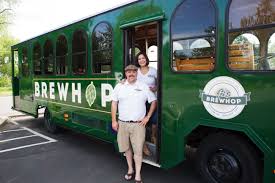
Hopefully, some smart person will come up with a business plan that includes a 15-passenger van shuttling people between all these breweries—then drop them at the Northside Marriott to sleep it off. If the city designates a district, maybe it could help the breweries subsidize such a service, with an official “Brew Trolley” (Brolley?)—who knows?


Read more »

IBN HISTORY OF BREWING SERIES REVEALS SECRETS OF THE MASH TUN

February 1, 2018 0 comments

It's only been a few weeks since we released our first title of 2018, Danish Beer and Continental Beer Gardens. Now IBN has followed up with another pocket classic, Secrets of the Mash Tun: or The Real Causes of Failure in Producing Good Ale or Beer.  First published in 1847, this guide was written for small brewers and home brewers during a period when science was becoming more appreciated for its contributions to the brewer's art. This is not a reproduction, but an all-new edition, freshly re-designed and typeset, including Publisher's comments and a helpful record-keeping section at the back for home brewers.

With simple explanations, useful advice and a common-sense approach, it offers today's small-scale brewers a handy manual of practice and a fascinating insight into our beer-brewing past. It's just the kind of handy reference you would like to add to your homebrewing bookshelf, or sit back and enjoy with a cold ale, next to a mid-winter fire.

Available via Amazon: HERE
Via Amazon UK: HERE
Read more »

THE ECONOMIC IMPACT OF THE CRAFT BEER REVOLUTION

January 26, 2018 0 comments


Having lived through America’s Craft Beer Revolution—and being a beer drinker before it even began—I can appreciate a thoughtful and objective look back on its impact and significance. That’s exactly what this article, which appeared in both The Atlantic and Citylab, provides. Derek Thompson does a nice job in briefly describing the beer landscape that used to exist in America and how crafty beer appeared at just the right moment to take advantage of changing tastes at first, and then economic circumstances later.

While a lot of beer drinkers and beer writers focus on cultural issues, style developments and personalities, Thompson does a nice job describing the Craft Beer Revolution’s economic impact, and how the expansion of local breweries and jobs has come during a period of industrial and retail consolidation. It seems like an anomaly, but fits in perfectly during an era when the Great Recession sparked innovation, forced many people to become new entrepreneurs and boosted interest in local production.

Changing tastes play their role too—and the article explains how the traditional three-tier system shaped the brewing industry for so many decades. All in all, it’s a solid read and a concise, accurate place to start if you want to get a helpful grip on U.S. beer history.

Read more »

BIGGER, BETTER 2018 SUMMIT BREW PATH TAKES SHAPE

January 22, 2018 0 comments
Just before the end of the year, my wife and I managed to complete the 2017 Summit Brew Path, thus winning the commemorative T-Shirts which are awarded to all those who manage to complete the brewery tour. I imagine our approach was like many other folks; hitting the “easy” destinations close to home and finishing up with those brewers which were located further away—like Wadsworth Brewing Co. in Wadsworth and Madcap Brew Co. in Kent. Over the Thanksgiving holiday, we were able to knock off all three Canton-area breweries (Canton, Royal Docks and Scenic) which set us up for a fine finish.

It’s pretty clear that the whole Brew Path effort—led by the local Convention & Visitor’s Bureau—was a great success, with almost 20,000 of the passports printed as a result of great demand. At least 2,600 people managed to get every stamp from the 14 official stops on the tour. All the breweries reported significant increases in sales as a result of the program, and it was also a great way to bring beer drinkers together—I don’t think we stopped at a single place where we didn’t meet someone else who was coming in to get their Brew Path passport stamped, too.

As plans for next year are being finalized, Ohio beer blogger Rick Armon was invited to sit in on a meeting at the Convention Bureau with a number of participating brewers. The meeting was set to provide feedback and generate ideas for the 2018 Brew Path, and while most all the feedback was positive and enthusiastic, the only complaint was made about the color of the T-Shirt prize that was awarded. Patrick Armistead, co-founder of Two Monks Brewery, was definitely not a fan of the brown, poo-colored shirt.

“Don’t make it a crappy brown T-Shirt,” he suggested.

Ignoring options for urine-yellow and boogar-green shirts next year, it’s likely that a new type of prize will be awarded in 2018.

With an additional five or six new breweries being eligible to be added to the Brew Path in 2018, it’s possible that a two-tier prize level will be used—making it possible to offer some form of recognition to folks who can’t manage to visit every one of the breweries on the new, expanded list. Like last year, additional breweries will be highlighted in the passport as places to visit, but not made official stops if they were not open by the start date of March 10.

This brew trail marketing concept has really taken off, not only just here in Ohio, but nationwide as well. As previously noted, it’s a wonderful way to bring the beer community together, and provides a great economic boost to our local brewers. Wherever you are, if there’s a program like this in your area—get your book and go get a brew!
Read more »

CONSISTENT QUALITY: SPOETZL BREWERY - SHINER, TEXAS

January 16, 2018 0 comments
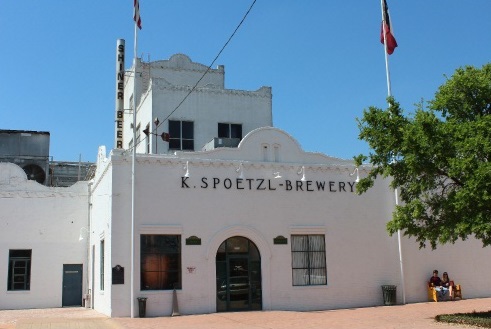
Spoetzl is Texas' oldest independent brewery.
Living here in Ohio, it should be no surprise that I am partial to many of our great Midwestern brewers, like Great Lakes, Hoppin’ Frog, Thirsty Dog, Platform, Bell’s, Short’s and Rhinegeist. They all make great beers—even though it is inevitable that there will always be hits-and-misses from time to time. Nobody’s perfect.

That said, one American brewer I would like to celebrate for their high level of consistency and quality is the Spoetzl Brewery of Shiner, Texas. The oldest independent brewery in Texas, they are widely distributed, and generally easy to find in major markets throughout Ohio.

Originally named "The Shiner Brewing Association," (SBA) The Spoetzl Brewery was founded in 1909 by German and Czech immigrants who had settled around the central Texas town of Shiner. Unable to find the type or quality of beer they had enjoyed in their home countries, they began to brew their own. They remain one of the oldest independent breweries in the U.S

Shiner Brewing Association - 1909
Personally, I have sampled a wide range of their beers, though strangely enough, their standard Shiner Premium lager, I regularly enjoy their Bock beer, Bohemian Black Lager, Cream Ale, Oktoberfest and Holiday Cheer—the last two being seasonals. Their Strawberry Blonde is excellent as well, and their 2015 Birthday Beer, a chocolate stout, was one of my all-time favorites. Sadly, the birthday beers change every year, and I’ve not had it since.

The German and Czech heritage must run strong throughout Spoetzl’s brewing tradition and methods, because what I enjoy most about their beers are that they are always true to style—Bocks, Oktoberfests and Cream Ales always taste the way you expect them to…no extra hops, wrong hops, or other strange flavors distracting from a job well done. So many American craft brewers fall to the temptation to try to “improve” on classic styles, or somehow “reinterpret” them--and the result is usually a big fail.

The other thing I would commend them for is the ability to just “get it right” when it comes to taste and balance. It would be easy to get into trouble with more creative recipes like Shiner Prickly Pear, Ruby Redbird, or their Holiday Cheer, but the brewery always manages to get consistently great results, using just the right amount of ingredients that complement the underlying beer without overwhelming it. That’s not easy—evidence that their brew masters have a well-tuned palate. Maybe a little common sense, too.

Read more »

TRUTH IN BEER: TWO MONKS BREWING

July 17, 2017 0 comments
In a world where over-the-top, hop-heavy beers are nothing out of the ordinary, it’s truly refreshing (forgive the pun) to come across a brewer who is adamant about staying true to style when it comes to traditional beers. Such is the case with Two Monks Brewing. I’ve had a growler-full of their German dunkel and was thoroughly satisfied—it was smooth, flavorful and malty—just what I was expecting.

On my first visit, the two owners were still prepping the tap room and getting their occupancy permits; tables, chairs and other equipment were stacked against the walls as they provided a growler-filling service to customers who stopped in.

On my most recent visit, they were fully open and ready to go, and there was a nice crowd checking out the beers on a Saturday afternoon. The wife and I stopped to get our Summit BrewPath passports stamped, so we sat down and looked at the beer list, which is not long, but features a nice assortment of styles—you should be able to find something you like here.

My wife, who generally prefers lighter fare, went with the Czech Pilsner, which she thoroughly enjoyed. I selected a pint of the E.S.B. and was totally won over—an excellent English bitter that was correctly hopped, full of flavor and extremely drinkable. On my next visit, it will definitely be my “go-to” beer.

Overall, Two Monks is a nice, comfortable spot to enjoy well-made beer; being just a stone's throw from Hoppin' Frog and the Brick Oven Brewpub, it's part of a nice East-Side Brewery Triangle that you must check out. I would only encourage the one owner to engage the customers a little more; when I asked him about their brewing system and complimented him on their beer, he seemed a little disinterested, and generally unenthusiastic about holding a conversation. Maybe he was just tired, but I've yet to meet a brewer who didn't enjoy talking about beer and bragging up his brews to anyone who will listen!

As an acknowledged “traditionalist” when it comes to beer, I can still appreciate some creativity and experimentation when those efforts are clearly identified as such. What does irritate me is when craft brewers offer a traditional beer style and then muck it up, either through inexperience, ignorance or a desire to make it “fit” today’s hop-heavy flavor profiles. Thus, we get an Austrian Pils that should be labelled an “American Pils”…or a German Oktoberfest that should be labelled “American Octoberfest.” That would constitute “fair warning”.

A perfect example is a recent 6-pack of Lager Heads Brewing Oktoberfest I bought. While they may have used German hops (this is what it claims on the label) they used too much of them to make it taste like a true German Oktoberfest; in fact, if I poured it in a glass and served it to most of my friends, they probably would guess it was an IPA. This is precisely why I am wary of buying a lot of “traditional-style” American craft beers—a lot of them have a problem with “truth in labelling”—though it’s due to bad brewing choices and lack of knowledge, not dishonesty.

Thankfully, it’s nice to know that places like Two Monks can still get it right. Hats (or hoods) off to them!


Read more »

A SUMMER OF BEER – PART 2: MICHIGAN BEER BONANZA

July 16, 2017 0 comments
My campsite in Bellaire, Michigan. Looking out of my tent door.
Every couple of years or so I try to get up to NW Michigan to see some of my favorite vacations spots; being kind of a last-minute exercise this year, and that no reasonable accommodations were available, I was forced to go camping. This also meant that I would be traveling alone, since my wife does not camp out in tents. This also gave me an opportunity to volunteer at the Boyne Thunder Poker Run, a great performance boating event that raises thousands of dollars for a camp that serves children with cancer.

My first destination was once again Bellaire Michigan, home of well-known Short’s Brewing. Since my last visit, some of their excellent beers have become available in Akron, so I didn’t feel the need to stock up on the return trip. That said, they had an excellent range on tap—I got a sampler which included a Kolsch 45, Power of Love, Totally Noche, and a Bellaire Brown. All were great; the Totally Noche, which I might suggest is like a dark Dos Equis or a Modello Negro—was very good. The Power of Love was a fruit beer that was very rich and tasty…nice for dessert, at the end of a meal. I settled in after this with a pint of the Noche, and ordered The Old Man Thunder beef shoulder sandwich, which was awesome.

On a Friday night in July, every seat in all three
indoor rooms and the patio were filled.
What is so interesting about this place—aside from its location in a vacation wonderland and the great beer they serve—is that they just keep growing. The original taproom has expanded to encompass the buildings on either side, and now also includes a comfortable covered patio that overlooks Bridge St. out front.

Short's has also have opened a production facility in Elk Rapids (on Lake Michigan, closer to Traverse City) and are expected to brew 55,000 barrels of beer this year. As a result, rumors seem to fly every year that they are about to sell out to a mega-brewer (this year, it was supposed to be Heineken) but it’s just not true. Whoever said that quality is what speaks the loudest has it right.
Read more »

A SUMMER OF BEER – PART 1: GRAPEFRUIT GLORY

July 14, 2017 0 comments
One of the first pleasures of the season, I am happy to relate, was the release of Hoppin’ Frog Brewery’s Grapefruit Turbo Shandy, which is the first product of theirs to be available in a 12 oz. can. As I have previously noted, I am a big fan of the regular (lemon) Turbo Shandy, and would drink it by the bucketload if I could afford it. I first tried the grapefruit version on the first day of its release, and although I have always preferred lemon, I must admit it was very delicious. Being highly familiar with grapefruit radlers—like those offered by the Austrian brewery, Stiegl—I found Fred Karm’s product superior in most every way.

Having been to the Stiegl brewery in Salzburg a year ago, I was happy to relate my judgement to Fred Karm, Hoppin’ Frog’s owner – who explained to me that it was one of the beers after which he had patterned his grapefruit masterpiece. We agreed that the primary reason for the superiority of his product is that it has a lot more “product” in it to begin with; as a result it has a significantly higher ABV than the Stiegl radler, which is only 2.5% compared to Hoppin’ Frog’s 7.0%.

The key to both Fred’s Shandies is the fact that he starts with a great ale—something that you’d be happy to drink “as-is”—and then adds a very rich, all-natural tasting fruit flavor. As Men’s Journal said in a review of America’s best Shandy & Radler beers – “Ohio's Hoppin' Frog makes no beer in half measures…”  Amen to that.

I took a 4-pack of the Graprefruit Turbo Shandy with me on a recent trip to Michigan and the folks I shared them with agreed that it was one of the “best summertime beers” ever. If you can get your hands on some – try it out.


Read more »

THE BEER IN ENGLAND IS NOT SERVED WARM

May 21, 2017 0 comments

In fact, most of the beer—or lager—as they would call it, is served perfectly cold. In this case, however, we’re talking about ale. And while English ale is not served warm, it would better be described as cool.

Of course, none of this came as a surprise to me during our recent trip to London. True English ales, hand-pumped out of a cask, are at their best when they are just slightly cool, so that more of their flavor has a chance to show through. This is especially true of the low-alcohol (around 4% abv) session ales, which are very light indeed. Served ice cold, they would clearly suffer as a result, and no doubt display all the character of a Coors Light.

Another note is that these ales, when pulled from a cask, are not nearly as carbonated as you might expect, especially if you enjoy English ales out of a bottle here at home. While not completely flat, the character is more like a bottle of beer you attempted to re-cap and put back in the fridge to drink the next day; there’s something there, but not like when you first opened it.


I will get into a little more detail in some follow-up posts regarding some specific ales and experiences—the pubs were mostly all delightful and the ales very good. We had a wonderful visit to the Windsor & Eaton Brewery after a visit to the castle and the staff were so entertaining and gracious as we sampled a variety of their tasty offerings. We did a lot of walking, which left me quite thirsty—as a result, when we reached a pub for a break, I often had a cold lager to start and followed up with ales afterwards.

As I expected, the long reach of American Craft Beer is making itself known in the UK; besides the ubiquitous BrewDog offerings, a few of the newer craft brewers were beginning to fall under the spell of “more hops, please” – and are also using some US variety hops. I can only hope this phenomenon is held in check, as I’d hate to muddy the traditional character of true English ales as a result of this bitter trend.

All in all, however - a great trip and a memorable experience.
Read more »

JUST SAY NO TO HOP MADNESS

May 20, 2016 0 comments
I’ve been grousing about the infestation of IPAs into American Beer Culture for some time now, as well as the fact that so many US craft brewers seem to have no clue in how to use them correctly. This attitude was strengthened even more after a recent trip to Germany, Switzerland, Alsace and Austria—where I was actually able to enjoy a number of different beers. While they varied quite a bit in their color, taste and strength, they all seemed to have one thing in common—they were largely formulated with varying combinations of beer’s four main ingredients: Water, Malt, Hops and Yeast.

I’ve often been of a mind that most US craft brewers should first dedicate themselves to learning how to make a solid, well-balanced beer with just these four ingredients before jumping into trendy stuff like pumpkin ales, sours, hop-bombs, chocolate or peanut-butter ales, or any other exotic style. There are a very few US craft brewers who can successfully pull this wizardry off (my local brewery, Hoppin’ Frog, comes to mind) but the truth is, this “everything and the kitchen sink” approach can offer plenty of style and little substance. It also offers some brewers with limited skill a convenient place to hide—behind a truckload of ingredients that can camouflage an otherwise less-than-stellar brew.

After being reminded of what simple, fresh and delicious beer tastes like, it’s easy to get tired of so-called “experts” telling me that I just don’t “get” the appeal of hops, or have “too weak a palate” to appreciate all these bold, bitter hop flavors. What a load of bullshit.

“You need to train your palate to appreciate these bitter hop flavors.” More bullshit. I suppose I could slip a dab of poop into my ham sandwich every once in a while and build up a tolerance. What does that prove other than I have developed a taste for shit?

First of all, I’ve been drinking beer long before some of these morons were even born; and most of it was good beer, not just the swill that the macro-brewers have been foisting upon us for the last 65 years. It’s true that for much of that period, imports were the best and most popular route to quality beer, at least until the late 1970’s and early 80’s. At that time, microbreweries were just beginning to appear and some of the larger brewers responded to the rise of imports by rolling out premium lines and bringing back some old brew house recipes that offered more flavor. And back then, most imports were really imported—not brewed in the US under contract. I believe I developed a fairly sophisticated palate over 40+ years of beer drinking, and while my taste buds and sniffer might not be as good as they used to be, I’d like to think I know what beer is supposed to taste like.

And I’ll be damned if you try to convince me that it’s supposed to taste like turpentine. Or Pine Sol.

Unfortunately, we have a whole generation of beer drinkers who have been marketing-brainwashed into thinking that this is exactly how good beer is supposed to taste; utterly convinced that these “bold” flavors have been missing from beer for generations. Of course the convincing has been done by some craft brewers who have built a reputation on hop-bombing the Western Hemisphere, and US hop-growers who only want to expand the market for their goods.

Now the usual response to my view is always – “Well, if you don’t like it, just don’t drink it.” And that sounds reasonable, until you realize that the tidal wave of IPAs has pushed a vast number of great alternatives off the store shelves. It’s getting harder to obtain beers I actually like. The local super-grocers offer dozens and dozens of IPAs in their cooler, both in 6-packs and in single bottle (“build your own 6-pack”) selections. But where before I could choose from among 10 or 15 English ales, or 18 different German beers, or a few dozen other imports, or some reliable, high-quality domestic beers, now I can only find a handful (cold) and maybe a few more (warm) on the store shelf.

Yes, there are a number of US Craft Beer offerings that are not IPAs, it is true; but the simple fact is—I don’t trust a lot of these brews to deliver on their promises. Many are not “true to style”. Many are still over-hopped, as brewers end up massaging their entire brewery lineup to cater to the “hop-forward” tastes of today. I’d be happy to give some a test shot, but I’m not going to buy a $12 6-pack to experiment—or give away later.

Other bozos will try and make some technical argument that bitterness is not always associated with hops. They add fragrance and aroma, too. Yes, I know that. And I will respond by simply stating that, while yes—a beer with extra hops does not always have a bitter taste, the other side of the coin is simply this: almost every beer that tastes too bitter is the result of being over-hopped.

Or the result of using the wrong hops. I really do think a lot of craft brewers are using hop varieties for taste that should only be used for aroma. For example, let me be clear in stating that while Pine-like flavors may lend a nice aroma, they have absolutely no place in beer taste.

Have you ever had smoked meat or fish? Have you ever wondered why expert barbeque masters only use hard woods like oak, hickory, mesquite or cherry on their fires? Did you notice that they never use pine wood? The reason is simple: pine leaves a sharp, resinous and wholly unpleasant taste in the mouth that ruins food. No grillmaster with a brain uses it. Why would you want to put that taste in your mouth via beer?

Again, we see generations of simple knowledge and proven experience go by the wayside, as idiots try to convince us that this is actually a good taste for beer to have. I’ll be honest and also admit that I have found few American hop varieties that I appreciate as much as traditional, noble hop European varieties. I’m sure there are some good ones, but it’s hard to judge when they are being used by the boxcar load.

Do I sound grouchy? Good. Then you’re catching on.

Just as lame arguments break on the rocks of four decades of beer drinking experience, the same can be said for trendy brewing approaches that go against the grain of several hundred years of beer brewing tradition. Just how bitter can a beer be, anyway—before it becomes palate-tiring, overwhelming and undrinkable?

Ever had a real, traditional English IPA? Bass dropped the “India” from its “Pale Ale” some years ago, but the taste hasn’t changed all that much over the years; this style was never intended to be as bitter as the stuff that has been pushed on us today in the US. Ever had an English “bitter”? Try a Fullers ESB. The bitterness is subtle; it embellishes the taste and balances the malt. It doesn’t overwhelm it. Same with a genuine Pilsner, which has slightly more bitterness than a typical Lager.

Hey, if you wanna drink this bitter swill—go ahead. Pay $12 a 6-pack or $8 a pint and support the Hipster Brewmaster & Organic Hop-Grower’s Retirement Fund. Of course IPAs are selling so well, but what do you expect when (aside from Macro-Brew) that’s mostly what you find on today's store shelf? It’s a self-fulfilling cycle—and a cycle that’s making it harder to obtain truly good, honest beers that have been enjoyed for decades.

For the craft brewers who are focusing on innovative, well-balanced stouts, tasty porters and drinkable ales that people can actually enjoy, my hat is off to you. Continue to innovate, and please resist the urge to obscure the tastes you’ve worked hard to develop by wrapping them in an overly-bitter hop shroud. Hopefully this hop madness will wear off, the pendulum will swing in the other direction and more brewers will come to their senses—not to mention beer drinkers who haven’t had enough experience to know any better.

Read more »

BUDWEISER BASHES CRAFT BEER: BECAUSE IT CAN

July 20, 2015 0 comments
Once the brewing giant AB InBev started throwing shade on the craft beer movement, the craft beer world was understandably up in arms over the insult. In response, those who make and enjoy craft beers continue to hammer the brewing behemoth—most notably for the company’s clear hypocrisy: making fun of craft beer and its adherents while heavily investing in small, independent craft breweries and trying to position some of those products as “craft.”

The fact is, I’ve often made fun of Budweiser myself. Even though it was one of the first beers I ever consumed, there is no sense of nostalgia associated with it—in fact, my memories are usually associated with post-party headaches (I used to blame the beechwood aging).

What has been a little surprising is the fact that after taking its initial shots, AB InBev has doubled down on its “let’s-chide-craft-beer-lovers” strategy, with new ads that celebrate Bud’s macro heritage.

With macro-brew sales slipping, this might seem like a pointless effort. But in reality, I don’t see what choice the mega-brewers have. As Chris Morris noted in a recent Fortune post, Bud is really preaching to the choir now—reinforcing the behaviors of long-time Bud drinkers who are slow to try anything new, and who generally see beer as a high-volume commodity, not something to be sipped and savored.

This might not increase sales, but it may help slow the erosion of its market.

After all, not everyone is an experienced or educated beer drinker. Some people simply like to drink LOTS of beer, and they cannot or will not pay craft beer prices. While there are lots of fine craft beer bars here in Akron, for example—I would also tell you that for every one of those, there are 8-10 other bars that slam out innumerable bottles of Bud and Miller Lite and Coors Light each and every night.

Sure, their customers may have briefly switched to Yuengling after it first became available in Ohio, but now the novelty has worn off and they are back to their old standby.

For these consumers (and boy, do they consume) it has always been about quantity over quality. To make the appeal clearer, you could plan out your weekly bar stops here in town and probably enjoy your “Dollar Domestics” night somewhere—at least five nights a week. That’s five or six 12 oz. bottles of beer for the price of a pint of something much better. That is, if you care about better.

The Bud ads are the equivalent of saying “Yeah—who’s the smart guy now? Six beers for the price of One? And ours will wash down that burger just as good.”

Most of us know the truth about quality. But this is the line of thinking that AB InBev is taking in speaking to its target audience. This is the same audience that ran the Sam Adams Rebel IPA off the tap at one of my local bars, after no one bought it and the barmaid characterized it as “undrinkable.” I know there was nothing wrong with it per se, only that it was a bitter, highly hopped IPA that was totally foreign to the palates of the “regular beer drinkers” who frequent that bar—and was quickly rejected.

It’s the same mind-set that takes umbrage at anyone trying to tell them what they are “supposed-to” like:
“Dammit, my dad drank Bud, and it was good enough for him. I’ve enjoyed it for years, and dammit, I’ll be dammed if any liberal, smart-alecky, thinks-he’s-better-than-me SOB is gonna tell me what I should drink or like. Same damn people that wanna take away my guns, tell me I gotta like gay people, or tell me where or when I can have a smoke. Hell with them. Give me another Bud.”

...then he goes out to his pickup with the Rebel Flag mudflaps and cranks up some Bro Country CD.

Okay – this characterization may be a little unfair. A similar attitude could be found with the college kid that never grew up; raised on dorm fridges filled with Bud, or PBR, or Busch—it may be all he ever feels the need to drink. The college degree did not include the finer points of beer brewing or consumption.

This is precisely why it may take years or decades before Big Beer cedes a really substantial portion of the market to craft beer. It took Prohibition, decades of TV advertising, force-of-habit, more advertising, and macro-beer economics to get to where we are today. The attitudes of most macro-beer consumers may never change, and AB InBev’s ad strategy seems to be designed to ensure that any change, if it does come, will come at the slowest rate possible.
Read more »

A BEAUTIFUL BEER WEEKEND IN MICHIGAN: PART TWO

July 13, 2015 0 comments
BOATS LIKE THIS AT BOYNE THUNDER: X 100
Well, after we left Bellaire, you might have thought the beer highlights of our trip were over. But not so. Our ultimate destination on Friday was Boyne City, at the far eastern end of Lake Charlevoix. While the Boyne Thunder Poker Run is on Saturday, the Main Street organization organizes a great street party, where people come from all over to check out awesome powerboats, cool cars and rat rods, as well as listen to some great music by the lake. Boyne city is one of those “perfect small towns” in which you can easily imagine yourself living.

We took in the sights, sounds and smells of the street party, stopped in at The Sportsman for a beer, then wandered into Boyne Country Provisions, a great wine/beer emporium and market. The carry-out beer choices here are incredible, and their individual bottle selection really shines – plus, you can mix-and-match a 6-pack and get 10% off, which is pretty standard at most bottle shops now.
After a walk over to the docks to gawk at the boats that would be participating in the poker run, we headed back to Boyne Mountain resort for the night. The next morning, we headed back to Boyne City, to see some more of the 100 boats making the run and then watch them run their “parade lap” off the seawall before heading west down the lake towards Charlevoix.

This is really an experience to see; you’ve got about 100 big boats, most are powered by twin engine big-block V-8s, but some of these monsters have triple engines, turbine engines, and multiple outboard engines. When they all start up, it’s gotta be as loud (if not louder) than any NASCAR race. They slowly roll out onto the lake to get into formation, which takes about 45 minutes; then they get up to speed—throwing 100-foot roostertails—and run past the lighthouse point seawall, around 150 yards out, at about 60-70 mph.  They would go faster (a lot of these boats can do over 100mph or close to it) but the resulting boat wakes would create multiple small tsunamis and drench the spectators at the seawall. As it was, we still got splashed a couple of times!

After this experience, it was time to drive west over to Charlevoix—where there’s a nice harbor and a narrow channel that allows access to Lake Michigan. At this point I have to mention that the weather was perfect. Low-to-mid 80’s…not a cloud in the sky…and little to no breeze, which made wave conditions great for the boaters.

OK. Now for the Beer…

THE PATIO AT LAKE CHARLEVOIX BREWING CO.
After perusing all the great stuff available at the annual Arts & Crafts fair in Downtown Charlevoix, we headed over to Lake Charlevoix Brewing Company and parked ourselves on the patio overlooking the marina. The brewery here is just a few months old; there’s also a newer tap-house next door—both places are excellent for soaking up the sun and some suds.

The wife and I managed to grab the last seat on the patio. There was no umbrella at our table, which is not so bad (I tan well) but drinking beer in the hot sun can catch up to you after a few. Nevertheless, I started with a Nutty Hobo, an excellent brown ale that went down ultra smooth; nice caramel touches, without the harsh hoppy bite that you might find in some American brown ales. As I've said before, it's a matter of preference--and where brown ales are concerned, I prefer malty over hoppy.

FRANKENMUTH BREWERY
After that, I switched to the Michigan Bleached Blondie, which was a nicely balanced, refreshing blonde with a slightly sweet, malty finish. Perfect for sitting in the sun on a hot day, great for drinking more than one—and I did. We tried the Liquor Store Nachos, which were great (slathered in cheese and smoked pulled pork) – a perfect pairing with the cold beer. Did I mention the service was excellent?

At this point we needed some walking and some time to recover so we could make our next stop. We considered overnighting in Charlevoix, but the wife talked me into a 3-hr drive south to Frankenmuth, MI—another great beer town and tourist destination. Years ago, there used to be a large Carling Brewery here, as well as the local Frankenmuth Brewery, which still runs a great and very popular operation. Thankfully, some of their products are available in Akron, though I was intent on trying some new styles if I could.


THE BAVARIAN INN - FRANKENMUTH, MI
So we headed off, got to town about dinnertime, checked into a hotel and started walking down Main Street. You could get fat here; we stopped in the Cheese Haus, walked past the fudge shop, a taffy shop, and then headed to the Bavarian Inn, where I had a couple tulip glasses of Strawberry Short’s Cake, which I did not remember seeing when we were up at Short’s in Bellaire. It was perfectly delicious.

While there, we sat at the bar in Michigan on Main, a spot at the Inn where they feature all Michigan-made food and drink. The service was unbeatable and the people we met there were incredibly friendly. Also, the wine and beer shop downstairs is not to be missed. While a lot of retail stores have trimmed their import selection to make room for the innumerable US craft beers, the Bavarian Inn had an excellent selection of imports—particularly German favorites—that are not quite as easy to find as they once were. As a result, I grabbed some up to bring home.

I was able to enjoy a Hofbrau Dunkel with our late dinner; by the time we got to the Frankenmuth Brewery, their kitchen was closed, but we stopped at a crowded wine bar across the street that (thankfully) had a few good beers on tap. A delicious pastrami pannini went well with that, and made for a great exclamation point to our Michigan weekend.  Prost!
Read more »

A BEAUTIFUL BEER WEEKEND IN MICHIGAN: PART ONE

0 comments
THE VIEW FROM THE DOCKSIDE - TORCH LAKE
Okay, you probably don’t expect a guy from Ohio to be raving about anything from “that state up north” – but I had one of my best weekends ever up in Michigan, enjoying some incredible views, gawking at awesome high-performance powerboats, and sampling some of the great beers that state has to offer.

As a brief note of explanation, I have vacationed in this area since about 1962, when my father started bringing the family up to stay on the chain-of-lakes just north of Traverse City, with beautiful Torch Lake being the most notable. Over the years, we’ve visited spots up-and down the coast, including Charlevoix, Petoskey and on up to Mackinac.

I think the last time we were in Bellaire, it was a Sunday morning; we were on our way back home and I believe Short’s Brewing Company was not open at the time. So I was determined to get there on this trip.

Our destination was Boyne City; for the third time, the wife and I decided to check out Boyne Thunder, which is a fund-raising Poker Run for high-performance offshore powerboats. There were over 100 boats registered this year, and not only can you check them out on the docks, there’s also a big street party on Friday night, right on the shores of Lake Charlevoix—featuring both hot boats and hot rods.

Before that, however, our first stop was at one of our old haunts, the Alden Bar & Grille, just steps from Torch Lake. The place was recently remodeled, and I have to say—while it is larger and brighter, it lost some of its “up north” character when they replaced the original knotty-pine wall paneling with new stuff. I’m sure it will look just fine in about 30-50 years, but for now, it just seems too “new.” Still, that didn’t stop us from enjoying a couple cold ones; I went for a traditional Bell’s Two-Hearted Ale (what else would you drink in Hemingway Country?) and having done that, we headed north along the east coast of Torch Lake to Clam River.

THE DOCKSIDE - FROM ACROSS CLAM RIVER CHANNEL
Clam River, where Clam Lake flows into Torch Lake, is home to The Dockside, one of the most popular spots on the chain-of-lakes. It’s right on Torch, so you have spectacular views and lots of action, as boats go back-and-forth down the channel. The place was crowded as you might expect, but the service was prompt and friendly—and my smoked chicken quesadilla was perfect. I washed that down with a delicious Short’s Bellaire Brown, not something I normally drink on a hot day when I’m sitting in the sun, but it’s smooth and light enough to go down easy and quench any thirst.

We spent about an hour or so enjoying the lake, then headed off to Bellaire to check out Short’s Brewery in person. Just as expected, the place was packed on the middle of a Friday afternoon, and I went with a flight of five beers, including Paper Thin Walls (which my wife really liked) Locals, Magician, Village Reserve and a Badankadank. All of them were great, and I grabbed a six pack of Locals and Bellaire Brown to take home with me.

SHORT'S BREWING COMPANY - BELLAIRE MI
The Brewery and restaurant are really first class, it’s easy to see why this place is a top regional tourist attraction. From the physical facilities to the beer packaging, it’s clear that there’s a solid, consistent line of philosophy and creativity running across the whole operation. Their success is a real tribute to the commitment and care that everyone demonstrates from top to bottom.
That’s all for Part One of our Michigan Beer Journey. Part 2 to follow.
Read more »

NEW! TWO CLASSIC BREWING BOOKS AVAILABLE

June 29, 2015 0 comments
As a home brewer myself, I've always been fascinated by traditional approaches to brewing, particularly those dating back to an earlier age, when brewers did not have the technology or tools that we utilize today.

In truth, the brewing of beers and ales may not be a complex task, but it is one where extra thought and care may result in a superior end product. This approach is evident in both of the classic works we have chosen to offer through our publishing partner, American Biblioverken. Together, they kick off our History of Brewing Series, which we hope will continue to grow with additional titles as time goes on.

The first, A Treatise on the Brewing of Beer, was written by E. Hughes and dates from 1796. It is a very modest work, extending but to 36 pages, but does include some insightful thoughts on the production of beers and ales via traditional methods. The second book, The London and Country Brewer, was originally published in 1736, and offers 100 pages of thoughtful advice on brewing, selection of malt and hops, as well as beer storage and transportation.

Upon reading, what does become clear is the realization that while modern technology does make brewing easier, and results in a more consistent product, it may not be absolutely necessary to produce a quality beer or ale, and that there is much "lost knowledge" from which today's brewers may still benefit.

In both examples,  the writing style is far more formal than modern ears may be accustomed to, and this may present a modest challenge to some readers. Nevertheless, the information as presented is logical, heartfelt and indeed, rather entertaining. To that end, we have retained all of the traditional idioms and spellings from the original edition, since they add so much to the overall effect of the works.

Both books are available at the links listed above, via Createspace, at $5.50 and $9.99 via the links above.  We'll post the links to Amazon in a few days, when they become available. The cost is the same at both sources.
Read more »

WHY AKRON NEEDS A BREWERY DISTRICT

June 28, 2015 0 comments
Not everyone knows it, but Akron is home to several high-quality breweries, with national and regional reputations; one (Thirsty Dog) has already indicated that they need further room to grow. Separately, none of these operations are huge. They all include production facilities and Tasting Rooms, where customers gather to sample their products and enjoy food and entertainment. Currently, most of them are spread out all around the city.

Every time I drive past the old Goodyear World Headquarters and factory, which is being redeveloped as the landmark East End project, I can't help but thing what a natural location this would be for a Brewery District. Gathered together, these breweries could create a strong destination attraction—a Brewery District—that would enhance the marketability and appeal of the East End location, allowing these brewers to use their “strength of numbers” to pull visitors from many areas.

A while back, I spoke to Fred Karm, owner of nationally-recognized Hoppin’ Frog Brewery, and his initial response was that he might be interested in such a concept, and could see some advantages. Of course, it would have to make economic sense, and some incentives might be needed to make it happen, but he seemed to find the idea appealing.

I have also spoken  to our current Mayor, and while he thinks it's a solid idea, the city has limited resources to get behind such a plan right now; what's more, we'll have a new Mayor come next January, and it's hard to get anything going during an Election Year. Nevertheless, it's an idea worth pursuing and one that I feel the developer, Stuart Lichter's Industrial Realty Group, should take a hard look at.

POINTS TO CONSIDER:

1) There are TONS of space available at East End for brewing operations and tasting rooms; tens of thousands of square feet. Plenty of parking, easy highway access (for out-of-town visitors). It’s a natural fit for these old buildings. Simply put, this location is high-visibility, and far superior to any place these breweries are currently located (outskirts of town, old, run-down neighborhood, etc.)

2) Existing and future Commercial/Office/Hotel development here – provides an additional customer base for these operations. (Goodyear-Hotel-major hospital-are already nearby)

3) Easily accessible from The University of Akron, too—by bus or bike. Some cities who have similar districts even establish a “brewery shuttle” – low/no cost trolley service to district from popular destinations.

4) A successful brewery district would also be an advantage for attracting out-of-region craft breweries to locate to Akron. The city could get in the game with other regional brewers who may want to expand their operations into the Midwest.

5) A district here offers a nice geographic balance to a popular area like Highland Square. While that area is certainly a natural for craft-beer loving Hipsters, there’s really no room for new breweries there. East End is about the same distance from Downtown, easily accessible by public transportation, and long term, provides an additional working/living option for that demographic.

Over the coming weeks and months, I'll be talking to more people about this--it seems like too good an idea to pass up.
Read more »

FALL & WINTER: THE BEERS ARE LOVELY, DARK AND DEEP...

November 12, 2014 0 comments
I feel I'd be pretty confident in saying that my seasonal beer drinking habits are probably in line with most serious beer drinkers. After a summer-full of lighter pilsners, lemon-and lime infused beers, wheat bears and other hot-weather styles, the shorter days and falling leaves lead me to darker, heavier, more full-flavored beers and ales.

Not having to worry about sitting for hours in the hot sun, brown ales, smokey porters and rich stouts get added to the shopping list--along with pumpkin ales, spicy holiday brews and even some hoppier ales, depending on the activity and the menu choices. This is also the time of year I make more trips to the grocery myself, where I can usually put together a "build your own" 6-pack of individual beers I'd like to try (keeps me from making $10 "mistakes") and also grab an occasional 22oz bottle of something special.

Most fall and winter weeknights, I'll enjoy a bottle or two while reading or watching TV; often checking the Twitter stream and surfing for beer-related news and commentary. I generally don't do in-depth beer reviews (there are enough of these already) but I will usually tweet a brief comment on what I'm tasting, some initial impressions and also--whether I might drink it again. 

So far, I've come across few beers I would describe as "bad." If I express any negative comments about a beer, it would be more likely that it's not particularly true to stye, or that I don't find it quite as "remarkable" as some other people do. In other cases, I mind not find  a beer's taste so pleasing, but I am also willing to chalk that up to personal preference--especially where high IBUs are concerned.

Weekends are a little different. I'm a big NFL and NCAA football fan, so that naturally pairs with beer-drinking. If I'm at the neighborhood sports bar--to which I can thankfully walk--I might settle in with a Yuengling (buck a bottle on Thursdays) and if I am home, a sessionable brown ale or dark lager. Regardless of how good the game might be, I wouldn't try to pound a lot of heavy, high ABV craft beers, and I don't think you would, either.

It's early in this "dark season." My favorite so far has clearly been Samuel Smith's Organic Chocolate Stout, which was incredibly rich and dessert-like. In fact, I know I will be serving a small glass of this this along with dessert at some holiday dinner party. I found Breckenridge Brewery's Vanilla Porter to be quite good as well; very smooth and subtle.

I have just started checking out Christmas ales as they are now coming out. Locally, Akron's own Thirsty Dog puts out an excellent 12 Dogs of Christmas Ale, though I found Great Lakes Brewing Company's Christmas Ale to be just slightly smoother in terms of the spice combination. What that really boils down to is that I might drink two of one and three of the other at Christmas dinner.

Happily, Hoppin' Frog Brewery is about a mile from my house, and it wouldn't be winter without a few of their Imperial Stouts, Porters and Scotch Ales. They've always been major belly-warmers; the perfect thing for a cold winter night in front of the fireplace, nodding off during an episode of Brew Dogs.

Though I am not a particular fan of most IPAs, I am intrigued by some of the darker, so-called "black" IPA's I've seen, and am determined to give them a try some time soon. In fact, if you have any good suggestions, let me know.

This time of year, the beers are lovely, dark and deep.  But there are so damn many to drink. 
Let's get to work.
Read more »

GETTING PAST THE POLITICS OF PILSNER

November 1, 2014 0 comments
I came across a ridiculous rant the other day on Deadspin, where Will Gordon (does he pronounce that "Gor-DON" - like in the Sprint commercials?) rails against Stella Artois being a disgrace to Belgian beer. Apparently he was disappointed in getting an older sample, which may have been a little skunky. It happens, although getting a truly bad bottle is a little less common than it was in the past.

I've had a decent Stella or two over the years - mostly on tap - and anyone who knows beer clearly knows that Belgium produces a wonderful array of beers that are far superior, by anyone's standard. Of course, that's pretty much the case in any country, including the USA; there are plenty of smaller breweries delivering a better product than the larger, more popular brands. So much for stating the obvious.

What I really found irritating in the article is that he seems to be basing his opinion primarily on the simple fact that since the brand is owned by a large beer holding company like InBev, it must be horrible. Most of the post is spent trashing big beer in general - about three paragraphs. Eventually, he gets around to actually, "reviewing" the beer, which he usefully describes as "skunked and awful."   Nuff said; I'm all for tight editing.

He ends the article with this out-of-breath zinger:

Belgium's continued production of Stella Artois is an affront to human decency. All the waffles and Westvleteren in the world can not make up for this crime against beer.

Well, then...
"A crime against beer?"  Really? All in all, Godon's take is really sophomoric, and typical of so many rants I hear from hipsters about how terrible any product must be if it's from a "large" brewery. Or more accurately, ANY brewery - small or large - that happens to be owned by a big, international holding company.

This seems to be the prevailing attitude: Is your brewery producing beer by the same methods it was before you were purchased by that big international conglomerate? Doesn't matter - the minute you signed on the dotted line, your beer became swill. At the very least, it's not "worthy" of our consumption, and the hard-working people who have been making your beer are traitors to the craft beer movement.

Now, I am sure there are examples where the perceived quality, or the formulation, may have been compromised for "the product formerly known as craft." It can happen. One supportive commenter on the article I am mentioning pointed out that Red Hook is now a shadow of its former self since being taken over by Craft Brew Alliance. I have to wonder if that's view is based on his "beer politics" or a blind tasting.

It's similar to a guy I know who, upon occasion,  used to drive over to PA to bring back a couple cases of Yuengling, because "it's really good beer" and you couldn't get it in Ohio at the time. Today, success allows those folks to also claim the title of "largest American-owned brewery" in addition to being the oldest.  The result? Yuengling's popularity has now earned the disdain of some craft beer sophisticates. That seems a little unfair.

Before I go any further, let's get this straight: I support and love Craft Beer. The movement here in the US and in other countries is providing beer lovers with access to an incredible array of great beers and ales, better overall beer knowledge and lots of good jobs. I've been drinking beer for forty years, and I remember when -- if you wanted something better than a Bud, your only other choices were a Molson, a Heineken, a Bass Pale Ale, or a St. Pauli Girl.

Hell yes, things are way better now.

We're getting more variety, improved quality, new flavors and more freshness. The interest in beer, the non-stop calendar of beer-related events, the increased appreciation of beer as a food product, and even the realization of beer as a cultural phenomenon makes this an exciting time.

But let's not get lost in the reality of what's in the glass. I'm not buying into this need to automatically "rip" some beer because it's not made by a handful of bearded guys in an old warehouse, or cooked up in a farmhouse and sold in 22oz. bottles. Even the so-called "craft wannabees" are way better than the swill we had available 35 years ago.

In the end, the question for me is not so much - "is it really a craft beer?" - as is it is" "Is it really a good beer?"  One seems to be a question of production method, philosophy and marketing. The latter is a simple result, and not exclusively dependent on the former.

I don't drink beer as a political statement. I drink it because I enjoy it, and it [usually] tastes good. Just because a beer brand may be owned by a big company, doesn't automatically disqualify it from my appreciation. For the same reason - any so-called "Craft Beer" doesn't get a free pass just because it was produced in a small quantity, by seemingly dedicated beer-lovers. They can make nasty beer, too - and I've had a few.

Having made beer myself, I can appreciate the time and effort that goes into it, and the skill required to brew up a drinkable product - several dozen or several thousand barrels at a time. It's all I can do to knock out five tasty gallons.

Producing a great beer can be a serious matter. But it is beer, after all. No need to take it's enjoyment quite so seriously.


Read more »

FALL...IT'S PRIME BREWING TIME

October 27, 2014 0 comments
Not sure why, but Fall has always been my favorite time of year to brew beer. The air gets cooler; stronger, more flavorful beers call out to my palate; and the upcoming feasts of the holiday season demand memorable home-made beers to match the great food. Invariably, I will start things out with a batch of Brown English-style ale and progress to more complex, holiday ales as December approaches.

This year seems no different, I started out with a brown ale kit I picked up a month or so ago at my local homebrewing store, The Grape & Granary. Up till now, I had mostly brewed all-extract brews of this type and have always been happy with the results. This kit included some specialty grains for steeping--which added another extra step to the process, but one which I hope will make a notable improvement.

I had anticipated a long time getting the kettle up to boil; it was easy enough to get the water up to 150 degrees or so for steeping the grain. But even on my commercial-grade range, it seemed to take forever when it came time to get the wort up to a rolling boil after adding the extract and bittering hops. I rigged up a colander and some coffee filter paper in an attempt to strain out most of the solids from the wart--but the results were mixed, due to the added grain.  As I wait out the primary fermentation, I'll have to consider a more reliable method to remove the remaining "silt."

For now, the wort is working in the basement...the yeast is really cranking and you can see the rolling action as fermentation builds inside the 5 gallon acrylic fermenter. It's always fun to watch, but I'm already planning my next batch; something more of a "Christmas Style" ale.

To that end, I'm looking at adding a couple of smaller fermenters; the 2-gallon BrewDemon Conical models have caught my eye, and they might just be the ticket. A recent issue of Brew Your Own magazine had an interesting article about the advantages of brewing smaller batches--there's the matter of convenience, time savings, and less investment lost if a batch doesn't turn out "as expected." It's a little easier to experiment with new ideas and flavors, too.

I bottle-condition most of my beers and make labels for them, which is almost as much fun as drinking the beer. While I often have a name and type in mind, I usually wait until tasting a sample to make my final decision on this, since the final taste and flavor characteristics will often influence the choice of name and label graphics.

Thus, if you ever see a bottle of Bedpan Brown Ale in my refrigerator, you'll know the final results were probably less than expected.


Read more »

FAIR WARNING....PLEASE

September 14, 2014 0 comments
I would never say hops are a bad thing. They're an essential part of beer--and well used, are critical to imparting great aroma and flavor to our beers and ales.

But the current tendency in American Craft Brewing seems to be adding hops to the point where they often dominate the taste profile...and where their over-use almost becomes an end in itself. As a result we are left with double and triple-IPAs, "Hoppinators," "Hoppus Maximus," "Hop Killers," etc. etc.

While some of these beers are fine for sampling, their bitterness and "hit you on the head with a hammer" qualities make them impractical for any type of session drinking, and I've found many to be almost undrinkable. (I've had some beers that were loaded with so much Simcoe that I thought someone had poured a cap full of PineSol into my beer.) At best, I find myself saying - "Well, that's good, but I couldn't drink more than one."

For those who like these kinds of beers, fine. But my worry is that this hop craze is having a detrimental effect on Craft Beer overall--to the point where the high-hop focus is insinuating itself into beer styles that are not traditionally hoppy. Even experienced craft brewers seem to be falling into this trap. I've always loved GLBC beers, but over the years, I find their offerings all morphing into a very similar hop taste profile. Over the past year, I've had an Oktoberfest and a Pilsner from them that were far too hoppy for the claimed style--and many other quality craft brewers seem to be heading in the same direction.

It's easy to think that the hop-craze we've seen here in the US might have filtered into our general approach to brewing. A lot of Americans under 35 have become accustomed to highly-hopped beers...perhaps to the point where brewers feel a certain amount of bitterness is required if the beer is going to "taste right" to those folks. If so, that would be a shame--since those of us that don't need a ton of hops in our beer to know we are drinking a good one will be forced to suffer.

Of course, I'm not the first to complain, and I won't be the last. It may get worse before it gets better. I've heard about an upcoming hop shortage (we can only hope) - but then I am also reading so many articles about how many people are growing hops in the US now (and why not, you can grow them in your backyard) that it seems inevitable that more and more are going to end up dumped into our beer by the bushel-full. Why? Just because we have them.

I'm beginning to think US brewers should do us a favor and label some of these beers "American Oktoberfest,"  "American Helles," etc. -- so we get fair warning that we shouldn't expect these beers to adhere to the traditional beer styles at all; that they have been "hop-boosted" to please what they have come to believe is the common American preference.

That way, they would not disappoint experienced beer drinkers who are expecting something more refined, subtle and well...traditional.


Read more »

BOOKS: HOMEBREW HANDBOOK IS A HIT

December 6, 2013 0 comments
Future Publishing's [UK] Homebrew Handbook has been out for a little while now - but it was only recently that it caught my eye at the local Barnes & Noble. I'm a sucker for a nicely-produced book or magazine of any kind, so I couldn't resist grabbing a copy and taking up to the checkout.

The handbook is a very attractive, well-written and well-illustrated guide on how to brew your own beer. Like most publications from Future Publishing, it's a very high-quality piece, printed on high-quality paper and made to serve as a handy, durable reference that will last you through many homebrewing sessions. I will look good on your coffee table, too. The handbook looks at three essential methods of brewing (Home Kit, Extract and Full-Mash) and includes some solid reference material on malt, hops, water and various aspects of the brewing process that the beginning homebrewer--whether they are in the UK or the US--will find helpful. As it has been a while since I've brewed myself, it also served as a nice refresher, and the articles on establishing microbreweries and labeling your beer were interesting and inspirational, too.

One of the most useful parts of the book is the nice collection of recipes that are included, from very basic types to some more specialized brews that were provided by some popular craft breweries. Some of these you might be familiar with; others are rather obscure offerings from lesser known brewers, but they are all interesting to read about and assess, and may inspire you to tinkering with your next batch of homebrew.

All in all, a nice publication that we would highly recommend at just $14.99.
Read more »

ShareThis Stuff

Bookmark and Share

Translate This Site

Latest from Twitter

Topics

Beer Culture (22) Beer Inc. (11) Beer Ratings (7) Books (4) Breweries (14) Commentary (33) Craft Beer (31) Education (11) Equipment (1) Events (2) Germany (3) History (10) Homebrewing (6) Imports (4) Local (14) Marketing (6) News (13) Places (10) Pubs (2) Quality (12) Reviews (11) Sarcasm (3) Seasonal (9) Session Beers (6) Travel (7) UK (6)

Search This Blog

Powered by Blogger.

CRAFT BEER NEWS

HOMEBREWER'S ASSOCIATION NEWS

BREWER'S ASSOCIATION NEWS

DAILY NEWS

UK BREWING NEWS

Other Sites of Interest