Content

R. SHEA PRODUCTION BREWERY LEASE OPENS DOOR TO AKRON BREWERY DISTRICT

March 29, 2018 0 comments
With the news that R. Shea Brewing is formalizing a new lease at Canal Place, owner Ron Shea is getting closer to his dream of establishing a Brewery District around downtown Akron. With Missing Falls Brewing Company settling into the same building just a few steps away, Thirsty Dog and Aqueduct Brewing located over on Grant Street, and soon-to-open Akronym and Lock 15 breweries up at the north end of downtown, there will be enough critical mass needed to shape such a district, which the city appears to be ready to certify and sanction.

I’ve always thought a brewery district of some kind would be a great idea for Akron; the only question was where would it be located, and who would take the initiative to make it happen. Clearly, Shea has long demonstrated the hard work, vision and creativity to see it through—and what we are seeing develop is the happy (or hoppy) result.

To be honest, though—a lot of these breweries are not within walking distance of one another, although the 6 are roughly within a square mile. Aqueduct and Thirsty Dog are close neighbors, but almost a mile from Canal Place, where R. Shea and Missing Falls will be located. Akronym will be almost a mile north on Market, and Lock 15 will be about 1/3 mile north of that, at North and Howard streets. They will all fit nicely on a map, but visiting more than two at a time will require some serious hiking boots.

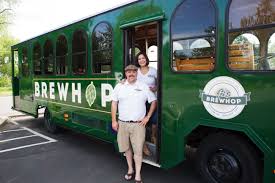
Hopefully, some smart person will come up with a business plan that includes a 15-passenger van shuttling people between all these breweries—then drop them at the Northside Marriott to sleep it off. If the city designates a district, maybe it could help the breweries subsidize such a service, with an official “Brew Trolley” (Brolley?)—who knows?


Read more »

IBN HISTORY OF BREWING SERIES REVEALS SECRETS OF THE MASH TUN

February 1, 2018 0 comments

It's only been a few weeks since we released our first title of 2018, Danish Beer and Continental Beer Gardens. Now IBN has followed up with another pocket classic, Secrets of the Mash Tun: or The Real Causes of Failure in Producing Good Ale or Beer.  First published in 1847, this guide was written for small brewers and home brewers during a period when science was becoming more appreciated for its contributions to the brewer's art. This is not a reproduction, but an all-new edition, freshly re-designed and typeset, including Publisher's comments and a helpful record-keeping section at the back for home brewers.

With simple explanations, useful advice and a common-sense approach, it offers today's small-scale brewers a handy manual of practice and a fascinating insight into our beer-brewing past. It's just the kind of handy reference you would like to add to your homebrewing bookshelf, or sit back and enjoy with a cold ale, next to a mid-winter fire.

Available via Amazon: HERE
Via Amazon UK: HERE
Read more »

THE ECONOMIC IMPACT OF THE CRAFT BEER REVOLUTION

January 26, 2018 0 comments


Having lived through America’s Craft Beer Revolution—and being a beer drinker before it even began—I can appreciate a thoughtful and objective look back on its impact and significance. That’s exactly what this article, which appeared in both The Atlantic and Citylab, provides. Derek Thompson does a nice job in briefly describing the beer landscape that used to exist in America and how crafty beer appeared at just the right moment to take advantage of changing tastes at first, and then economic circumstances later.

While a lot of beer drinkers and beer writers focus on cultural issues, style developments and personalities, Thompson does a nice job describing the Craft Beer Revolution’s economic impact, and how the expansion of local breweries and jobs has come during a period of industrial and retail consolidation. It seems like an anomaly, but fits in perfectly during an era when the Great Recession sparked innovation, forced many people to become new entrepreneurs and boosted interest in local production.

Changing tastes play their role too—and the article explains how the traditional three-tier system shaped the brewing industry for so many decades. All in all, it’s a solid read and a concise, accurate place to start if you want to get a helpful grip on U.S. beer history.

Read more »

BIGGER, BETTER 2018 SUMMIT BREW PATH TAKES SHAPE

January 22, 2018 0 comments
Just before the end of the year, my wife and I managed to complete the 2017 Summit Brew Path, thus winning the commemorative T-Shirts which are awarded to all those who manage to complete the brewery tour. I imagine our approach was like many other folks; hitting the “easy” destinations close to home and finishing up with those brewers which were located further away—like Wadsworth Brewing Co. in Wadsworth and Madcap Brew Co. in Kent. Over the Thanksgiving holiday, we were able to knock off all three Canton-area breweries (Canton, Royal Docks and Scenic) which set us up for a fine finish.

It’s pretty clear that the whole Brew Path effort—led by the local Convention & Visitor’s Bureau—was a great success, with almost 20,000 of the passports printed as a result of great demand. At least 2,600 people managed to get every stamp from the 14 official stops on the tour. All the breweries reported significant increases in sales as a result of the program, and it was also a great way to bring beer drinkers together—I don’t think we stopped at a single place where we didn’t meet someone else who was coming in to get their Brew Path passport stamped, too.

As plans for next year are being finalized, Ohio beer blogger Rick Armon was invited to sit in on a meeting at the Convention Bureau with a number of participating brewers. The meeting was set to provide feedback and generate ideas for the 2018 Brew Path, and while most all the feedback was positive and enthusiastic, the only complaint was made about the color of the T-Shirt prize that was awarded. Patrick Armistead, co-founder of Two Monks Brewery, was definitely not a fan of the brown, poo-colored shirt.

“Don’t make it a crappy brown T-Shirt,” he suggested.

Ignoring options for urine-yellow and boogar-green shirts next year, it’s likely that a new type of prize will be awarded in 2018.

With an additional five or six new breweries being eligible to be added to the Brew Path in 2018, it’s possible that a two-tier prize level will be used—making it possible to offer some form of recognition to folks who can’t manage to visit every one of the breweries on the new, expanded list. Like last year, additional breweries will be highlighted in the passport as places to visit, but not made official stops if they were not open by the start date of March 10.

This brew trail marketing concept has really taken off, not only just here in Ohio, but nationwide as well. As previously noted, it’s a wonderful way to bring the beer community together, and provides a great economic boost to our local brewers. Wherever you are, if there’s a program like this in your area—get your book and go get a brew!
Read more »

NEW ADDITION TO IBN HISTORY OF BREWING BOOK SERIES

January 20, 2018 0 comments


We’ve just added a new title to the IBN History of Brewing Series—Danish Beer and Continental Beer Gardens, is an all-new, expanded edition of a classic early-20th century book by Dr. Max Henius. Originally developed as an extended lecture for American brewers, this new edition highlights many of the “best practices” used by Danish brewers and surveys continental attitudes regarding beer drinking culture. It includes a new introduction, an all-new interior layout and additional matter at the back of the book, including subject updates and additional information that adds further context. Presented in a slightly larger format (7” x 10”) than our first two titles due to the many illustrations, most of which were photo-edited to maximize their reprint quality.

“As usual, we refuse to just scan-and-copy an old book and charge an exorbitant price for a reprint,” explained M.A. Schweitzer, who edited this edition. “We essentially created an all-new book, improving the images, adding extra material and providing some relevant context for modern readers.”

Available on Amazon
List Price: $8.59
7" x 10" (17.78 x 25.4 cm)
58 pages
ISBN-13: 978-1983657023
ISBN-10: 1983657026
Read more »

CONSISTENT QUALITY: SPOETZL BREWERY - SHINER, TEXAS

January 16, 2018 0 comments
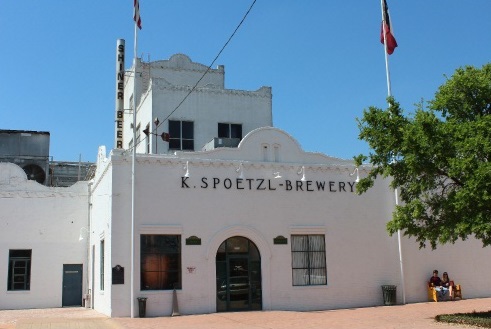
Spoetzl is Texas' oldest independent brewery.
Living here in Ohio, it should be no surprise that I am partial to many of our great Midwestern brewers, like Great Lakes, Hoppin’ Frog, Thirsty Dog, Platform, Bell’s, Short’s and Rhinegeist. They all make great beers—even though it is inevitable that there will always be hits-and-misses from time to time. Nobody’s perfect.

That said, one American brewer I would like to celebrate for their high level of consistency and quality is the Spoetzl Brewery of Shiner, Texas. The oldest independent brewery in Texas, they are widely distributed, and generally easy to find in major markets throughout Ohio.

Originally named "The Shiner Brewing Association," (SBA) The Spoetzl Brewery was founded in 1909 by German and Czech immigrants who had settled around the central Texas town of Shiner. Unable to find the type or quality of beer they had enjoyed in their home countries, they began to brew their own. They remain one of the oldest independent breweries in the U.S

Shiner Brewing Association - 1909
Personally, I have sampled a wide range of their beers, though strangely enough, their standard Shiner Premium lager, I regularly enjoy their Bock beer, Bohemian Black Lager, Cream Ale, Oktoberfest and Holiday Cheer—the last two being seasonals. Their Strawberry Blonde is excellent as well, and their 2015 Birthday Beer, a chocolate stout, was one of my all-time favorites. Sadly, the birthday beers change every year, and I’ve not had it since.

The German and Czech heritage must run strong throughout Spoetzl’s brewing tradition and methods, because what I enjoy most about their beers are that they are always true to style—Bocks, Oktoberfests and Cream Ales always taste the way you expect them to…no extra hops, wrong hops, or other strange flavors distracting from a job well done. So many American craft brewers fall to the temptation to try to “improve” on classic styles, or somehow “reinterpret” them--and the result is usually a big fail.

The other thing I would commend them for is the ability to just “get it right” when it comes to taste and balance. It would be easy to get into trouble with more creative recipes like Shiner Prickly Pear, Ruby Redbird, or their Holiday Cheer, but the brewery always manages to get consistently great results, using just the right amount of ingredients that complement the underlying beer without overwhelming it. That’s not easy—evidence that their brew masters have a well-tuned palate. Maybe a little common sense, too.

Read more »

TRUTH IN BEER: TWO MONKS BREWING

July 17, 2017 0 comments
In a world where over-the-top, hop-heavy beers are nothing out of the ordinary, it’s truly refreshing (forgive the pun) to come across a brewer who is adamant about staying true to style when it comes to traditional beers. Such is the case with Two Monks Brewing. I’ve had a growler-full of their German dunkel and was thoroughly satisfied—it was smooth, flavorful and malty—just what I was expecting.

On my first visit, the two owners were still prepping the tap room and getting their occupancy permits; tables, chairs and other equipment were stacked against the walls as they provided a growler-filling service to customers who stopped in.

On my most recent visit, they were fully open and ready to go, and there was a nice crowd checking out the beers on a Saturday afternoon. The wife and I stopped to get our Summit BrewPath passports stamped, so we sat down and looked at the beer list, which is not long, but features a nice assortment of styles—you should be able to find something you like here.

My wife, who generally prefers lighter fare, went with the Czech Pilsner, which she thoroughly enjoyed. I selected a pint of the E.S.B. and was totally won over—an excellent English bitter that was correctly hopped, full of flavor and extremely drinkable. On my next visit, it will definitely be my “go-to” beer.

Overall, Two Monks is a nice, comfortable spot to enjoy well-made beer; being just a stone's throw from Hoppin' Frog and the Brick Oven Brewpub, it's part of a nice East-Side Brewery Triangle that you must check out. I would only encourage the one owner to engage the customers a little more; when I asked him about their brewing system and complimented him on their beer, he seemed a little disinterested, and generally unenthusiastic about holding a conversation. Maybe he was just tired, but I've yet to meet a brewer who didn't enjoy talking about beer and bragging up his brews to anyone who will listen!

As an acknowledged “traditionalist” when it comes to beer, I can still appreciate some creativity and experimentation when those efforts are clearly identified as such. What does irritate me is when craft brewers offer a traditional beer style and then muck it up, either through inexperience, ignorance or a desire to make it “fit” today’s hop-heavy flavor profiles. Thus, we get an Austrian Pils that should be labelled an “American Pils”…or a German Oktoberfest that should be labelled “American Octoberfest.” That would constitute “fair warning”.

A perfect example is a recent 6-pack of Lager Heads Brewing Oktoberfest I bought. While they may have used German hops (this is what it claims on the label) they used too much of them to make it taste like a true German Oktoberfest; in fact, if I poured it in a glass and served it to most of my friends, they probably would guess it was an IPA. This is precisely why I am wary of buying a lot of “traditional-style” American craft beers—a lot of them have a problem with “truth in labelling”—though it’s due to bad brewing choices and lack of knowledge, not dishonesty.

Thankfully, it’s nice to know that places like Two Monks can still get it right. Hats (or hoods) off to them!


Read more »

A SUMMER OF BEER – PART 3: BEERS OF BOYNE CITY

July 16, 2017 0 comments
The docks and dining deck at The Landing at Ironton. Great beer & Food.
After a night in beautiful Bellaire, I packed up my gear and headed to Boyne City, Michigan—to claim a camping spot about four miles west of town, right on the shores of Lake Charlevoix. Boyne City is at the east end, and Charlevoix is at the western end of this big lake, near where it empties into Lake Michigan. Both towns are wonderful and great places for boating.

A lot has changed since my last time in Boyne City; two new, large tap rooms have opened and a small brewery has also made the town it’s home.  That the population of the town is only about 4,000 people should tell you something about its popularity as a summer vacation destination, and maybe how much the folks up here like their beer! It was safe to say that my visit occurred on the busiest weekend of the year, and every one of these beer destinations was packed.


Another great campsite - outside my tent door on Lake Charlevoix.
Sadly, I was not able to try the offerings at Stiggs Brewing Company, located just a block off the main street; though they have an outdoor serving area and a decent-sized dining/tap room (they were packed) I couldn’t even find a seat at the bar. I was assured by a friend I saw later that their beer was quite good, but that second-hand endorsement is all I can offer. They are located in a great-looking old Victorian-era building, with an attractive bar to match; I guess I’ll have to try again another time.

I did manage a couple of stops at the excellent 7 Monks Taproom. It’s a big place, with a nice contemporary décor, a very long bar and an awesome outdoor patio with a view of the lake. Being a big fan of Founder’s Rubaeus, I jumped at the “nitro” version they offered, which was smooth and creamy enough to be a dessert. I followed that with a very small salad and to accompany that, a pint of a classic Weihenstephaner lager.

The only problem was it wasn’t a lager, it was a Weihenstephaner weiss beer, which was evident from both its taste and its color. I brought this to the attention of the server, who immediately checked with her colleagues to investigate. Turns out the brand has very similar-looking kegs for the lager and Weiss - and it was just simple a mix up. Not hard to imagine with all those beers to keep track of. The staff corrected this right away and quickly brought me a golden lager. I found the fact that they did not even charge me for it (due to the minor inconvenience, I suppose) extremely hospitable and generous.

The boats - why I came here in the first place.
Later that evening, I decided to have dinner at the Boyne City Tap Room, which is operated by the same folks who operate the Bridge Street Tap Room in Charlevoix, as well as Lake Charlevoix Brewing Co. The beer selection is vast, and clearly described on a large electronic board that stretches above the bar. It makes for a nice display. I can barely recall what beer I ordered, I believe it was a Griffin Claw El Rojo Red Ale—this is probably because I was distracted by the prospect of having a delicious perch dinner. I love perch. By the way, the beer was good, too.

Service at both these places was extremely friendly, helpful and eager to please, but that’s what you expect up here. It was the same experience the night before, when I passed through Ironton, a small village about halfway between Boyne City and Charlevoix. There’s a three-dollar ferry there that provides a short cut across the lake’s lower arm (saves about 20 miles) – but the real attraction is The Landing, a great place to eat with an excellent beer selection of its own. I tried a Landings Lager—a nice, clean lager made with some wheat, brewed especially for the restaurant by Short’s in Bellaire. Crisp and clean, with a light body, I found that a couple of those, along with my perch sandwich, made for another perfect night. What a BeerCation.
Read more »

A SUMMER OF BEER – PART 2: MICHIGAN BEER BONANZA

0 comments
My campsite in Bellaire, Michigan. Looking out of my tent door.
Every couple of years or so I try to get up to NW Michigan to see some of my favorite vacations spots; being kind of a last-minute exercise this year, and that no reasonable accommodations were available, I was forced to go camping. This also meant that I would be traveling alone, since my wife does not camp out in tents. This also gave me an opportunity to volunteer at the Boyne Thunder Poker Run, a great performance boating event that raises thousands of dollars for a camp that serves children with cancer.

My first destination was once again Bellaire Michigan, home of well-known Short’s Brewing. Since my last visit, some of their excellent beers have become available in Akron, so I didn’t feel the need to stock up on the return trip. That said, they had an excellent range on tap—I got a sampler which included a Kolsch 45, Power of Love, Totally Noche, and a Bellaire Brown. All were great; the Totally Noche, which I might suggest is like a dark Dos Equis or a Modello Negro—was very good. The Power of Love was a fruit beer that was very rich and tasty…nice for dessert, at the end of a meal. I settled in after this with a pint of the Noche, and ordered The Old Man Thunder beef shoulder sandwich, which was awesome.

On a Friday night in July, every seat in all three
indoor rooms and the patio were filled.
What is so interesting about this place—aside from its location in a vacation wonderland and the great beer they serve—is that they just keep growing. The original taproom has expanded to encompass the buildings on either side, and now also includes a comfortable covered patio that overlooks Bridge St. out front.

Short's has also have opened a production facility in Elk Rapids (on Lake Michigan, closer to Traverse City) and are expected to brew 55,000 barrels of beer this year. As a result, rumors seem to fly every year that they are about to sell out to a mega-brewer (this year, it was supposed to be Heineken) but it’s just not true. Whoever said that quality is what speaks the loudest has it right.
Read more »

A SUMMER OF BEER – PART 1: GRAPEFRUIT GLORY

July 14, 2017 0 comments
One of the first pleasures of the season, I am happy to relate, was the release of Hoppin’ Frog Brewery’s Grapefruit Turbo Shandy, which is the first product of theirs to be available in a 12 oz. can. As I have previously noted, I am a big fan of the regular (lemon) Turbo Shandy, and would drink it by the bucketload if I could afford it. I first tried the grapefruit version on the first day of its release, and although I have always preferred lemon, I must admit it was very delicious. Being highly familiar with grapefruit radlers—like those offered by the Austrian brewery, Stiegl—I found Fred Karm’s product superior in most every way.

Having been to the Stiegl brewery in Salzburg a year ago, I was happy to relate my judgement to Fred Karm, Hoppin’ Frog’s owner – who explained to me that it was one of the beers after which he had patterned his grapefruit masterpiece. We agreed that the primary reason for the superiority of his product is that it has a lot more “product” in it to begin with; as a result it has a significantly higher ABV than the Stiegl radler, which is only 2.5% compared to Hoppin’ Frog’s 7.0%.

The key to both Fred’s Shandies is the fact that he starts with a great ale—something that you’d be happy to drink “as-is”—and then adds a very rich, all-natural tasting fruit flavor. As Men’s Journal said in a review of America’s best Shandy & Radler beers – “Ohio's Hoppin' Frog makes no beer in half measures…”  Amen to that.

I took a 4-pack of the Graprefruit Turbo Shandy with me on a recent trip to Michigan and the folks I shared them with agreed that it was one of the “best summertime beers” ever. If you can get your hands on some – try it out.


Read more »

BREWPATH POPULARITY BOOSTS AKRON'S BOOMING BEER BUSINESS

June 11, 2017 0 comments

I decided it was time to jot down some quick notes on the continuing popularity of the Summit Brewpath – a local brewery trail and passport program developed by the local Convention & Visitors Bureau. Similar to popular programs run in other cities, the program lets beer lovers get a passport at 14 participating breweries in Summit, Medina, Portage and Stark counties, then collect stamps when they visit and have a beer. Once their passport is filled with brewery stamps, they can get a free “I completed the Summit Brew Path” T-shirt, and are also eligible for an entry to win a grand-prize overnight stay in Akron.

To say this was a great idea for local beer lovers and brewers is perhaps the understatement of the year. Initially, 5,000 passports were printed; when 4,000 went out the door out in the first two days of the promotion, another 5,000 were ordered. By the end of April, the bureau had been forced to order an additional 10,000 passports due to the incredible demand.

It’s a fun idea, and participating brewers have reported that about half of their customers are coming in to get their books stamped. Each book provides a short intro to each of the 14 participating breweries and a space for their unique ink stamp. A few other regional breweries are also profiled in the book, which look similar to a travel passport. The 14 participating breweries include Aqueduct, BrickOven Brew Pub, Hoppin’ Frog, Ohio, R. Shea, Thirsty Dog and Two Monks in Akron; HiHO in Cuyahoga Falls; Mucky Duck in Green, Canton in Canton; Royal Docks and Scenic in Jackson Township; MadCap in Kent; and Wadsworth in Wadsworth.

Akron continues to add new breweries on a regular basis, as the local beer business finally seems to be hitting its stride and gaining a higher profile. Clearly, the Summit Brewpath program has been a big boost to business—even presenting a challenge to some of the smallest brewers, who have sold out of some beers on busy weekends when lots of people show up to get stamped. Nevertheless, if you’re selling beer, that might be a good problem to have.

The passport program has also had a great social impact as well, as visitors from different cities and neighborhoods compare their stamps, talk about their visits and the beers they’ve tried. It’s an idea that’s been working well in Columbus, where the Ale Trail is in its 3rd year; in 2017, it expects to have 38 stops and print between 35-40,000 passports. For Akron, at one-fourth the population size, to have a program almost half as large, is a pretty good start. Cincinnati recently announced plans to develop an Ale Trail of their own, and the Ohio Craft Brewers Association launched a statewide digital trail for smart phones called Ohio on Tap in May.
Read more »

THE BEER IN ENGLAND IS NOT SERVED WARM

May 21, 2017 0 comments

In fact, most of the beer—or lager—as they would call it, is served perfectly cold. In this case, however, we’re talking about ale. And while English ale is not served warm, it would better be described as cool.

Of course, none of this came as a surprise to me during our recent trip to London. True English ales, hand-pumped out of a cask, are at their best when they are just slightly cool, so that more of their flavor has a chance to show through. This is especially true of the low-alcohol (around 4% abv) session ales, which are very light indeed. Served ice cold, they would clearly suffer as a result, and no doubt display all the character of a Coors Light.

Another note is that these ales, when pulled from a cask, are not nearly as carbonated as you might expect, especially if you enjoy English ales out of a bottle here at home. While not completely flat, the character is more like a bottle of beer you attempted to re-cap and put back in the fridge to drink the next day; there’s something there, but not like when you first opened it.


I will get into a little more detail in some follow-up posts regarding some specific ales and experiences—the pubs were mostly all delightful and the ales very good. We had a wonderful visit to the Windsor & Eaton Brewery after a visit to the castle and the staff were so entertaining and gracious as we sampled a variety of their tasty offerings. We did a lot of walking, which left me quite thirsty—as a result, when we reached a pub for a break, I often had a cold lager to start and followed up with ales afterwards.

As I expected, the long reach of American Craft Beer is making itself known in the UK; besides the ubiquitous BrewDog offerings, a few of the newer craft brewers were beginning to fall under the spell of “more hops, please” – and are also using some US variety hops. I can only hope this phenomenon is held in check, as I’d hate to muddy the traditional character of true English ales as a result of this bitter trend.

All in all, however - a great trip and a memorable experience.
Read more »

BEER NOTES FOR LATE SUMMER / EARLY FALL

September 21, 2016 0 comments
Summer or Fall, any time is a great time for beer.
It's been a little while since I posted so I thought I’d share some thoughts about a few of the brews I’ve enjoyed recently…

Hoppin’ Frog | Can Fred Karm even make a bad beer? I don’t think so. My only issue with Fred’s treats is that I just can’t drink a lot of them; the rich flavors are so intense, the alcohol is up there, and the cost—well, let’s just say they are not cheap—but they are worth the price. During the summer I often enjoy lighter stuff like his Turbo Shandy, and his light/dark berry brews. My wife, who is a habitual Miller Lite drinker, has definitely taken a shine to Outta Kilter and Karminator. I guess it’s never too late to change your beer habits. On our most recent visit, I tried one of his concoctions with Peanut Butter, Chocolate/Coffee and it was truly a new experience. Perfectly balanced, the PB came through clearly but did not overwhelm the overall taste profile. I look forward to trying it again. I also had a pint of the Oktoberfest, which was just being rolled out on the Saturday afternoon we visited. It was very solid, with a distinct character; at first I thought the hop bitterness was slightly higher than the style demanded, but after a few more sips I came around to the notion that it was pretty spot on.

I cornered Fred across the room where he was spinning some records and asked him for some suggestions for something I could store in our basement. I built a wine/beer storage cellar under the stairway—most of it is against the solid concrete outer wall, and the temperature stays fairly cool and steady throughout the season. We settled on a BORIS the Crusher Oatmeal Stout and a Silk Porter as a good place to start; Fred said they should do well for at least 9 months, maybe more. I doubt if they will make it past the holidays.

Sweetwater Hop Hash | I keep trying to give IPAs a fair shake, but I keep coming back to the realization that this is not the way beers were intended to taste. My best friend has this stuff from time-to-time; I thought their standard IPA wasn’t bad (the bitterness was light, and dissipated quickly off the tip of the tongue) and I do like their Blue, but the Hop Hash just solidified my overall preference not to drink beers with “hop” in the name. If you like this stuff, it’s not bad.

Gervasi Vinyards Farmhouse Ale | This popular winery is a great place to visit, but go for the wine, not the beer. I tried the Farmhouse Ale (bottled) but it turned out to be a pretty standard, hoppy IPA with no unique or notable characteristics. I was expecting something more interesting, and maybe a little “rougher around the edges” taste-wise. The ale is contract brewed for Gervasi by Thirsty Dog in Akron, who generally makes excellent beers. This one, maybe not so much. I switched to Peroni for my second beer.

Short’s Soft Parade | This is a high gravity brew that’s loaded with four different kinds of berries. While it does exhibit definite fruitiness, the malt also manages to balance out the tartness and makes for a very smooth sipper with just enough of a note of alcohol to remind you that it’s 9% ABV. That’s not a lot, but it means you can’t knock back two or three of these like you could a more typical “berry beer.” A substantial and memorable ale, I was glad to find that this top Michigan brewer was now available in Northeast Ohio. It’s brewed in Bellaire, just a little north of Traverse City—if you ever have a chance, be sure to visit. You may never come back.

Stiegl Lager | I had enjoyed this beer before going to Germany last May, but when we took a day trip to Salzburg, Austria, the Stiegl Brewery immediately made it on the “must see” list, and we enjoyed both their brewing museum tour and a fine dinner in their central courtyard/bier garten, which was crowded and fun. We sampled several of their beers, all of which were excellent, but I keep coming back to their standard lager, which has become one of my go-to German styles. I also enjoyed a 6-pack of their Grapefruit Radler this summer, which is great for sitting in the hot sun by the pool. Or in the pool.
Read more »

ANOTHER FALL SEASON OF BREWING BECKONS

August 10, 2016 0 comments
I generally brew my beer in the Fall; something about the season always feels right, and the thought of entering the Holiday Season with some special beers on hand makes a lot of sense to me. Fall being harvest time also seems appropriate, especially when considering complimentary flavors that might be added. Note—that does not include pumpkin.
My brew tools are pretty rudimentary and common to most home brewers:  a 6-gallon clear fermenter, brew pots, plastic pails for bottling and secondary fermentation, large bottles, small bottles, an ancient capper—you name it. All this and a handful of books on brewing plus a great local supply shop, The Grape & Granary, provide me with just about everything I need.

Once in a while, however, I come across something new that piques my interest, and so it was with the BrewDemon 2.5-gallon Conical Fermenter. Till now, I’ve always brewed in 5-gallon batches, but I was attracted to the idea of brewing smaller batches, which would allow for a little more frequent experimentation with recipes and new styles. I ordered mine from Amazon with some birthday gift money as well as some spare airlocks and a BrewDemon kit to make one 2.5-gallon batch of Brown Ale, which remains my go-to drink of choice.

For whatever reason, I’ve preferred the beers I’ve made with extract over the last batch I made from a kit that included dry malts and steeped grains. The latter, while good, had more of the roasted malt taste that I associate with American Brown Ales, rather than the sweet, caramel-malt “fruitiness” that typifies good English Brown Ales. My goal with the first batch here is to try and replicate my past efforts, which normally result in a fresh, rich and sessionable Brown Ale, similar to Newcastle, but better. Currently, I’m considering what modest additions I might add to this kit to ensure just a little more body and taste.

I’ll let you know how this works out. I’m also looking at what comes next—I am thinking about some type of rich Harvest Ale, a Holiday Porter, and at least one or two other styles that I can store long term. Over the last winter, I completed building a wine/beer storage cellar under the basement stairs, and it’s been waiting for some occupants. Time to get to work!
Read more »

JUST SAY NO TO HOP MADNESS

May 20, 2016 0 comments
I’ve been grousing about the infestation of IPAs into American Beer Culture for some time now, as well as the fact that so many US craft brewers seem to have no clue in how to use them correctly. This attitude was strengthened even more after a recent trip to Germany, Switzerland, Alsace and Austria—where I was actually able to enjoy a number of different beers. While they varied quite a bit in their color, taste and strength, they all seemed to have one thing in common—they were largely formulated with varying combinations of beer’s four main ingredients: Water, Malt, Hops and Yeast.

I’ve often been of a mind that most US craft brewers should first dedicate themselves to learning how to make a solid, well-balanced beer with just these four ingredients before jumping into trendy stuff like pumpkin ales, sours, hop-bombs, chocolate or peanut-butter ales, or any other exotic style. There are a very few US craft brewers who can successfully pull this wizardry off (my local brewery, Hoppin’ Frog, comes to mind) but the truth is, this “everything and the kitchen sink” approach can offer plenty of style and little substance. It also offers some brewers with limited skill a convenient place to hide—behind a truckload of ingredients that can camouflage an otherwise less-than-stellar brew.

After being reminded of what simple, fresh and delicious beer tastes like, it’s easy to get tired of so-called “experts” telling me that I just don’t “get” the appeal of hops, or have “too weak a palate” to appreciate all these bold, bitter hop flavors. What a load of bullshit.

“You need to train your palate to appreciate these bitter hop flavors.” More bullshit. I suppose I could slip a dab of poop into my ham sandwich every once in a while and build up a tolerance. What does that prove other than I have developed a taste for shit?

First of all, I’ve been drinking beer long before some of these morons were even born; and most of it was good beer, not just the swill that the macro-brewers have been foisting upon us for the last 65 years. It’s true that for much of that period, imports were the best and most popular route to quality beer, at least until the late 1970’s and early 80’s. At that time, microbreweries were just beginning to appear and some of the larger brewers responded to the rise of imports by rolling out premium lines and bringing back some old brew house recipes that offered more flavor. And back then, most imports were really imported—not brewed in the US under contract. I believe I developed a fairly sophisticated palate over 40+ years of beer drinking, and while my taste buds and sniffer might not be as good as they used to be, I’d like to think I know what beer is supposed to taste like.

And I’ll be damned if you try to convince me that it’s supposed to taste like turpentine. Or Pine Sol.

Unfortunately, we have a whole generation of beer drinkers who have been marketing-brainwashed into thinking that this is exactly how good beer is supposed to taste; utterly convinced that these “bold” flavors have been missing from beer for generations. Of course the convincing has been done by some craft brewers who have built a reputation on hop-bombing the Western Hemisphere, and US hop-growers who only want to expand the market for their goods.

Now the usual response to my view is always – “Well, if you don’t like it, just don’t drink it.” And that sounds reasonable, until you realize that the tidal wave of IPAs has pushed a vast number of great alternatives off the store shelves. It’s getting harder to obtain beers I actually like. The local super-grocers offer dozens and dozens of IPAs in their cooler, both in 6-packs and in single bottle (“build your own 6-pack”) selections. But where before I could choose from among 10 or 15 English ales, or 18 different German beers, or a few dozen other imports, or some reliable, high-quality domestic beers, now I can only find a handful (cold) and maybe a few more (warm) on the store shelf.

Yes, there are a number of US Craft Beer offerings that are not IPAs, it is true; but the simple fact is—I don’t trust a lot of these brews to deliver on their promises. Many are not “true to style”. Many are still over-hopped, as brewers end up massaging their entire brewery lineup to cater to the “hop-forward” tastes of today. I’d be happy to give some a test shot, but I’m not going to buy a $12 6-pack to experiment—or give away later.

Other bozos will try and make some technical argument that bitterness is not always associated with hops. They add fragrance and aroma, too. Yes, I know that. And I will respond by simply stating that, while yes—a beer with extra hops does not always have a bitter taste, the other side of the coin is simply this: almost every beer that tastes too bitter is the result of being over-hopped.

Or the result of using the wrong hops. I really do think a lot of craft brewers are using hop varieties for taste that should only be used for aroma. For example, let me be clear in stating that while Pine-like flavors may lend a nice aroma, they have absolutely no place in beer taste.

Have you ever had smoked meat or fish? Have you ever wondered why expert barbeque masters only use hard woods like oak, hickory, mesquite or cherry on their fires? Did you notice that they never use pine wood? The reason is simple: pine leaves a sharp, resinous and wholly unpleasant taste in the mouth that ruins food. No grillmaster with a brain uses it. Why would you want to put that taste in your mouth via beer?

Again, we see generations of simple knowledge and proven experience go by the wayside, as idiots try to convince us that this is actually a good taste for beer to have. I’ll be honest and also admit that I have found few American hop varieties that I appreciate as much as traditional, noble hop European varieties. I’m sure there are some good ones, but it’s hard to judge when they are being used by the boxcar load.

Do I sound grouchy? Good. Then you’re catching on.

Just as lame arguments break on the rocks of four decades of beer drinking experience, the same can be said for trendy brewing approaches that go against the grain of several hundred years of beer brewing tradition. Just how bitter can a beer be, anyway—before it becomes palate-tiring, overwhelming and undrinkable?

Ever had a real, traditional English IPA? Bass dropped the “India” from its “Pale Ale” some years ago, but the taste hasn’t changed all that much over the years; this style was never intended to be as bitter as the stuff that has been pushed on us today in the US. Ever had an English “bitter”? Try a Fullers ESB. The bitterness is subtle; it embellishes the taste and balances the malt. It doesn’t overwhelm it. Same with a genuine Pilsner, which has slightly more bitterness than a typical Lager.

Hey, if you wanna drink this bitter swill—go ahead. Pay $12 a 6-pack or $8 a pint and support the Hipster Brewmaster & Organic Hop-Grower’s Retirement Fund. Of course IPAs are selling so well, but what do you expect when (aside from Macro-Brew) that’s mostly what you find on today's store shelf? It’s a self-fulfilling cycle—and a cycle that’s making it harder to obtain truly good, honest beers that have been enjoyed for decades.

For the craft brewers who are focusing on innovative, well-balanced stouts, tasty porters and drinkable ales that people can actually enjoy, my hat is off to you. Continue to innovate, and please resist the urge to obscure the tastes you’ve worked hard to develop by wrapping them in an overly-bitter hop shroud. Hopefully this hop madness will wear off, the pendulum will swing in the other direction and more brewers will come to their senses—not to mention beer drinkers who haven’t had enough experience to know any better.

Read more »

ShareThis Stuff

Bookmark and Share

Translate This Site

Latest from Twitter

Topics

Beer Culture (22) Beer Inc. (11) Beer Ratings (7) Books (4) Breweries (14) Commentary (33) Craft Beer (31) Education (11) Equipment (1) Events (2) Germany (3) History (10) Homebrewing (6) Imports (4) Local (14) Marketing (6) News (13) Places (10) Pubs (2) Quality (12) Reviews (11) Sarcasm (3) Seasonal (9) Session Beers (6) Travel (7) UK (6)

Search This Blog

Powered by Blogger.

CRAFT BEER NEWS

HOMEBREWER'S ASSOCIATION NEWS

BREWER'S ASSOCIATION NEWS

DAILY NEWS

UK BREWING NEWS

Other Sites of Interest